Barometric pressure and fishing: what really changes
There is no magic number in millibars, but the direction pressure is moving is a useful signal once you know how to read it.
What pressure actually does to a fish
Anglers have long pointed to the swim bladder, the gas-filled organ that holds a fish steady at a given depth without constant swimming, as the thing that feels a change in barometric pressure. Look closer, though, and the mechanism does not hold up well. A fish’s swim bladder exchanges gas slowly, over roughly a day or more, far too slowly to register a change in the air above the surface within the same afternoon. And the scale is off by orders of magnitude: swimming a few feet up or down a water column shifts pressure on a fish’s body far more than the biggest storm-driven swing in barometric pressure ever will.
That does not mean pressure is meaningless, it just means the swim bladder story is probably the wrong explanation. What falling pressure reliably comes with, cloud moving in, wind picking up, light dropping, matters far more to a fish than the number on a barometer by itself.
Why stable pressure is easier to read
When pressure has sat still for several days, fish settle into regular habits: the same hours, the same spots, similar behaviour day after day. That is when experience built up on a particular water pays off most, because what worked yesterday has a good chance of working again. Settled weather lasting three or four days shows up more often as a favourable sign in angler reports than any specific pressure reading.
What a moving pressure changes
The speed of the change seems to matter more than its direction. A slow drop over several hours or a full day tends to sharpen appetite, likely because it usually comes with cloud building, softer light and a rising breeze, three things that help feeding across a lot of species. A slow rise can do much the same, provided it stays gradual.
A sharp swing in either direction, over just a few hours, unsettles fish enough to shut feeding down for a while as they adjust to the new conditions. Activity often returns once the new pressure has held steady for a stretch, sometimes with a noticeable pickup.
Anglers most often report the sharpest activity in the twelve to twenty-four hours before a front arrives, while pressure is still easing down and the cloud and wind that come with it have only just begun. That window tends to close fast once the front itself moves through and rain sets in, then reopens a day or two later once conditions settle at their new level.
Reading a barometer without confusion
Weather services in Britain and across continental Europe report pressure in hectopascals, a unit identical in scale to millibars, while forecasts in the United States more commonly use inches of mercury. A steady reading around 1013 hPa corresponds to roughly 29.92 inHg, but the exact figure only works as a reference point, never as a target to fish towards. What is worth tracking is the direction of travel over six to twelve hours: three or four readings spaced a few hours apart tell you far more than a single number checked once before you leave the house.
There is no magic number
No single pressure reading guarantees a good trip. The 1013 millibar figure that turns up everywhere is a meteorological convention, sea-level average, not a biological switch that flips fish into feeding mode. Low pressure does not automatically mean heavy feeding, and high pressure does not rule out a good session: these are tendencies drawn from observation, not fixed rules, and they shift from one species to another regardless.
What actually links low pressure to a good outing is not the number itself, it is everything that tends to travel with it: a sky clouding over, wind picking up, softer light. Treating pressure as a standalone signal means throwing away every other clue in favour of one, when it is really the combination that decides how a session turns out.
Species seem to differ in how strongly they respond, too. Fish that hold near the surface and feed by sight tend to track those light and wind changes more closely than fish that stay deep and rely on smell or vibration, which is one reason the same pressure trend can produce a strong session for one species and a flat one for another on the same piece of water.
What separates a catch from a blank
The most common mistake is checking only the current reading, without asking where it came from or where it is heading. A reading of 1015 millibars means little on its own: easing down gently after three calm days points to rising activity, while the identical figure climbing sharply after a storm usually points to fish holding back.
The second mistake is leaning on pressure alone to decide whether to go, while ignoring wind, light or water temperature. These factors stack together, and a day with supposedly poor pressure but a moderate breeze and cloud cover can easily beat a day with textbook pressure sitting under a flat, bright sky.
Plenty of anglers also cancel a trip the moment a change in the weather is forecast, when the hours before a blow or a light shower often rank among the most productive, right before the sharp change temporarily shuts things down.
What Piscary does with this
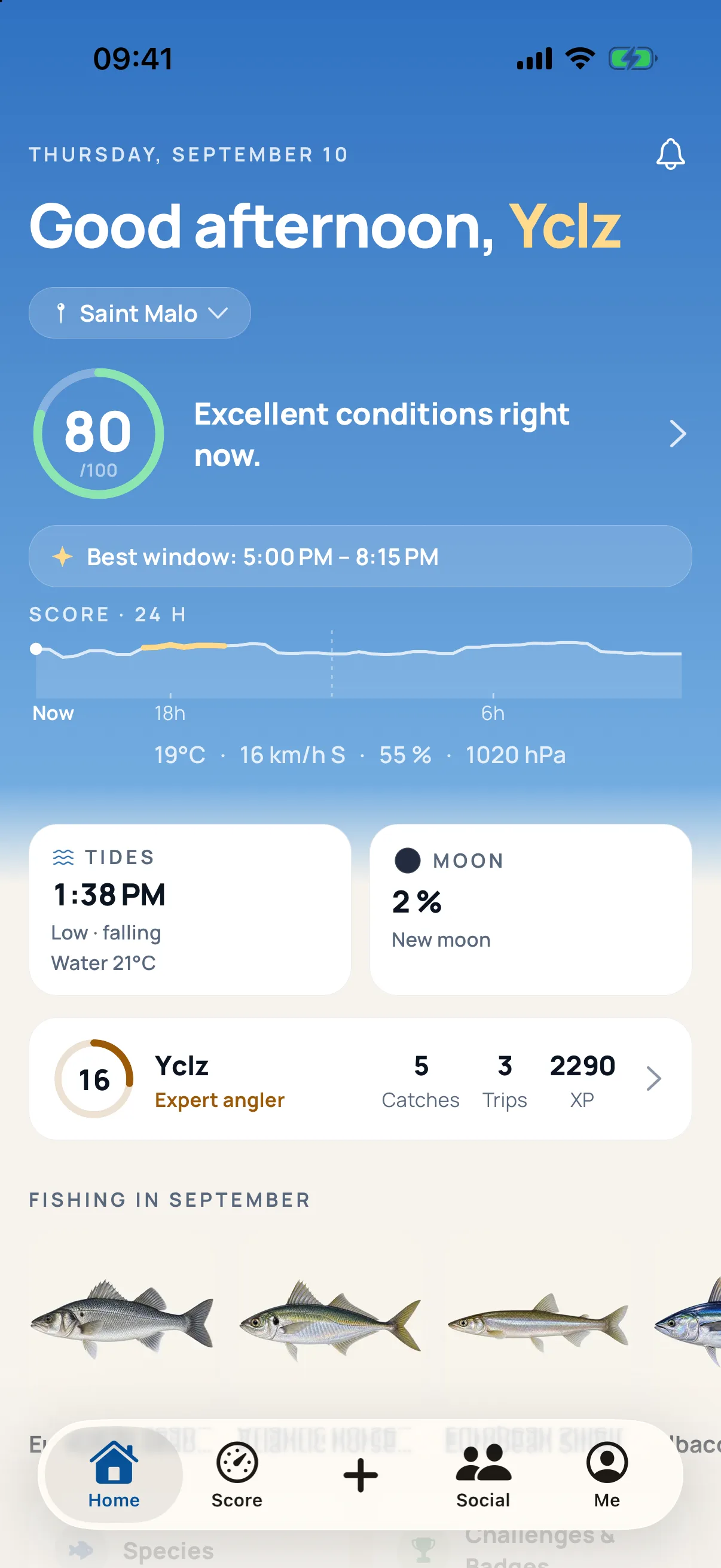
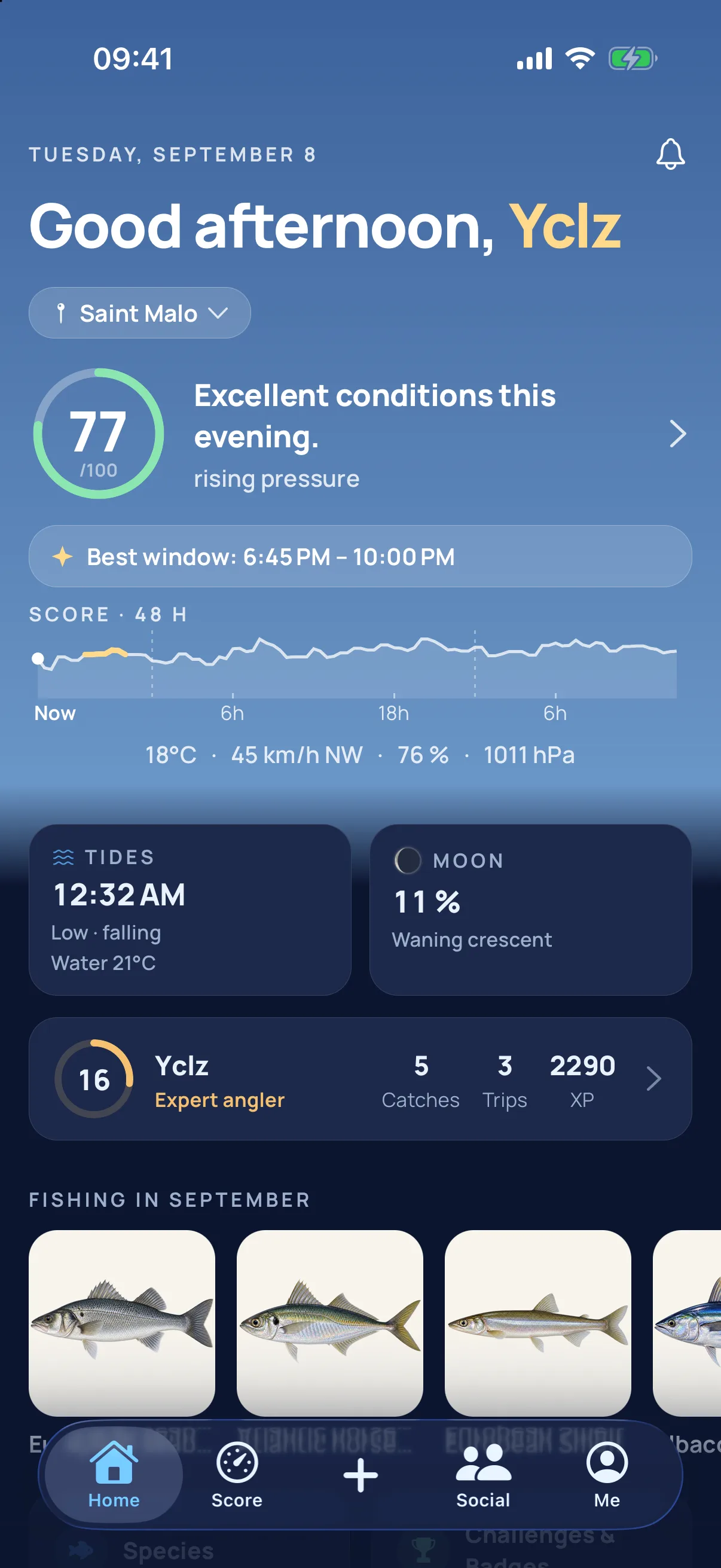
Piscary shows a pressure trend across the hours around your session rather than a single instant reading, so you see the direction rather than an isolated figure. That trend feeds into the daily score alongside wind, light and temperature, with no single factor left to decide the result on its own. The catch log also lets you compare pressure conditions spot by spot, showing what has actually produced rather than what you assume should.