How to keep a fishing log: what to note, and why
What turns scattered trips into real patterns, and the handful of details actually worth writing down.
What a log does that memory can’t
If you fish often, you probably think you remember your good days. In practice, memory holds on to the extremes, a standout catch or a frustrating blank, and lets everything else slide, including the exact conditions that surrounded them. Without something written down, there’s no way to tell whether a good session came down to the lure, the hour, the weather, or plain luck. A log doesn’t replace your instinct. It gives you something to check that instinct against.
That payoff doesn’t show up immediately. One logged trip teaches you no more than a memory would. It’s the accumulation, across dozens and eventually hundreds of trips, that starts surfacing real patterns: a spot that produces nothing until the water hits a certain temperature, a technique that only works under cloud cover, a time slot that keeps turning up in the good sessions too often to be chance.
What’s worth writing down every single time
Some information earns its place in almost every entry, and takes seconds to note. Date and time place a trip within the season and within the day, two timescales that affect fish behaviour in different ways. The exact spot, more specific than just naming a lake or river, lets you compare one swim against another rather than judging an entire water by a single visit. What you caught, species and a size estimate, tells you what actually worked. The day’s weather, wind, cloud cover, recent rain, fills in the conditions a map alone can’t show.
A second layer, more demanding but more useful over time, adds the technique and the lure or bait used, the depth fished, and missed bites alongside landed fish. A missed take in a swim is worth almost as much as a catch: it tells you a fish was there and feeding at that exact moment.
What you can safely skip at the start
Trying to log everything from the first trip puts people off faster than starting small does. Details such as moon phase, tide coefficient, exact water temperature or surface activity add real value once a log already exists, but none of them are necessary to get going. A log that records only date, spot, catches and weather for six months beats an ambitious one abandoned after three trips because there wasn’t time to fill it all in.
Turning notes into an actual hypothesis
Recording data does nothing on its own if each entry sits isolated from the rest. The step that actually pays off is going back through several trips together and forming a hypothesis you can test: this spot seems to fish better right after rain, this technique works mainly early in the morning, this species stops biting once the water drops below a certain point. Once you’ve stated it, you can check that hypothesis trip after trip, confirm it, refine it, or drop it when the evidence says otherwise.
That process takes longer than most people expect when they start a log. It usually takes dozens of trips across varied conditions before a real trend separates itself from noise, and a single spot rarely gives you enough to draw a solid conclusion on its own. It’s part of why anglers who improve fastest also compare notes with others fishing the same stretch or the same species, rather than relying only on their own history.
Format matters less than showing up
Paper, spreadsheet or app, each format has its strengths. A paper logbook needs no battery and flips open easily at the water’s edge, but gets unwieldy once it’s carrying several seasons’ worth of entries. A spreadsheet lets you sort and cross-reference columns, which helps patterns stand out, at the cost of a bit of discipline to fill in afterwards. A phone app makes logging on the spot easier, recording position and time automatically, which cuts out the most common gap: the trip that never gets logged because you were sure you’d remember it later.
The best format is whichever one survives the first few weeks of enthusiasm wearing off. Spending five minutes after each trip, rather than trying to reconstruct it from memory later, makes a bigger difference than the choice between paper and digital ever will.
Read it before you leave, not just after
A log earns its keep before a trip as much as after one. Check your notes on a spot before you head back to it, rather than trusting a rough memory: that lets you see whether today’s conditions match a session that worked or one that didn’t. That habit changes what the log actually is. From something filled in out of discipline, it becomes something you consult because it’s useful, which is why anglers who keep one for years are also the ones who open it before leaving, not only when they get back.
What Piscary does with this
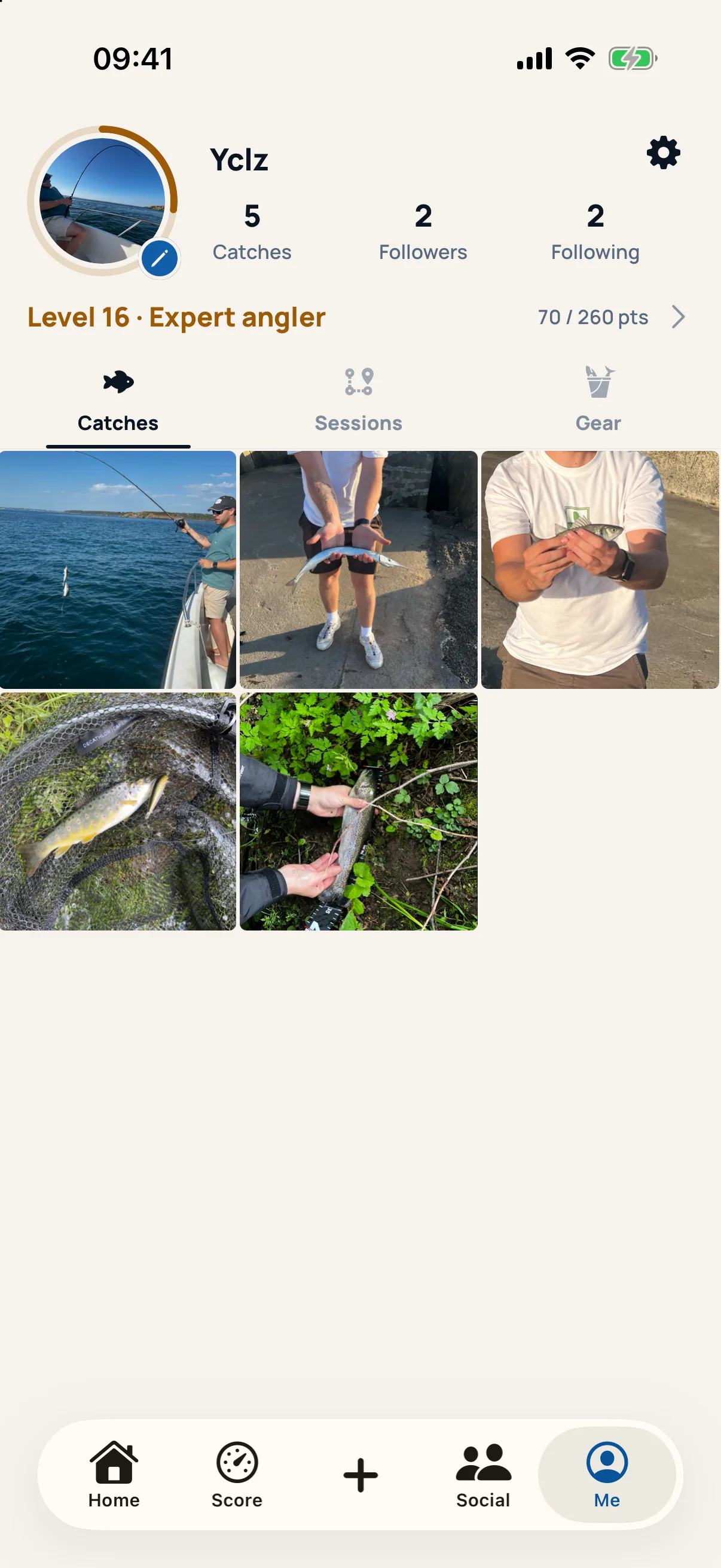
Every catch logged in Piscary keeps both the date it happened and the date it was recorded, along with the position, the weather at the time and a photo if you took one. From that history, the app builds personal statistics, totals, records and trends, and with Pro your progress through the season and the conditions behind your catches, without you needing to keep a separate spreadsheet. The data stays tied to each account, ready to check back on a season or compare two trips to the same spot at any time.