Water temperature: the thermometer that decides your trip
How water temperature sets a fish's metabolism, its depth and its appetite, and why the trend matters more than one reading.
Why a fish has no say in its own temperature
A fish doesn’t regulate its internal temperature the way a mammal does. It’s what biologists call an ectotherm: its body takes on the temperature of the water around it, with no way to push back. That single constraint explains most of what follows. Warmer water speeds up a fish’s metabolism, its digestion and its energy demands, almost mechanically. Colder water does the opposite, slowing it down to the point where it stops bothering to feed at all.
That relationship isn’t linear forever. Every species has a temperature band where its metabolism runs at its best, fast enough to be worth the energy, not so warm that it costs more oxygen than it delivers in usable energy. Get close to that band and a fish turns active and willing to strike. Drift away from it in either direction and it turns cautious, economical, sometimes close to invisible.
Every species draws the line somewhere different
That comfort band shifts a lot from one species to the next, which is why two fish sharing the same water rarely react to a hot or cold spell at the same moment. Northern pike, a temperate species, stays active across a fairly wide range, with growth peaking somewhere in the mid-teens to low twenties Celsius depending on the study. Trout tolerate far less latitude: their comfort zone sits on a narrow band, and once the water runs past it, they head for whatever cooler pocket they can find, a spring, a confluence, a deep shaded hole.
That difference splits fish into two rough camps anglers actually use. Coldwater species, trout and salmon among them, top out around 25°C (77°F) before conditions turn lethal, and need consistently cool, well-oxygenated water. Warmwater species such as carp, channel catfish and largemouth bass shrug off heat up to 36°C (97°F) or more. Coolwater fish, pike, walleye and smallmouth bass, sit in between, needing water on the cooler side of average without demanding the near-constant chill a trout does. As a rough guide from fisheries data, largemouth bass tend to fish most actively from the mid-sixties to low-eighties Fahrenheit, roughly 18 to 27°C, walleye from the mid-fifties to upper sixties, 13 to 20°C, and trout considerably lower still, roughly 52 to 67°F, 11 to 19°C. Push any of them well past their end of the range and the same water that felt productive a week earlier turns quiet.
What happens to a lake or river across the seasons
Water temperature doesn’t just track the air, it stratifies. A lake deep enough forms layers, warmer near the surface, cooler at depth, separated by a band where the temperature drops off fast. A fish hunting its preferred temperature moves up and down that column far more than it moves across the lake, which is why the same spot can fish completely differently a few weeks apart, at a different depth, with nothing else about the water having changed.
Spring flips that pattern. Surface water warms first, and fish that spent winter running slow move up into it as soon as it crosses a threshold that suits them, so a trout can turn genuinely active near the surface early in the season, before dropping back down once summer settles in. Autumn runs the same shift in reverse, with cooling surface water briefly drawing fish back into zones they had abandoned during the hottest weeks.
The oxygen trap that comes with heat
Warm water sets up an awkward trap. Rising temperature speeds up a fish’s metabolism and its oxygen demand at exactly the point where warm water holds less dissolved oxygen than cold water does. That mismatch bites hardest late in summer, in shallow water that isn’t well mixed, where a prolonged hot spell can push available oxygen well below what an active fish needs. A good deal of the sluggish fishing blamed on a heatwave has less to do with appetite than with fish struggling for air, and pushes them toward whatever pockets are still well oxygenated: creek mouths, small rapids, anywhere wind keeps the surface moving. Those are the places worth trying once a body of water has sat under heat for several days running.
Why a sudden swing hits harder than a slow one
A fish copes far better with a gradual temperature change than a fast one. A sharp cold snap, after a cold wind or a cool rain late in summer, can shut down feeding in many species for as long as it takes them to adjust. A temperature drop that arrives on the calendar’s own schedule works differently: it acts as a cue rather than a shock. In trout, the cooling of autumn reliably precedes spawning, and egg development afterwards is tracked in accumulated degree-days rather than calendar days. Temperature, in other words, doesn’t only set how active a fish is right now, it also times the larger stages of its life.
Reading a number before you head out
A single reading at the water’s edge tells you less than a trend across several days does. Water that has just crossed a species’ lower comfort threshold, after a gradual warm-up, usually signals a real jump in activity, more so than water sitting at that same figure for two weeks straight. A fast drop, even a small one, should set your expectations for slower fishing while fish readjust. The direction a number is moving in matters more than the number itself.
What Piscary does with this
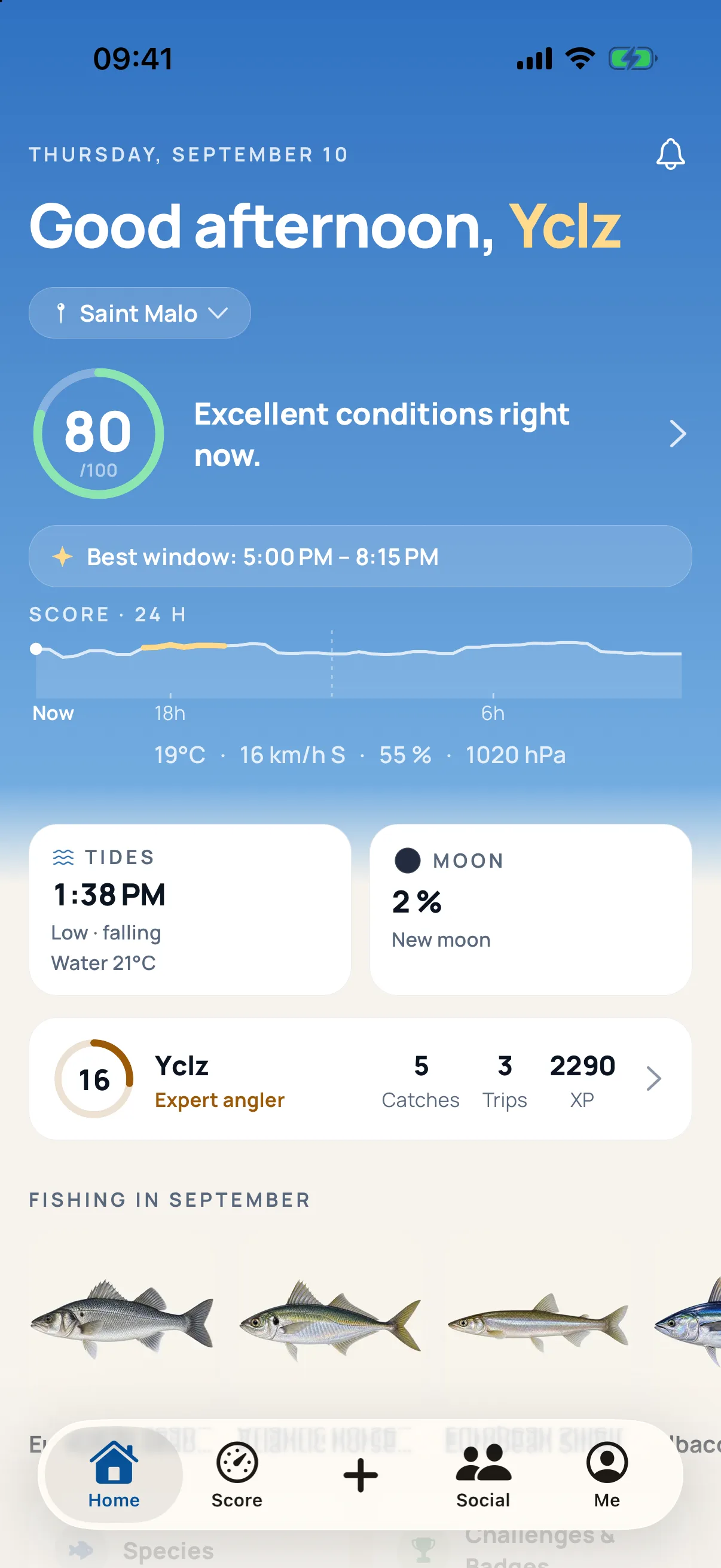
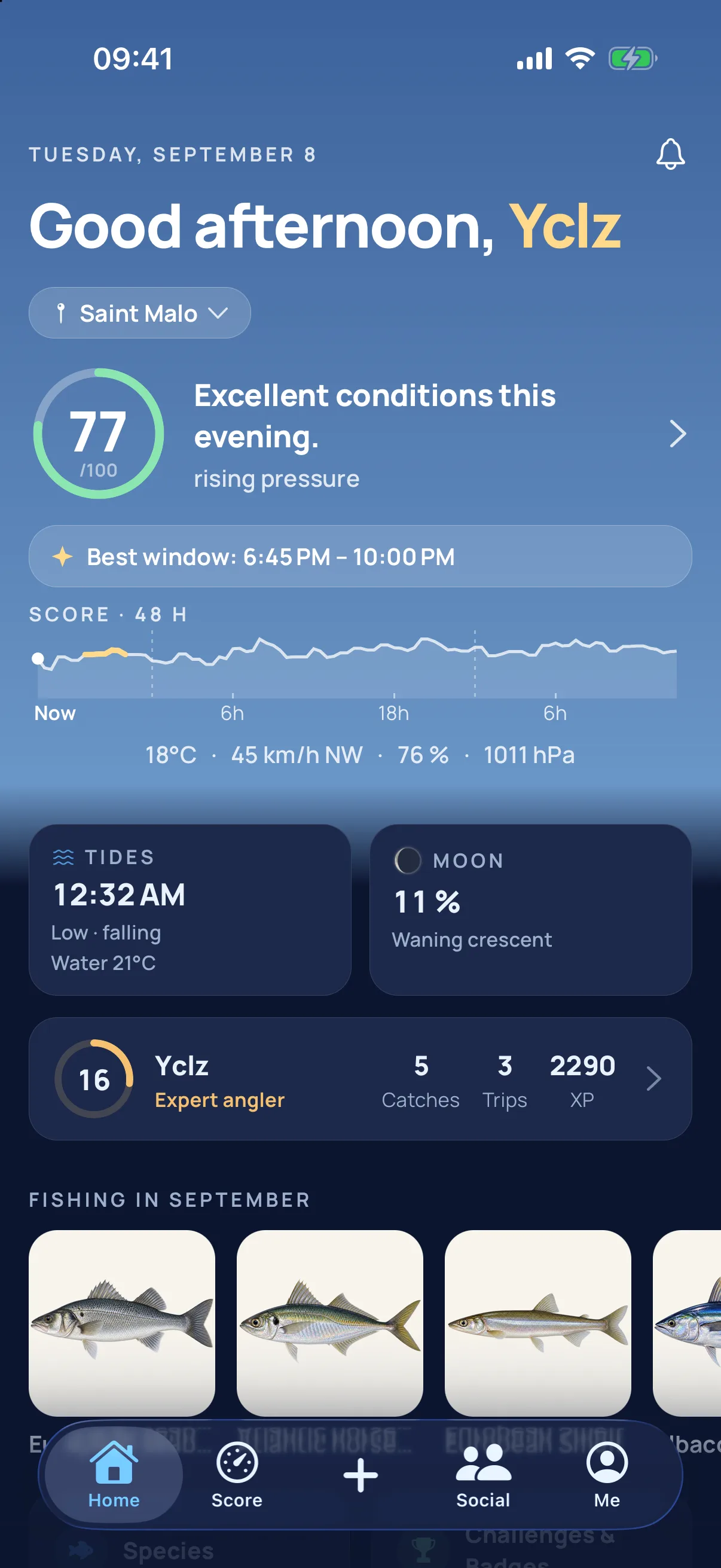
Piscary’s catalogue gives, for each species, the temperature band tied to its activity, built from the biological data available rather than a single rough average. The app also shows the water temperature recorded near a spot whenever a source provides one, so you can compare that figure against the range for whatever you’re targeting before you leave. The aim is to replace a seasonal impression with an actual number, not to claim it can guess a fish’s mood to the degree.