When to fish for pike: season, water temperature and windows
Pike activity tracks water temperature more than the calendar, here are the months and hours that actually work in your favour.
Species covered here
The thermometer runs the season
Pike stay active across a fairly wide band, roughly 50 to 66°F (10 to 19°C). Below that, metabolism slows and strikes become rare. Above about 70 to 75°F (21 to 24°C), warm water holds less oxygen and pike retreat to the coolest water they can find, often deep or tucked under thick weed, moving as little as possible. That temperature band explains why some months produce and others do not, far more reliably than the date on the calendar.
Autumn is the most dependable stretch
Between September and November, water loses heat slowly enough that pike stay active without ever tipping into thermal stress. This is when they feed hardest, building reserves for winter, and the size of what they attack tends to grow through the weeks as the hunt gets more selective and more rewarding. Fish drift out of deep summer haunts and back onto weedy flats and drop-offs as the water cools through the low sixties Fahrenheit, following the baitfish that gather there.
Spring gives a shorter window
After spawning, pike have burned through a lot of reserves and feed with little caution, often close to the shallow, dark-bottomed bays where spawning happened. That said, spring is choppier than autumn: temperature climbs in fits and starts, and a cold snap can shut down activity that had only just picked up. The best results tend to come from the areas that warm first, sunlit shallows and weed just breaking the surface, while the rest of the water is still cold.
Summer is the toughest season
Once water pushes past 70 to 75°F (21 to 24°C), pike fishing turns into a search rather than a broad sweep. You need to find water that still holds oxygen: current entrances, the margins of a weir, confluences, banks shaded by tall trees. Larger fish rarely show through the middle of the day and concentrate early in the morning or late in the evening, once the surface has had a few hours of darkness to cool.
Winter keeps a narrow but real window
Pike never fully switch off, even in cold water, but activity narrows to a few hours around midday while the sun has a chance to warm the surface. Outside that window, your time is usually better spent elsewhere: strikes are scarce and the fish keeps what little energy it has for the essentials.
The hours that repeat each season
Beyond the month, the hour of the day shifts with the season too. In spring and autumn, the two ends of the working day stay the most reliable, and activity can stretch across most of an overcast day. In summer, the coolest hours, early morning and late evening, hold most of the strikes, and the middle of the day becomes a period to avoid rather than explore. Winter reverses that pattern: the warm hours around midday become the only ones really worth fishing.
What the weather changes
Pressure that is steady or dropping gently, paired with a light to moderate wind, tends to help by oxygenating the water and pushing prey against certain banks. Cloud cover extends the useful window by keeping light levels down all day, while a hard summer sun squeezes that window down to the two ends of the day. A sharp pressure drop, on the other hand, often kills the pike’s appetite for a while, before it picks back up once conditions settle at their new level.
The signal that weather is about to turn
A pattern shows up again and again in angler reports: pike often feed more confidently in the hours before wind picks up, pressure falls or the weather takes a small turn for the worse, rather than during the change itself. It shows at any time of year, but becomes especially clear in late summer and autumn, when the first unsettled spells break up a stretch of stable warmth.
Once a front has passed, activity usually drops for a day or two while the fish adjusts to the new pressure and temperature. Heading out right after a big blow or heavy rain, expecting to catch the tail of it, often produces less than the outing the day before, when the weather had only just started to turn.
That pre-change window also explains why two trips to the same swim, days apart with seemingly similar weather, can produce very different results. What matters is not the weather on the day itself, but which direction it is heading at the moment you are fishing.
What separates a catch from a blank
The most common mistake is fishing in summer during the warmest part of the day, in bright light, over water that has nothing left in the way of oxygen at that hour: even an excellent swim turns lifeless under those conditions. The second mistake is ignoring pressure and wind and betting everything on the calendar: a calm, sunny day in autumn can produce less than a windy, overcast day in spring.
What Piscary does with this
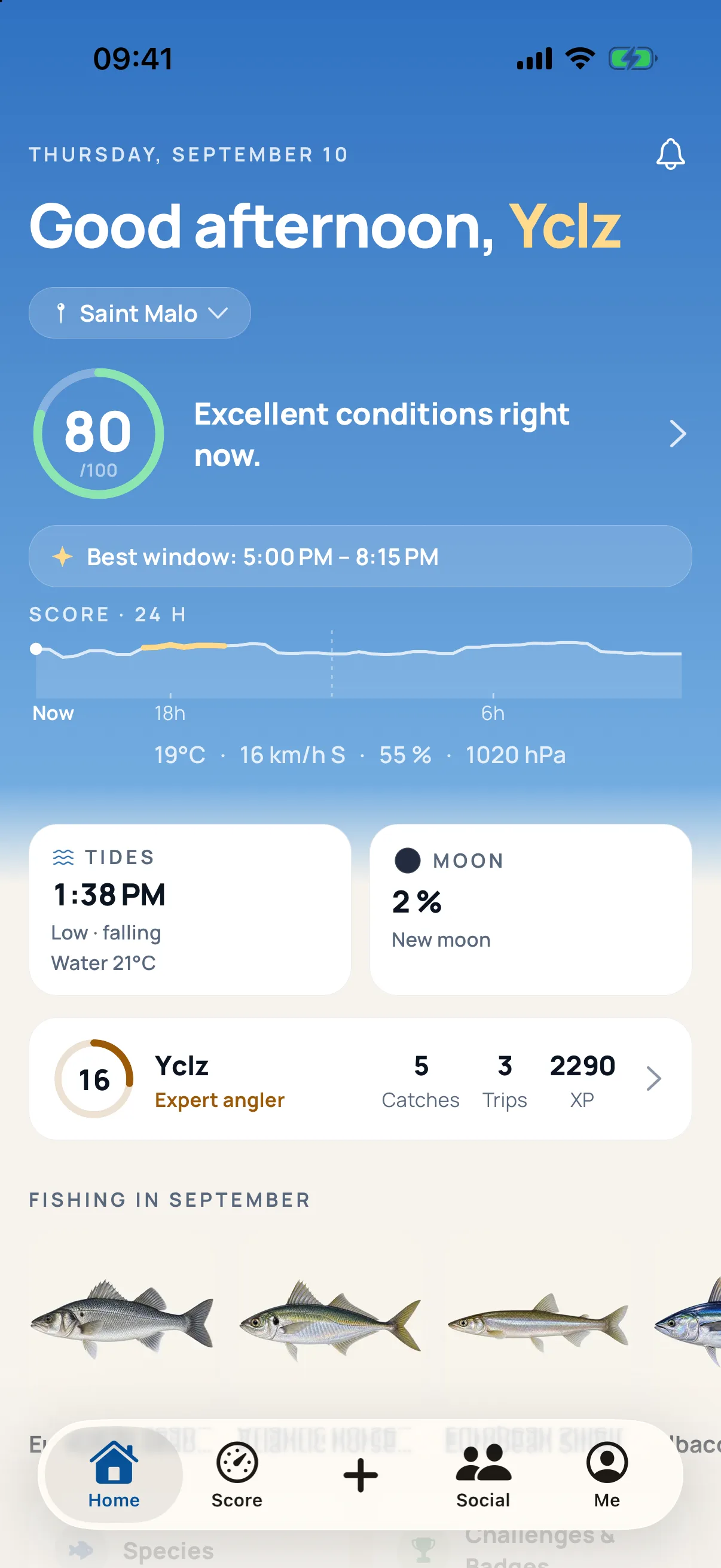
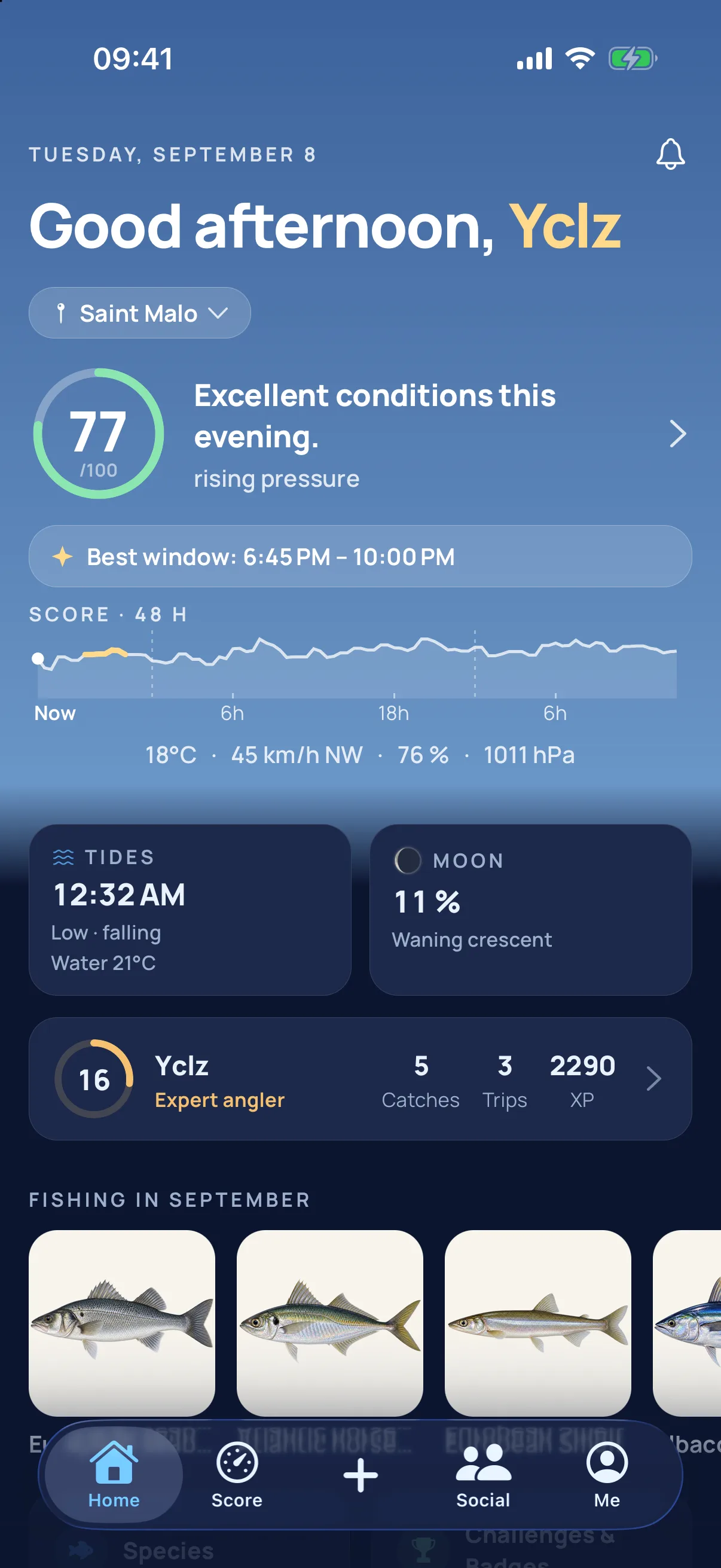
Piscary tracks cloud cover and the day’s weather to build the score attached to each outing, so you do not need to memorise seasonal thresholds, and shows the water temperature alongside whenever a station measures it. The suggested time window recalculates every day against the real sunrise and sunset. Species recognition confirms the catch once it is landed, whatever the season.