When to fish for zander: season, time of day and weather
Zander hunt on low light more than any other predator, so here is how season, time of day and weather line up to put you over feeding fish.
Species covered here
Why light matters more than the clock
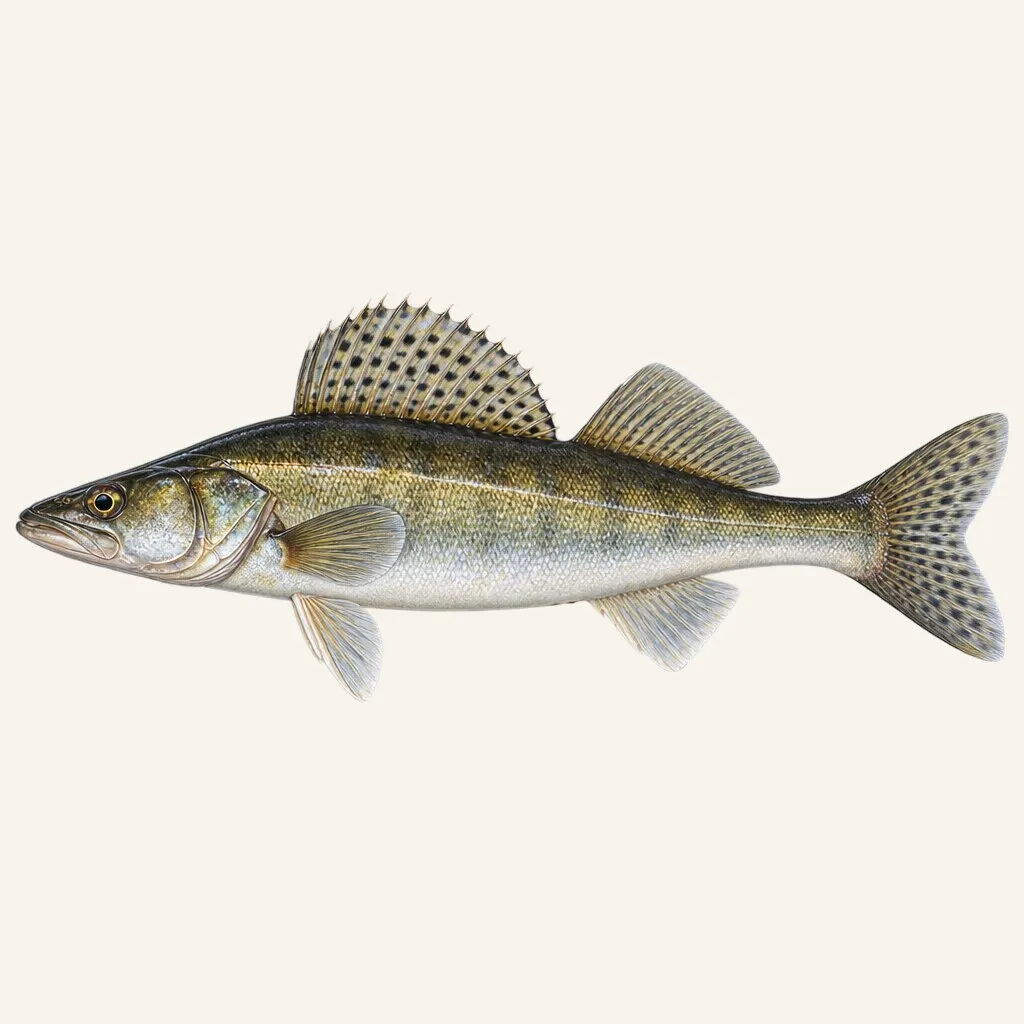
A zander’s eye carries a mirror-like layer behind the retina, the tapetum lucidum, that bounces unused light back through the receptors for a second pass. Combined with an eye that is already larger than a pike’s at the same body length, this lets a zander read a baitfish in conditions where most predators are working blind. That single trait explains almost everything else in this guide: zander switch on as light fades and go quiet once it climbs back up.
In winter, cold water already keeps the fish subdued for most of the day, so bright, high sun at midday does not chase zander off the way it would in July. Come summer, though, a clear sky over clear water shuts the bite down hard outside the low-light hours.
Picking the season
Autumn is the steadiest month to plan around. Water temperature drops gradually rather than crashing, baitfish shoals tighten up, and zander feed hard to build reserves before winter. Because the light change is less extreme than in high summer, activity can spread across most of an overcast day rather than being squeezed into an hour at each end.
Summer is the hardest season to read. Heat stacks a warm, well-oxygenated layer over cooler, poorer water in lakes and slow rivers, and zander shuttle between the two depending on the time of day. Through the middle of the day they tend to sit deep and digest rather than hunt, only moving up as darkness properly sets in.
Spring brings the biggest fish shallow onto gravel to spawn, and the male stands guard over the nest afterwards, fanning the eggs. A pair pulled off that nest and handled slowly leaves eggs exposed to every other fish in the swim, so it pays to look elsewhere on the water for zander that have not started spawning yet, or that have already finished.
Winter narrows the productive window sharply. Fish sit tight to the bottom in the most sheltered slack water and barely move, which calls for a slow, close-to-bottom approach rather than covering ground.
Choosing your hours
Two windows show up again and again in angler reports and guide notes: first light and the last hour before dark. These are the points where light shifts fastest, baitfish bunch up near the surface or the margins, and a zander gets a head start before full daylight sets in, or squeezes in a final push once it starts to fade.
Through summer that pattern shifts hard toward the night. Most of the activity sits between sunset and the middle of the night, once the day’s heat has bled off and darkness covers the whole swim. Fishing the middle of a summer day often means casting into water with plenty of zander in it, just none of them interested, holding tight to the bottom until dark.
Winter flips this pattern almost completely. Zander make the most of whatever stretch of the day the sun has had a chance to warm the surface, sitting deep and barely moving the rest of the time. It is a short window, but frequently the only one worth fishing all day.
What weather changes
Cloud cover stretches the useful window every time, by pushing back the point where light gets too strong. Coloured water after wind or rain has a similar effect: it cuts visibility, which makes a zander bolder and sometimes willing to feed in daylight it would otherwise avoid.
A clear sky over clear water does the opposite, squeezing the best fishing down to the two ends of the day and turning the rest into a waiting game. Wind plays a supporting role too, pushing baitfish against certain banks or points and pulling zander in behind them. A slow pressure change over many hours seems to bother zander far less than a sharp one, which tends to shut the bite down for a while before it settles back into a new pattern.
What separates a catch from a blank
The most common mistake is not lure choice, it is timing: fishing a good swim in full light, out of step with when the fish are actually feeding, produces a blank even on a stretch that holds several zander. The same swim, fished an hour before dark, can turn around completely.
The second mistake is staying glued to one spot all session. A shoal of zander can shift a few metres between midday and evening, sliding up onto a shelf or back down a drop-off as light and temperature change. Working a few different depths across the same area, rather than hammering the same spot, usually reveals where the fish have actually settled.
Finally, a zander bite tends to announce itself by what it lacks: not a sharp knock, but a sudden weight in the line, as if you had hooked bottom. Plenty of takes go unnoticed because the angler is waiting for a pull that never comes.
What Piscary does with this
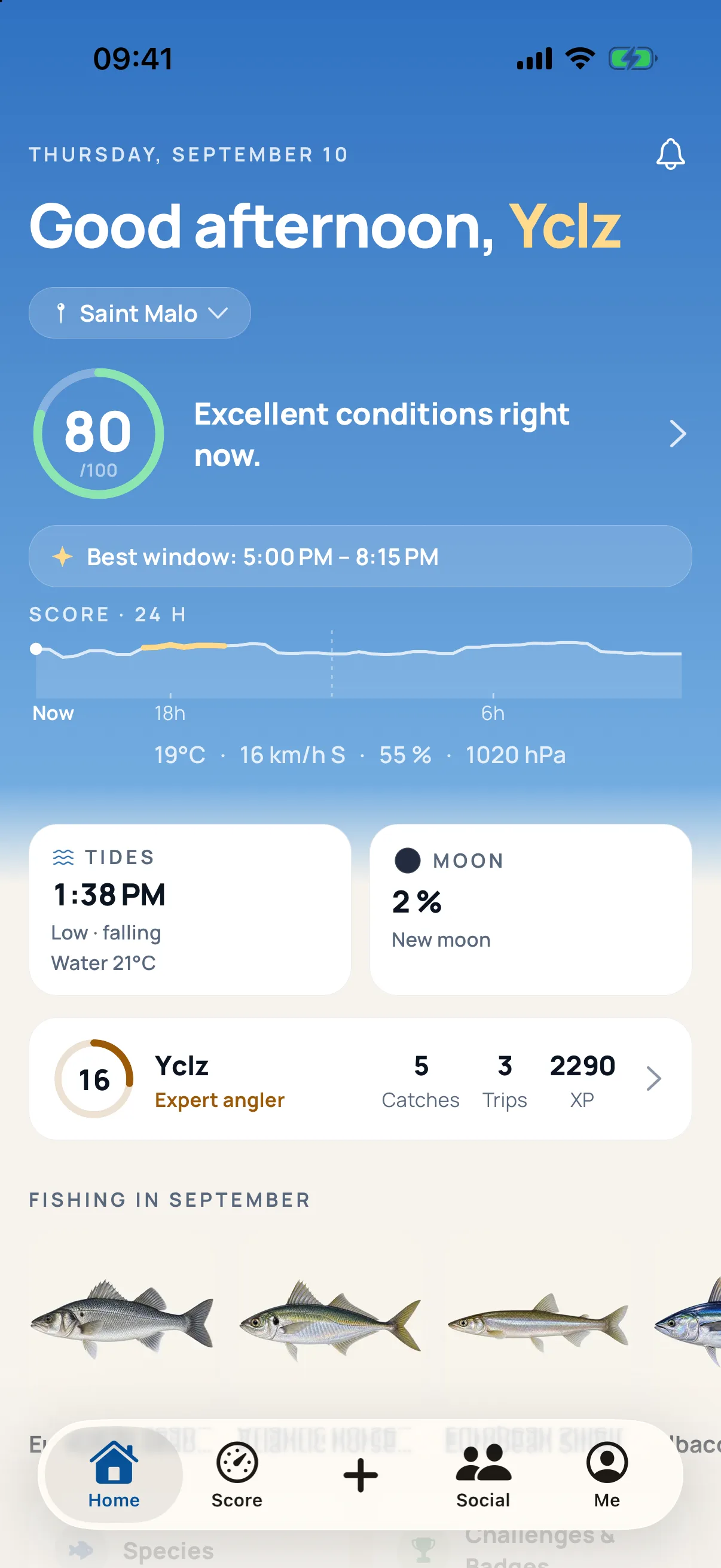
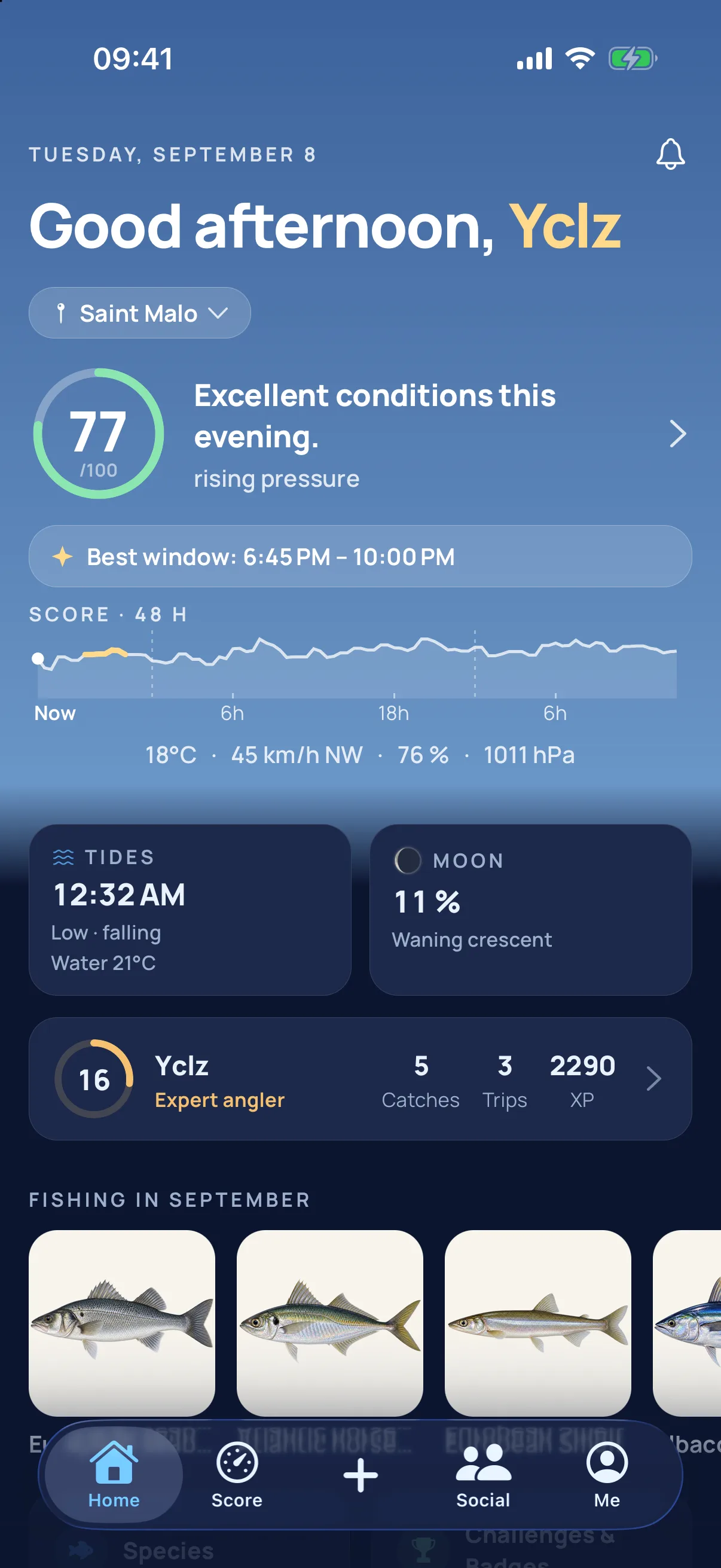
Piscary blends the time, the weather and the light of the moment into a daily score for the spot you are watching, so you do not have to remember temperature thresholds or season-by-season timetables. The window it flags for dawn or dusk shifts automatically as sunset moves through the year. Species recognition can confirm a zander caught outside its usual pattern, and each catch you log helps build a clearer picture of how that spot behaves.