When to fish for trout: flow, temperature and season
Brown and rainbow trout follow water flow and temperature more than the date, here is how to read both signals before you head out.
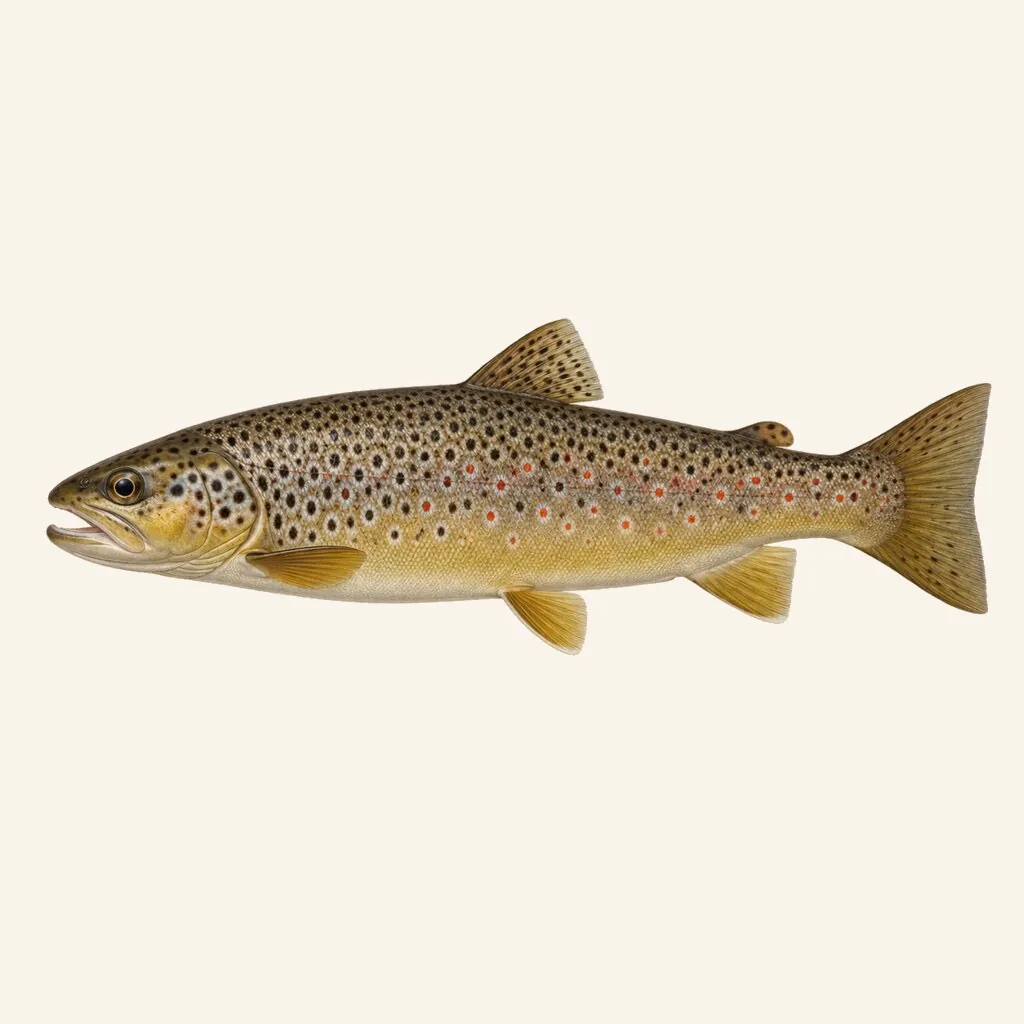
Species covered here
Temperature sets the tone for everything else
Field reports and fishery guides converge on a fairly narrow band: trout feed best somewhere around 52 to 66°F (11 to 19°C), with brown trout tending toward the lower half of that range and rainbows tolerating a touch more warmth. Below roughly 44°F (7°C), metabolism drops right off and feeding shrinks to brief spells. Above about 68°F (20°C), a trout is under real stress: oxygen in the water drops as it warms, and the fish stops feeding almost entirely, pushing instead toward whatever cold water it can find, often a side stream mouth or a pocket of deep shade.
That upper limit is not just a comfort line. One study on wild rainbow trout found fish losing condition and even regurgitating food once water pushed toward 77°F (25°C), well past where feeding makes sense for the fish, whatever the surface conditions look like from the bank.
Flow decides what a trout can actually reach
Temperature only tells half the story. Flow speeds up or slows how fast that temperature moves, and it also decides what food is within reach. A gentle rise in level after modest rain often stirs up insects and small invertebrates from the bottom, which triggers a burst of feeding just downstream of the disturbed water. Places where a smaller stream joins the main flow benefit most from that boost.
Flow that gets too strong flips the picture. A trout struggles to hold position in the main current and drops back into eddies, slack margins or behind whatever breaks the flow, wherever the swimming cost stays reasonable. Water that is both high and rising fast tends to close the fishing down rather than open it up, unlike a small rise that levels off.
The window right after a spate
A rise in water does not fish the same at its start as it does once it settles. While the level is climbing and the water is colouring up, trout take advantage of food knocked loose by the current for a while, but visibility drops fast and fishing gets hard once the water turns properly murky. It is usually in the hours that follow, once flow starts dropping and the water clears back to a light stain, that activity becomes easiest to read: trout sit in the same places they held before the rise, but with an appetite sharpened by everything that washed through earlier.
That gap explains why turning up mid-flood so often disappoints, while coming back to the same stretch a day or two later, once the water has dropped and cleared a little, tends to produce better. Waiting out the drop pays off more often than rushing to catch the rise itself.
How the season follows these two signals
Spring benefits from water warming steadily toward that comfortable range, just as the first big insect hatches build. This is when trout come out of a slow winter and feed with the least caution, both near the surface and down deep.
Summer flips the picture as soon as water pushes past the comfort zone. Fishing narrows to the coolest hours, early morning or late evening, and to stretches that hold onto cooler water: spring-fed sections, cold tributary mouths, deep shade. The rest of the day, a trout stays tucked away and is not worth chasing.
Autumn opens a wider window again, with a real pickup in fish preparing to spawn. They feed hard ahead of winter, often on bigger prey than in spring, which changes tactics as much as timing.
Wild brown trout, born in the river they hold in, stick closely to classic daily timing and turn noticeably more cautious as light gets strong.
What the sky changes
Cloud cover lowers a trout’s guard: it holds higher in the water column and shows itself more, something bright sun never allows. A light, steady breeze breaks up the surface and seems to build the fish’s confidence, on top of pushing land insects against certain banks. Dead calm water, by contrast, makes trout extremely cautious, especially over slow, clear stretches.
Pressure plays a more indirect role: its swings signal a change in the weather to come, and it is often the hours before wind or light rain arrive that produce the sharpest activity, more than the pressure reading at the moment you are actually fishing.
What separates a catch from a blank
The most common mistake in summer is sticking with the middle of the day over water that is already warm and low, long after a trout has stopped looking for food. The trip that works is usually the one that starts before sunrise and wraps up well before the heat sets in.
The second mistake is fishing the same way all season. A dry fly that works in spring, when insects hatch on the surface, loses its edge once the water warms: trout sit lower by then, and a deeper presentation takes over. Not adjusting depth to match the temperature of the day means fishing for a trout that has already moved on.
Finally, ignoring a small rise in water after rain often costs one of the best windows of the season, a short spell that rewards being on the bank more than any piece of tackle.
What Piscary does with this
Piscary works out a daily score from the weather and the position of the spot you follow, so you are not stuck memorising temperature thresholds. The suggested time window moves with real sunrise and sunset through the year, and species recognition tells brown trout and rainbow trout apart from the photo you upload.