Brown trout
Salmo trutta fario · Salmonidae
- Freshwater
- Salmonids
- Medium
- Size
25–60 cm
- Weight
0.2–10 kg
- Lifespan
38 years
- Water temp.
18–24 °C
- Depth
0–28 m
Where to fish
- Lake
- River
Habitat icons: Flaticon
Iconic spotted salmonid of rivers - Many local strains
Calendar
Spawning: fish are vulnerable. Check local rules — closed seasons vary by country.
Recorded in 15 countries
Armenia · Austria · Belgium · Czechia · France · Germany · Ireland · Italy · Luxembourg · Netherlands · Norway · Portugal · Spain · Switzerland · United Kingdom
GBIF occurrence records — native and introduced populations combined.
Its range
The native range covers the Atlantic, North Sea, White Sea and Baltic basins, from Spain to Chosha Bay in Russia, taking in Iceland and the most northerly rivers of Britain and Scandinavia. The upper Danube and the Volga drainage are native ground as well.
One detail shows how recent the whole arrangement is. In the Rhône system this fish is native only to the Lake Geneva basin, which it entered after the last glaciation; everything else in that drainage arrived by human hand. Recolonisation from a handful of ice-age refuges is also why isolated headwater populations differ so much from each other.
From the nineteenth century onwards the species was carried to every cold stream anyone could find — Patagonia, New Zealand, the Rocky Mountains, southern Africa, the highlands of east Africa and Asia. Several of the countries that received it have since recorded ecological damage, generally to native fish that had never met a predator of the kind. FishBase flags it as a potential pest, an odd label for an animal that is also stocked deliberately by the million.
Identifying it
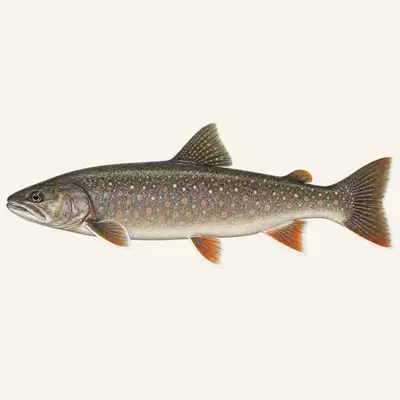
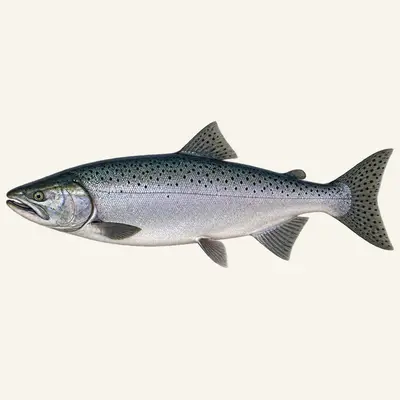
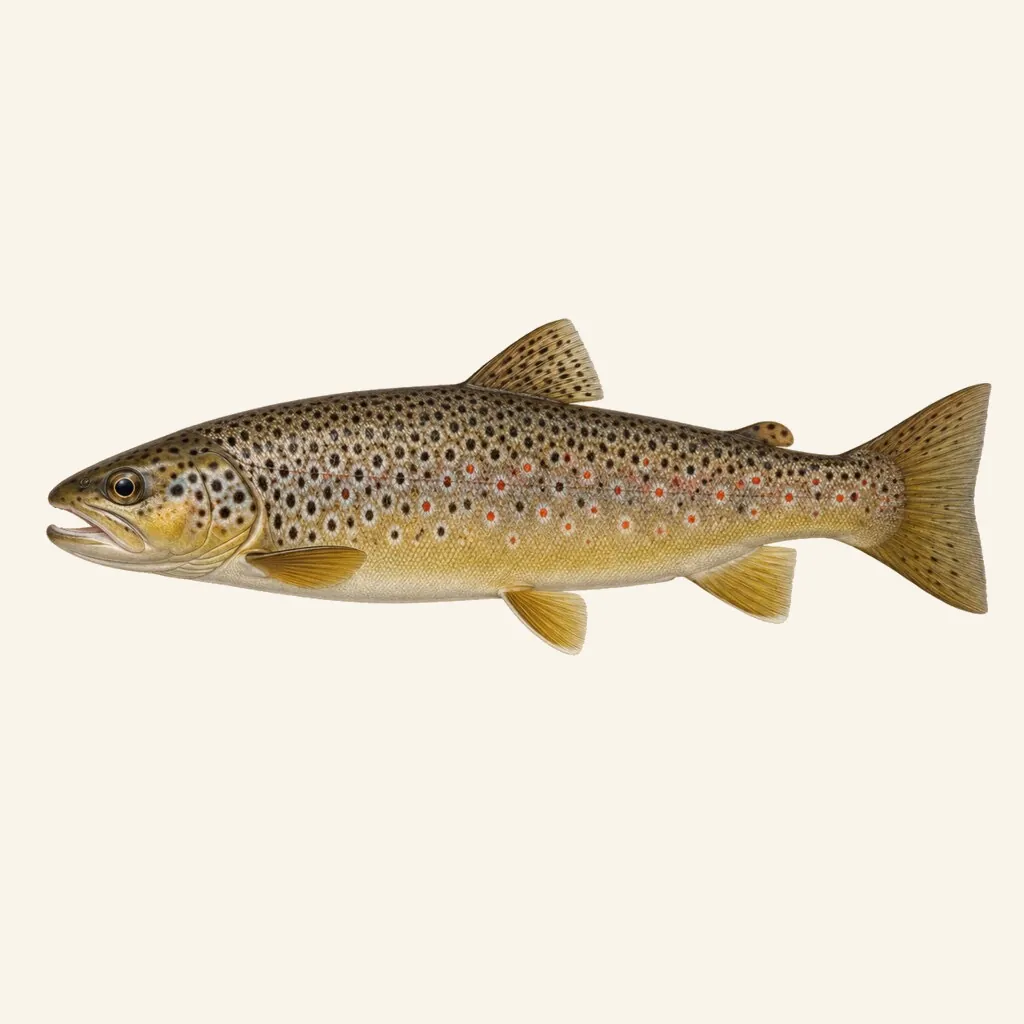
The spotting runs on under the lateral line, and that is the line between this fish and a salmon. The ground is grey-blue, darker over the back, carrying black spots and orange or red ones, each of the red set inside a pale halo. The adipose fin is edged in red.
The mouth settles whatever doubt is left. It is large, opening back well past the eye, and the vomer, the ridge of bone along the palate, is armed along its shaft with numerous strong teeth. The tail wrist is thick and rounded instead of pinched, the caudal fin has 18 or 19 rays, and the scales are small.
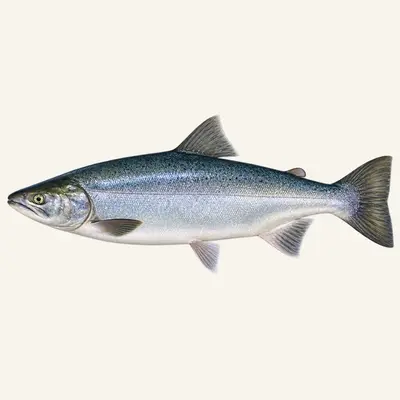
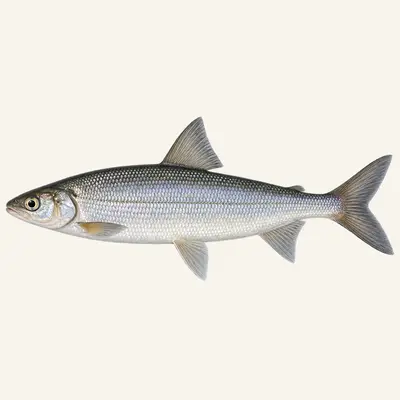
Then the caveat that outweighs all of it: colour on its own means very little here. A fish from a mountain torrent, a fish from a deep lake and a sea trout belong to one species and look nothing like one another. The sea-run form is plain silver, the stream fish dark and heavily freckled, and they were described as separate animals for a long time for exactly that reason.
Breeding
Brown trout spawn where the water sinks into the river bed. The redd is cut in a swift run, and what matters is not simply the presence of gravel but a downward current moving through it, since that is what delivers oxygen to buried eggs. A bed sealed with fine sediment produces nothing, in a river that is otherwise excellent.
A female carries something like 10,000 eggs and covers them after laying by restirring sand and small gravel across the redd. Most spawn more than once in a lifetime.
Alevins hatch at 12 mm and stay down among the stones for two to three weeks, living on the yolk sac, until they measure about 25 mm. Only then do they come up to feed in the water column.
Competition starts immediately. Territorial behaviour appears in the juveniles, and it is the reason a healthy river holds a modest number of trout rather than a crowd: the water is divided into holdings, and the shape of the bed fixes how many holdings there are.
Lake populations move to breed, running up inlet streams or dropping to the outlet, and spawning on wave-washed stony shores happens but is unusual. Their young leave the natal stream for the lake within their first two years. Fish are mature at three or four.
The water it needs
Cold, quick, oxygen-rich upland water, and less warmth than a rainbow trout will accept. That difference in tolerance is documented, and it decides which of the two holds on as a river heats. Where the climate softens, brown trout withdraw upstream into the headwaters and downwards into deep lakes.
After temperature comes cover. Submerged rocks, undercut banks and overhanging vegetation are what a lie is made of, together with a current seam bringing food past it. A straightened channel with tidy banks and an even bed can carry the right temperature and still be empty.
Territoriality completes the picture. Each fish holds a station and defends it. A good lie holds one trout, not three, and it is generally occupied again soon after the resident is removed.
Some populations go to sea, spending six months to five years in salt water. They feed in coastal and open water but rarely stray far from the mouth of their own river, and they come back at a size the resident form never approaches. The same genome yields a 30 cm stream fish and a sea trout of several kilos, and the oldest on record reached 38 years. Published weight records vary widely between sources; what matters here is that none of the largest figures came out of a small brook.
Areas
- Cool oxygenated rivers
- fast streams
- high-altitude lakes
Techniques
- Lures
- Flies
- Worms
- Wax worms
Baits
- Spinner
- Minnow lure
- Dry flies / nymphs
What it eats
Trout hunt by day and by eye. The young live on insects taken from the drift, aquatic and terrestrial in roughly equal measure; older fish add molluscs, crustaceans and small fish, and the lake and sea forms end up feeding largely on fish in open water.
The terrestrial half of that diet deserves attention, because it ties the fish to the bank rather than to the bed. Overhanging trees supply food and shade at once, which is why the awkward, cluttered side of a river is usually the productive one.
Hunting by eye also separates this species from the predators of coloured water. Turbidity works against a trout instead of for it.
How to catch it
Territoriality organises the entire approach. Since one station holds one fish, a river is fished by moving: cover the lie, then go up to the next. Standing over a spot that has already refused a good presentation costs the twenty lies that should have been fished in that time.
Direction follows from where the fish sits. A trout faces into the current, so it has its back to anyone wading up behind it, and the angler works from below. Fine lines and a low profile matter because the water is clear and the fish is watching for movement above it. A shadow thrown across a pool spoils it for the next hour.
Light governs timing. Overcast days and the ends of the day beat bright noon, and a hatch compresses everything into twenty or thirty minutes during which the fish is both easier to locate and far more particular about what it will take.
Temperature governs the season. In very cold water a trout sits deep and stops lifting to anything. In summer heat it collects where springs enter and in the cool pockets of deep pools, and the fishing moves to first light.
Conservation
Spawning gravel is where the pressure lands. Eggs need a clean bed with water moving through it, and fine sediment closes that bed — from eroded soil, from discharges, from a weir slowing the current just enough to let silt settle. A river can hold its adult trout for years after it has stopped producing a single fry, which is why a stock that looks stable can fail without warning.
Temperature is the second pressure, and it works upwards from the bottom of the catchment. Each degree gained deletes another stretch of habitable water at the downstream end, so lowland populations go first and headwaters become refuges.
The third is invisible from the bank. A century of stocking with hatchery strains has mixed populations that had been separate since the ice withdrew. A trout from an isolated headwater may belong to a lineage found in that stream and nowhere else on earth, which gives careful release a meaning beyond the individual fish in the net.
Regulations
Min. size 20-25 cm depending on area / Closed during the spawning season
For guidance only. Legal sizes, quotas and open seasons vary by location and season: always check the local regulations in force before fishing.
Other names
Brown trout is the standard name, and English then makes a mess of everything around it. Sea trout and lake trout are used in Britain for the migratory and lacustrine forms of this same species, but in North America lake trout means Salvelinus namaycush, a char, and brook or speckled trout means a second char again. A British angler and an American angler saying the word trout are often not discussing the same family.
Regional British names survive for the sea-run fish: sewin in Wales, peal in the West Country, finnock or whitling for small ones in Scotland. Anglers across Europe borrow fario, from the old trinomial, for the river-resident form, and German makes the split openly with Bachforelle for the stream fish and Seeforelle for the lake one.
Sources: fishbase.se · api.gbif.org