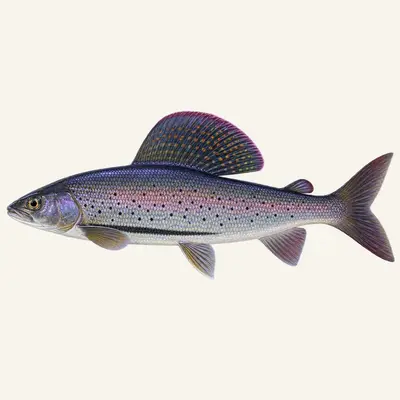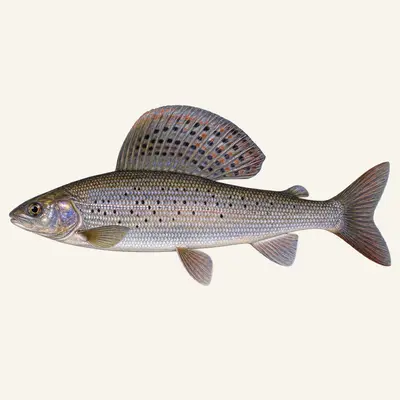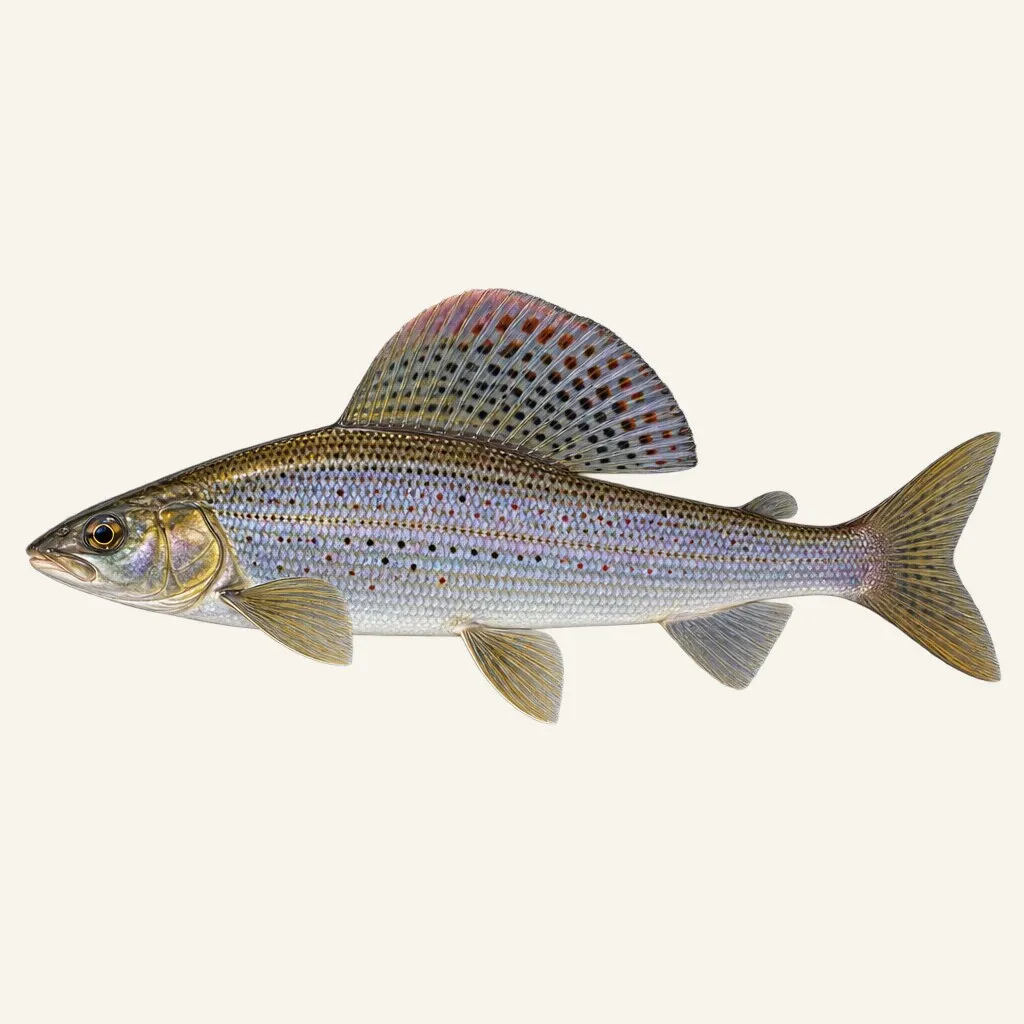
Adriatic grayling
Thymallus aeliani · Salmonidae
- Freshwater
- Salmonids
- Hard
- Size
30–50 cm
- Weight
0.3–2.0 kg
- Lifespan
14 years
- Water temp.
6–18 °C
Where to fish
- Pond
- River
Habitat icons: Flaticon
A species distinct from the common grayling - Endemic to the Adriatic basin
Calendar
Recorded in 1 country
GBIF occurrence records — native and introduced populations combined.
Identifying it
There is no field character that separates an Adriatic grayling from a European one, and the honest thing is to say so.
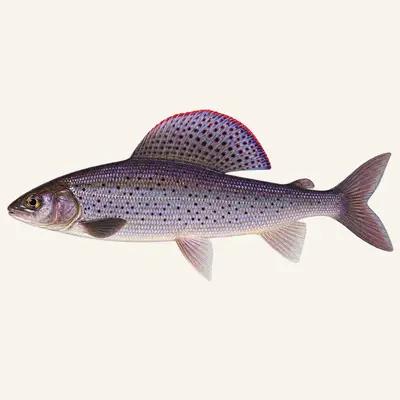
The reference entry for this species carries the diagnosis of the European grayling itself: maxilla usually reaching the front margin of the eye, pelvic fins grey without red stripes, body without red spots, dorsal greyish with parallel rows of round dark spots, 19 to 30 gill rakers averaging around 25.
Identification therefore rests on geography rather than on a lens. A grayling from the Soča basin or a northern Adriatic tributary belongs to this species; the same fish in the Loire or the Rhône belongs to the other.
The water it needs
Like its close relatives it occupies submontane reaches with hard sand or stone bottom, in cold, fast, well-oxygenated water, holding in the hollows behind boulders and in shaded water under overhanging vegetation. It is a shoaling fish.
Areas
- Fast-flowing mountain rivers
- Riffles and gravel beds
- Pools under riverbanks
- Torrent confluences
Techniques
- Fly fishing
- Light lures
Baits
- Flies
- Micro spoons
Conservation · Endangered (IUCN) — This species is threatened with extinction. Always release it (no-kill), handle it with the utmost care and check local rules — fishing for it may be prohibited.
Conservation
What happens to this species depends on a decision in taxonomy rather than on anything in the river.
While Adriatic graylings were counted with European ones, no assessment distinguished them. Separating them cuts the reference range and the reference population at a stroke, without a single fish having changed.
That situation is common and instructive. Stocking Adriatic basins with graylings of transalpine origin was long treated as reinforcement; the moment the two lineages are held to be distinct, the same practice becomes a question of mixing.
Regulations
Check the local regulations in force (legal size limits, closed seasons, bag limits).
For guidance only. Legal sizes, quotas and open seasons vary by location and season: always check the local regulations in force before fishing.
Other names
Adriatic grayling in English, temolo in Italian — a name Italian applies to the European grayling as well, which leaves older Italian accounts ambiguous about which fish they describe. The specific name honours Claudius Aelianus, the Roman author whose writings contain one of the earliest descriptions of fly fishing.
Sources: fishbase.se · api.gbif.org