Apache trout
Oncorhynchus apache · Salmonidae
- Freshwater
- Salmonids
- Hard
- Size
25–58 cm
- Weight
0.2–2.4 kg
Where to fish
- Lake
- River
Habitat icons: Flaticon
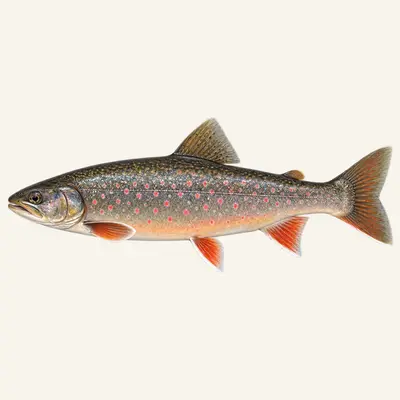
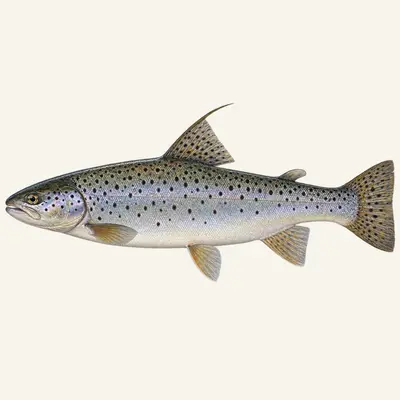
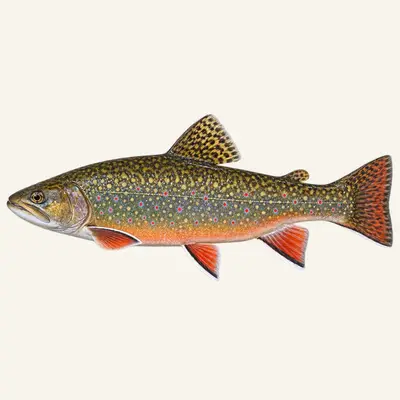
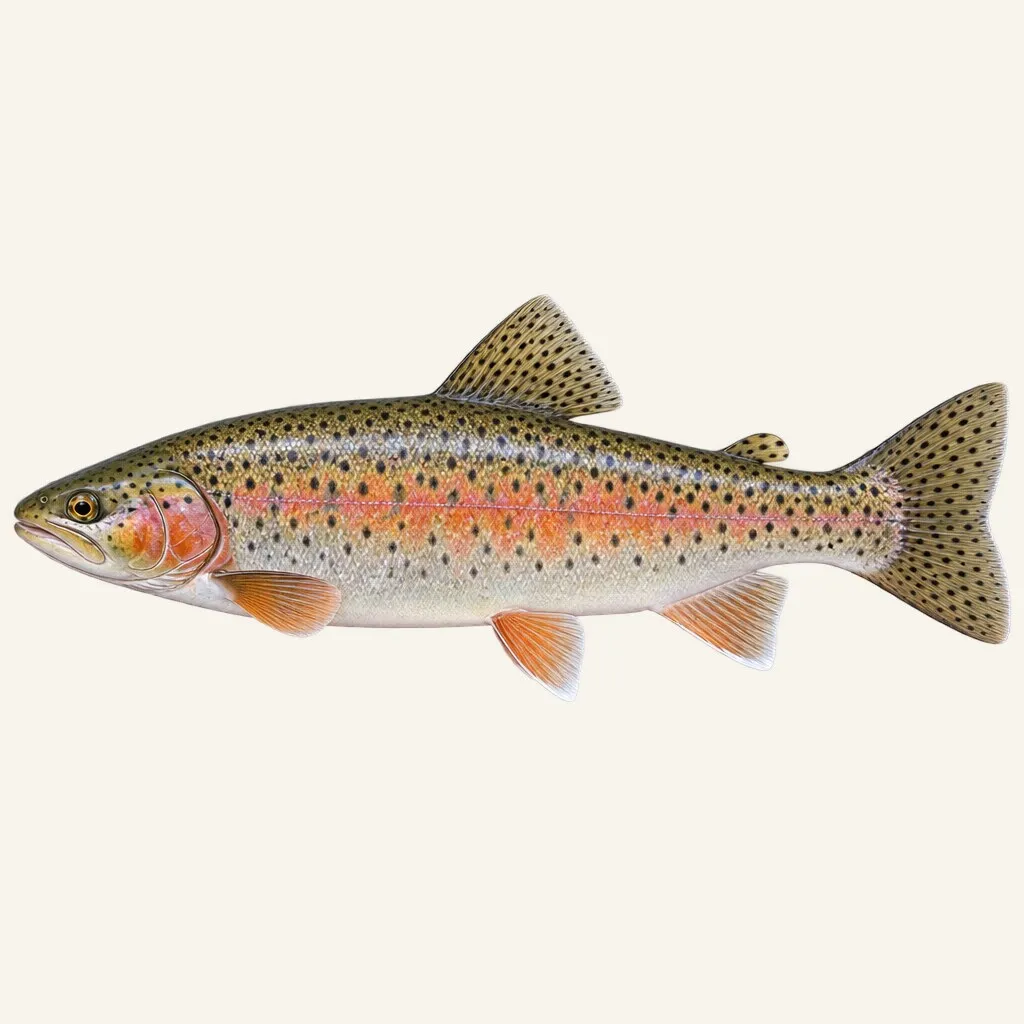
The Apache trout is a salmonid endemic to the high mountains of Arizona, with a stocky body covered in black spots on a golden-olive background.
Calendar
Recorded in 1 country
GBIF occurrence records — native and introduced populations combined.
Its range
Ninety-five per cent of the stream kilometres this trout once occupied are no longer occupied. The figure is measured in linear stream length, not in range area, and that is the correct unit for a fish living in ribbons of water a few metres wide.
What remains is divided between the upper Salt River and the Little Colorado system, both tributary to the Colorado, in Arizona. No other region of the world holds it naturally.
Neither a dam nor a pollution event caused the retreat. Three salmonids brought in from elsewhere did the work: rainbow trout, which crosses with it, and brook trout and brown trout, which take its place. The first mechanism dissolves and the other two displace, and all three acted on the same creeks at the same time.
The water it needs
Adults hold in clear cold mountain headwaters and creeks, generally above 2,500 m, and in mountain lakes. That is the highest elevation demanded by any of the south-western trouts.
Nothing in the cycle reaches salt water. The consequence is the same as for its regional neighbours, but it is aggravated here by fragmentation: the occupied segments are separated by downstream reaches now held by the introduced species, which act as a biological barrier where there is no physical obstacle at all.
Areas
- Mountain streams
- Cold springs
- Shaded riffles
- Small high-altitude lakes
Techniques
- Dry fly
- Nymph dead-drift
- Light streamer
- Ultra-light spinning
Baits
- Artificial fly
- Nymph
- Streamer
- Terrestrial insects
- Earthworm
How to catch it
The format sets the exercise: 25 cm on average. That means fine tackle, hooks in proportion and quick handling, on fish of which each individual counts at the scale of the species.
What really separates this fishing from any other is identification. On reaches where rainbow trout were released, a normal-looking fish may be a cross, and the difference is not judged from the bank. Where pure populations are maintained, the local manager knows which ones they are, and the question comes before the trip rather than after it.
Traditional use on the lands where the fish survives is a subsistence one.
Conservation · Critically Endangered (IUCN) — This species is threatened with extinction. Always release it (no-kill), handle it with the utmost care and check local rules — fishing for it may be prohibited.
Conservation
Hybridisation is the hardest of the threats to repair, because it leaves no gap behind. A creek overrun by crossed fish stays full of trout that look identical, and the original population has nonetheless ceased to exist as such. Nothing is visible, on the ground or in a count.
Competition from the two other introduced salmonids produces a more legible result: the native trout disappears from the reach and is replaced by a fish out of eastern North America or Europe.
The third factor is the fragmentation that follows. Each surviving population occupies a short isolated segment with no exchange with the others. A hillside fire followed by an ash flow, a severe drought, or one badly placed release can wipe out a whole population, with no natural return possible from downstream.
A last point concerns the record rather than the water: the most recent international assessment of the species dates from 1 August 1996. Thirty years have passed, restoration programmes have run in Arizona over that time, and the picture that assessment gives is of an old state of affairs.
Regulations
Check the local regulations in force (legal size limits, closed seasons, bag limits).
For guidance only. Legal sizes, quotas and open seasons vary by location and season: always check the local regulations in force before fishing.
Other names
Apache trout, in every language of the catalogue, after the people on whose lands most of what survives is found — much of it in tribal water closed to fishing well before any federal protection existed, which is the reason there was anything left to protect. The scientific epithet repeats the same reference, which is unusual: most trouts in this genus carry a river name or a colour adjective. Arizona names it as its state fish.
Sources: fishbase.se · api.gbif.org