Amur grayling
Thymallus grubii · Salmonidae
- Freshwater
- Salmonids
- Hard
- Size
31 cm
Where to fish
- River
Habitat icons: Flaticon
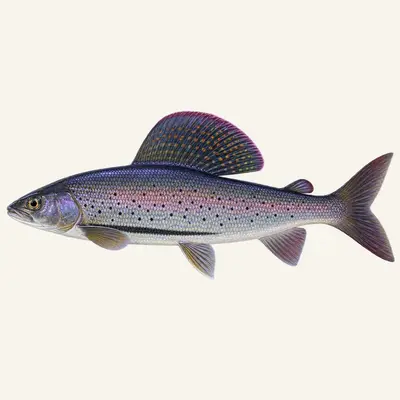
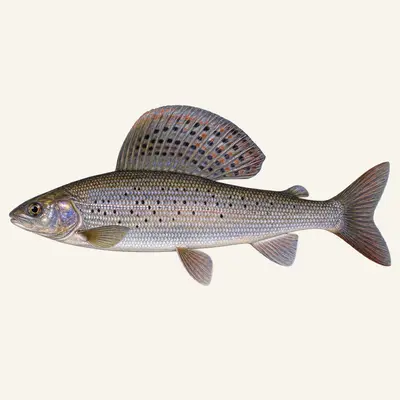
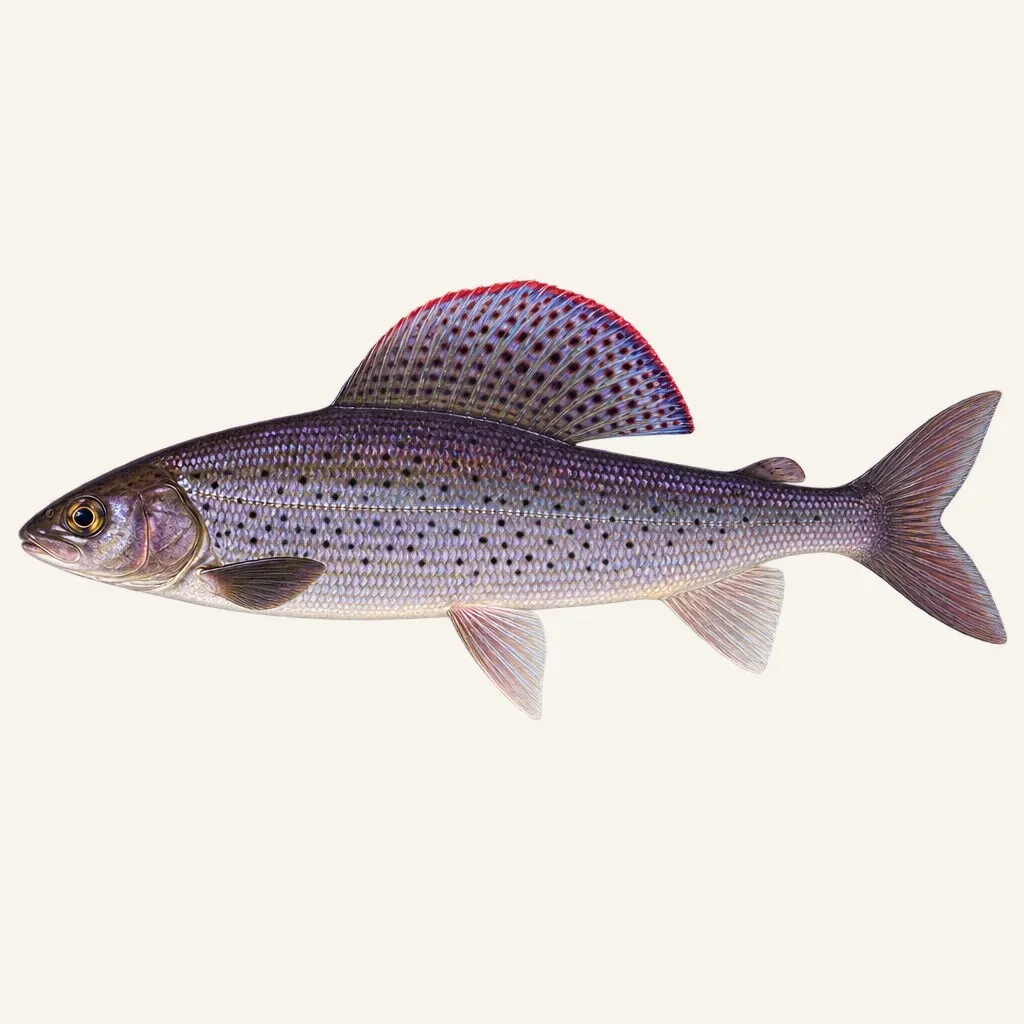
The Amur grayling is a salmonid of the cold, fast-flowing rivers of the Amur River basin in East Asia, featuring the genus's characteristic tall, colorful dorsal fin. Its elongated, slightly laterally compressed body bears silver scales scattered with small dark spots along the back.
Calendar
Recorded in 1 country
Russia
GBIF occurrence records — native and introduced populations combined.
Its range
The species holds the Amur drainage in Russia and China, and the Onon and Kherlen drainages in Mongolia.
It is a closed continental range with no access to the sea, centred on a single great river system.
Identifying it
The back is dark purple, the flanks a little lighter and scattered with many small dark spots. The dorsal is edged in purplish red mixed with spots; the pelvic and anal fins are paler, the pectoral dark.
The body is elongate — more slender than the European graylings — and the species is small.
The water it needs
Position reverses with the season, and it reverses the wrong way for a grayling.
In winter the adults move into the deep parts of mountain streams. In summer they occupy clear, slow-flowing water thick with aquatic weed.
Every other grayling seeks current in the warm months. Here the slow weedy summer water is the living space and the depth is only a cold refuge. Anyone applying European habits to this fish will look in the wrong place for half the year.
For spawning, the fish gather in shoals in clear, fast streams.
Areas
- Amur basin rivers
- Gravel riffles
- Current flats
- Confluence zones
Techniques
- Dry fly fishing
- Light nymphing
- Toc fishing
- Ultra-light spinning
Baits
- Small dry flies
- Light nymphs
- Insect larvae
- Bloodworms
- Small spoons
What it eats
It feeds on benthic organisms and insects.
Its small size and small mouth keep it on fine prey, with none of the shift towards fish that large graylings sometimes show.
How to catch it
Looking for an Amur grayling in the same place in January and July gets nowhere: this is a fish that moves between deep torrent pools and slow weedy reaches. The season decides the sector before the method decides anything else.
Its modest size calls for light tackle, and its benthic diet for imitations of bottom invertebrates as much as of surface insects.
Regulations
Check the local regulations in force (legal size limits, closed seasons, bag limits).
For guidance only. Legal sizes, quotas and open seasons vary by location and season: always check the local regulations in force before fishing.
Other names
Amur grayling in English, sometimes Lower Amur grayling to distinguish it from other graylings of the same basin, which has more than one. The genus name records the smell of thyme on a fresh fish.
Sources: fishbase.se · api.gbif.org