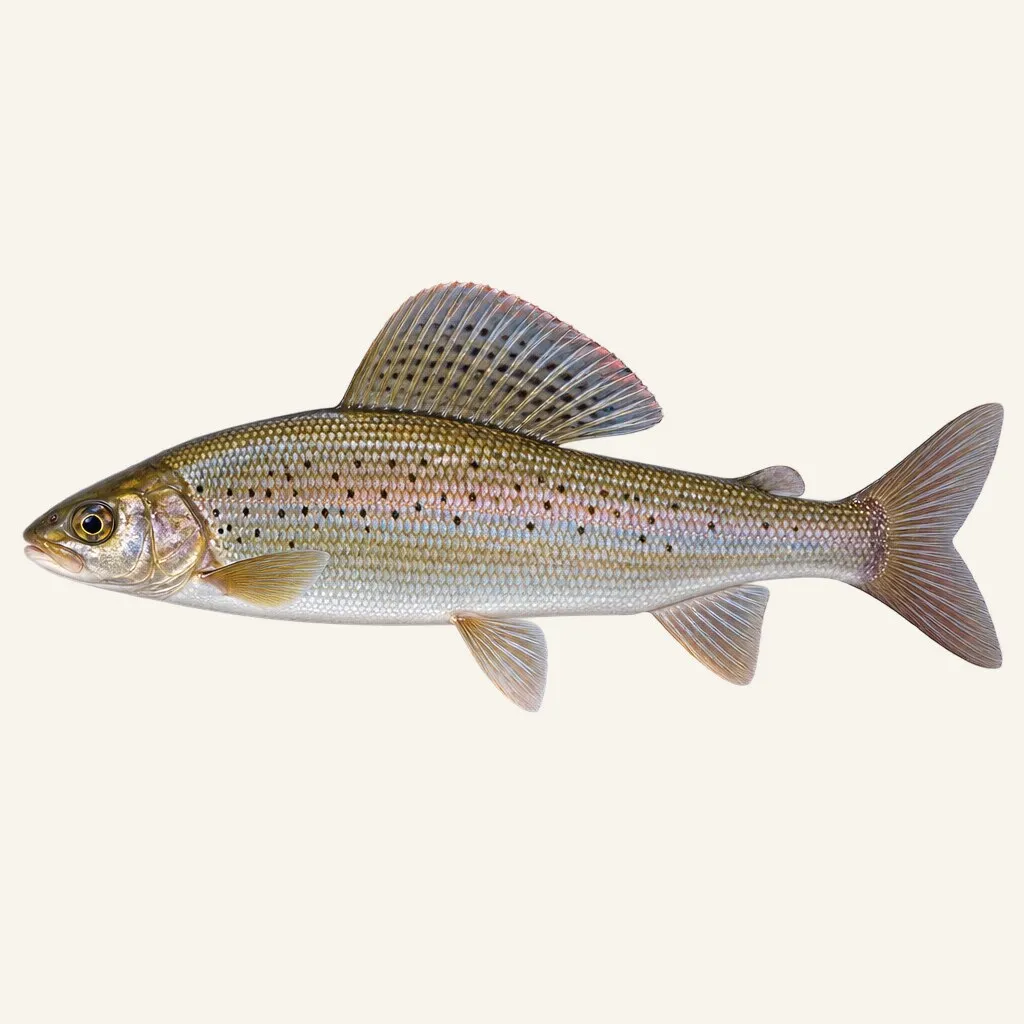
Korean grayling
Thymallus yaluensis · Salmonidae
- Freshwater
- Salmonids
- Hard
- Size
20 cm
Where to fish
- River
Habitat icons: Flaticon
Inhabits very cold and clean rivers. It has the most beautiful shape and fins of any fish.
Calendar
Identifying it
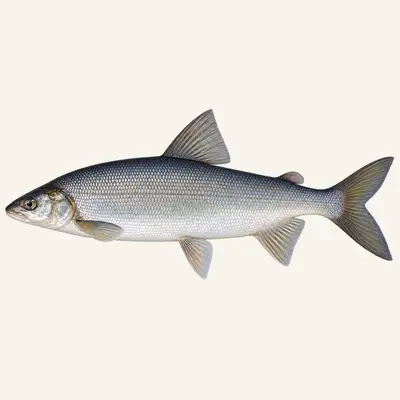
The dorsal carries 21 to 22 soft rays and no spines, the anal 12 or 13. The body is fusiform.
This is a small grayling, about half the length of most of its relatives. The Korean ichthyological literature calls it one of the most beautiful freshwater fish of the region — an unusual judgement to find in an identification key, and worth passing on for what it says about the fish's reputation rather than its anatomy.
The water it needs
It occupies very cold and very clean rivers. That double requirement is most of what is known about it, and it is enough to place its range: mountain headwaters, where the water has taken on neither heat nor load.
A fish defined by the cleanliness of its water disappears from a reach before it becomes rare in it. Its presence therefore says more about the river than about the fish.
Areas
- Yalu River and tributaries
- Shallow riffles
- Clear current flats
- Oxygenated rocky areas
Techniques
- Dry fly fishing
- Ultra-light nymphing
- Toc fishing
- Ultra-light spinning
Baits
- Very small dry flies
- Micro-nymphs
- Insect larvae
- Bloodworms
- Tiny spoons
How to catch it
The first job is finding the water rather than the fish: very cold, very clear, high in the catchment. Once the reach is identified, the species' small size governs everything else — light tackle, small imitations, and care in water transparent enough to show an angler standing on the bank.
Regulations
Check the local regulations in force (legal size limits, closed seasons, bag limits).
For guidance only. Legal sizes, quotas and open seasons vary by location and season: always check the local regulations in force before fishing.
Other names
Yalu grayling in English, after the river on the Chinese-Korean border where it was described. The genus name records the smell of thyme on a freshly caught fish, which holds for this species as for the rest.
Sources: fishbase.se · api.gbif.org