Lenok
Brachymystax lenok · Salmonidae
- Freshwater
- Salmonids
- Medium
- Size
55–70 cm
- Weight
2.0–8.0 kg
Where to fish
- River
Habitat icons: Flaticon
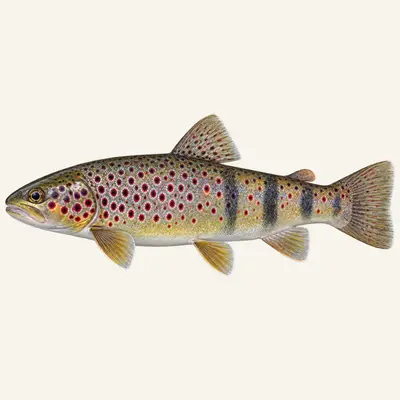
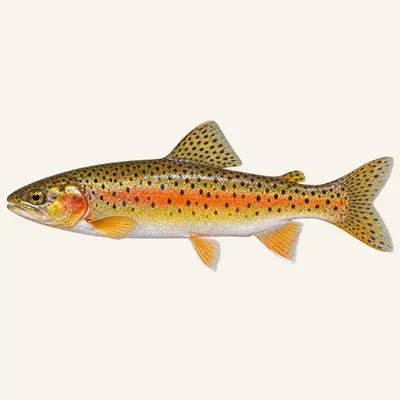
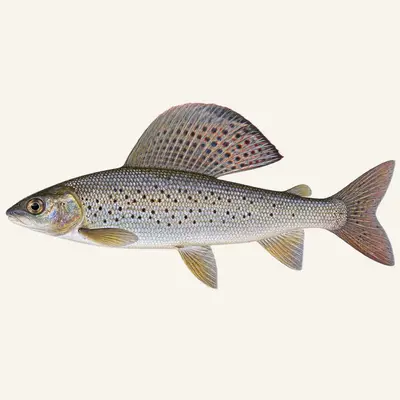
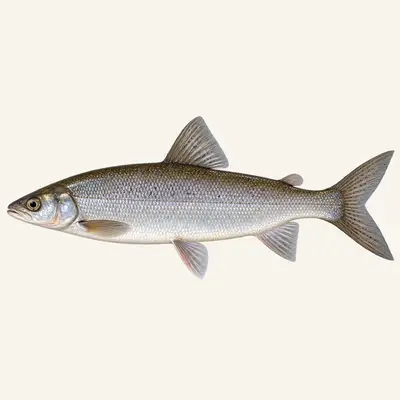
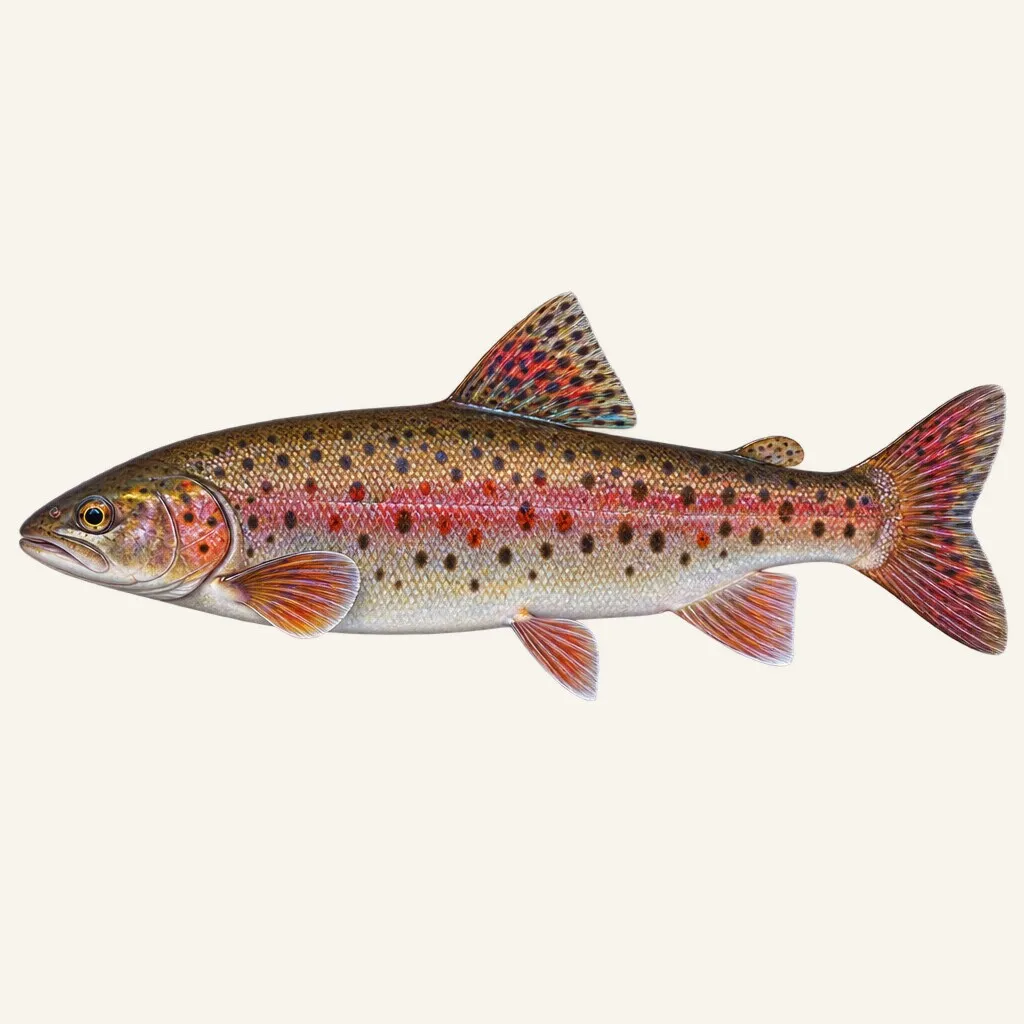
The Lenok is an Asian salmonid with a stocky body covered in small dark spots, with a subterminal mouth adapted for capturing benthic invertebrates.
Calendar
Recorded in 2 countries
Mongolia · Russia
GBIF occurrence records — native and introduced populations combined.
Identifying it
Small dark spots over a stocky body, and a mouth set beneath the snout. Both characters come from the catalogue entry on this page, and they have to, because the FishBase summary for the species has no morphology rubric at all — no ray counts, no vertebral count, no scale rows, nothing on colour.
The subterminal mouth is the one carrying information. The entry calls it adapted to taking benthic invertebrates, which is a functional reading, and it agrees with what the diet rubric holds. It also agrees with the genus name.
Breeding
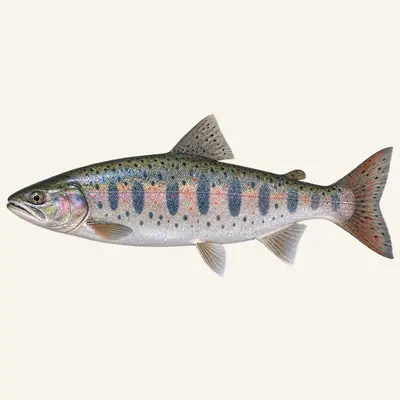
One element of the breeding biology is published, and it is the livery. The body turns dark red; the dorsal and the pectorals, those two fins by name, run through a range of colours. No date, no substrate, no depth, no egg count, no age at maturity.
The signal implies its own conditions. Colour of that intensity is only worth producing in water where it can be seen, which fits the cold clear rivers the species occupies and contradicts nothing else in the file.
It has an immediate use as well. A fish in that dress is a breeder in the middle of breeding, recognisable without measurement or examination by whoever is holding it.
The water it needs
It is under the ice from late autumn through the winter, and that is where the record leaves it for half the year.
That half is the interesting one, because most river fish drop out of an account at that point and this one does not. The other refuge sits at the opposite end of the year: through summer the fish looks for deep cold water, below whatever the surface has warmed to.
The two are connected by a statement the file makes plainly — it never goes to the sea. Cold water is the requirement and the river is where it has to be found, in a hole in August and under a lid in January. Neither position resembles the other, and nothing in the annual cycle depends on an estuary.
Areas
- Rocky rapids
- Plunge pools
- High-altitude riffles
- Torrent confluences
Techniques
- Tight-line nymphing
- Dry fly
- Small spinner
- Light streamer
Baits
- Artificial nymphs
- Local dry flies
- Earthworms
- Small spinners
What it eats
A mouth built to pick invertebrates off the bed, on an animal that eats mice.
Both halves are in the file. The invertebrate half is the ordinary business: insects as larvae and as adults, and amphipods, the gammarids of the stream bed. Small fish come next. Then, in another register entirely, frogs and mice.
The fourth item is the one that organises a season. It eats salmon spawn. A fish feeding on eggs positions itself behind spawning migrants, holding below occupied gravel and taking what the current lifts out of it, which makes its feeding calendar a copy of somebody else's breeding calendar. When the salmon run, the lenok is downstream of them.
How to catch it
Mice first, because that item changes what is worth tying on. Adults take mice and frogs, so the upper end of the size range for a surface presentation on this species is a good deal larger than a stocky river salmonid would suggest, and the fish will come up for it.
Eggs second. The species feeds on salmon spawn, which puts an egg imitation below occupied gravel at the right time of year in the strongest position available. The fish is already there for that reason.
Insects third, and they are the everyday: nymphs and emergers through the periods of insect activity, which is what the list of methods here is built around.
Then the seasonal geography, which is counter-intuitive on a mountain river. Summer means fishing deep, because the requirement is cold water and in August the cold water is down. Winter moves everything under the ice, where this is one of the river fish still feeding.
Growth is slow and the record says so in as many words. A common length of 55 cm is reached over a long time, so a good fish is an old fish — and nothing about the weight of the animal calls for heavy tackle.
Conservation
Slow growth and a commercial fishery. Those are the two facts in the file that bear on each other, and their combination is the whole of the argument.
A stock taking years to produce a marketable fish does not refill at the rate a fishery empties it, and the shortfall does not appear in the catch total. It appears in the composition of the catch. A worked river goes on producing lenok long after it has stopped producing large ones, because the old year classes go first and are the slowest to come back.
Two figures that would let any of this be checked are missing. No maximum age is published for the species and no age at first maturity, so slow-growing is the only demographic statement available and it cannot be converted into a rate. The catalogue carries no lifespan for the species either.
Regulations
Check the local regulations in force (legal size limits, closed seasons, bag limits).
For guidance only. Legal sizes, quotas and open seasons vary by location and season: always check the local regulations in force before fishing.
Other names
Lenok arrived in English with nothing attached to it. The word is Russian, ленок, and French, German, Spanish, Italian and Portuguese all take it unaltered. Set that against the rest of the family in English — brown trout, brook trout, Arctic char, chum salmon, each of which hands over a colour, a place or a habit — and the borrowed name is a blank. It identifies the fish only for somebody who already knows it.
Brachymystax is more forthcoming. It joins brachys, short, to mystax, the upper lip or moustache, and describes the short snout that goes with the mouth set under it — the character the entry above picks out.
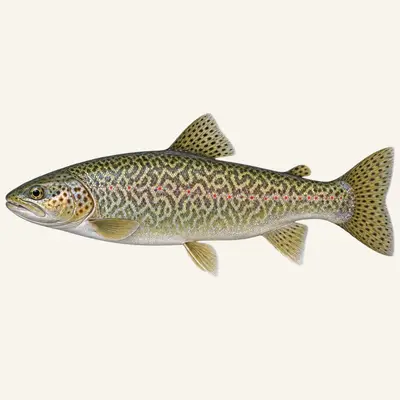
Lenok is also the name older literature applies to fish now treated as separate species, the Tumen and Qinling lenoks of this catalogue among them. A reference to lenok in a source predating those splits may be about any of the three.
Sources: fishbase.se · api.gbif.org