Macedonian vimba
Vimba melanops · Cyprinidae
- Freshwater
- Carp & coarse
- Easy
- Size
20–32 cm
- Weight
0.1–0.8 kg
Where to fish
- River
Habitat icons: Flaticon
Aegean basin vimba - Less well known than the common vimba
Calendar
Recorded in 3 countries
Bulgaria · Greece · North Macedonia
GBIF occurrence records — native and introduced populations combined.
Its range
A single basin. The species occupies the northern Aegean drainages from the Maritsa to the Pinios, across Turkey, Greece, Bulgaria and North Macedonia, between roughly 40 and 43 degrees north.
A range of that size is the central fact about the animal. There is no reservoir population elsewhere to recolonise from, every river holding it shares the same summer climate and the same pattern of water use, and a pressure applied across the region is applied to the whole species at once.
Identifying it
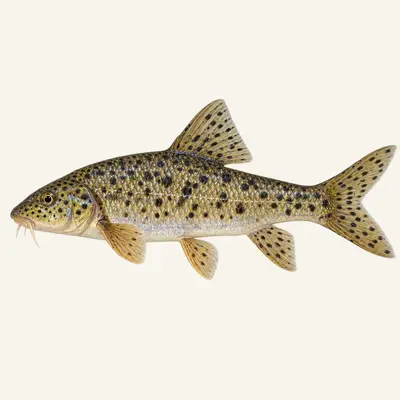
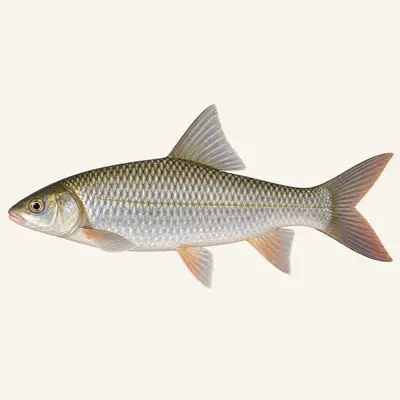
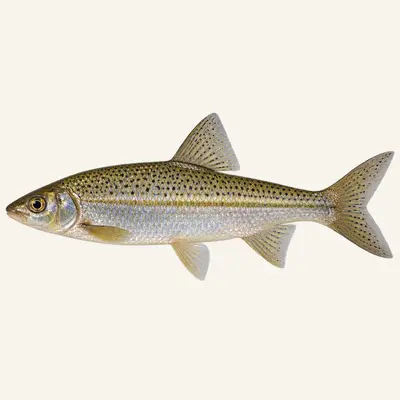
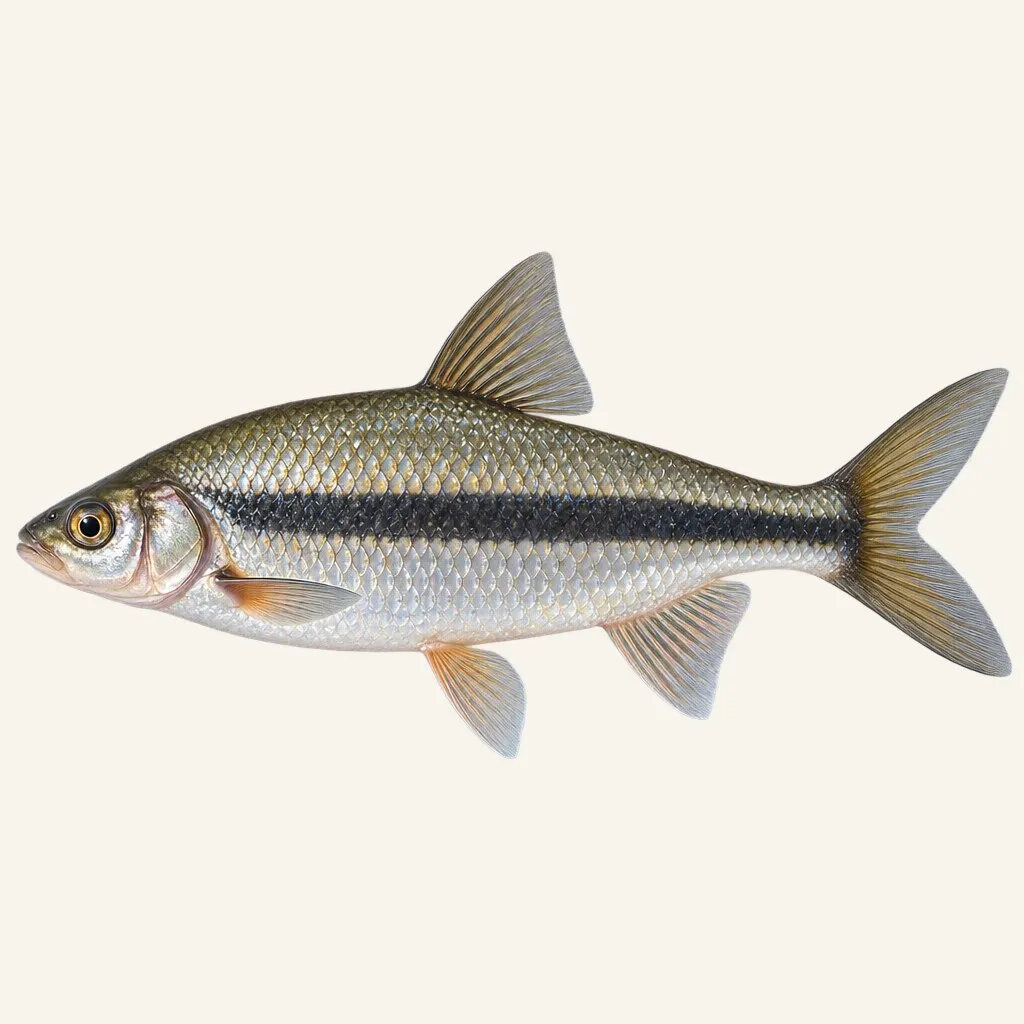
The back is not keeled behind the dorsal fin. The stretch between the fin and the tail stays rounded, and the published diagnosis of this species opens on that absence because the other European member of the genus is diagnosed on the presence of exactly that ridge. The two descriptions answer each other, which makes this one of the rare cases where a negative character is safe to use.
The anal fin holds 15 to 18 and a half branched rays and usually 16 and a half — a narrow range, narrower than its congener's, and the second element of the diagnosis.
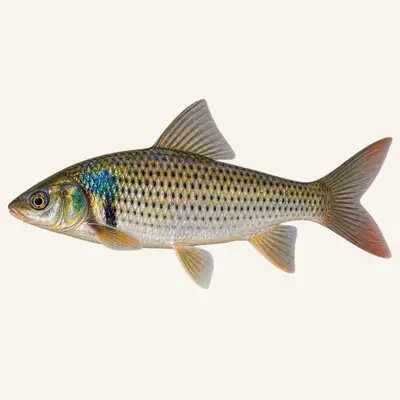
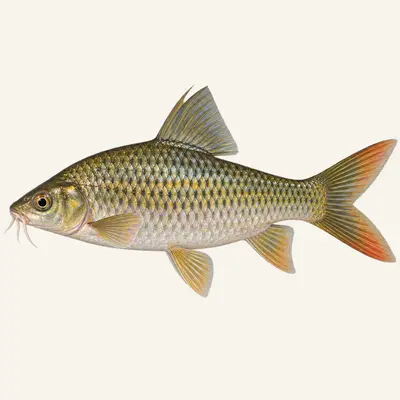
The third is seasonal and unambiguous. A male in spawning condition carries a broad black band along the middle of the flank, with the belly and the cheek left white. The other species goes the opposite way at the same season, dark-bodied with an orange cheek. One glance at a ripe male in spring separates them without a count.
Breeding
Spawning happens among stones in large rivers, and that is the entire published account.
It is worth being precise about the size of that gap rather than passing over it. For the vimba bream the literature gives a fecundity of 15,000 to 20,000 eggs, an age at first spawning of six or seven years, the months in which the migration starts and stalls, and the behaviour of spent fish afterwards. For this species none of those exist: no egg count, no age at maturity, no timing, no incubation period, no description of what the fish does before or after. What is known is a substrate and a kind of river.
That matters for more than completeness. Every practical judgement about protecting a spawning population — when to leave a reach alone, how long a year class takes to replace, whether one failed season is recoverable — depends on figures this species has not had measured.
The water it needs
Rivers and streams with a relatively brisk current, and also lakes and lowland watercourses where there is barely any. That is a wide tolerance for a fish confined to a small corner of Europe, and it means the species cannot be looked for by water type alone.
Areas
- Gravel shallows
- Calm areas near current
- Shaded river banks
Techniques
- Feeder
- Float ledgering
Baits
- Maggots
- Worms
What it eats
Invertebrates and plants. The account goes no further than those four words, and nothing is on record about proportions, seasonal shifts, or the size at which the diet changes.
Conservation
Three pressures are recorded together: habitat destruction, water abstraction, and angling.
The middle one is the mechanism to watch in this particular geography. These are Mediterranean-climate rivers with hot dry summers, drawn on hard for irrigation, and abstraction in such a system does not merely lower a level — it disconnects reaches, strands gravel and stone above the water line, and concentrates whatever else is in the river into what remains.
Angling appearing on that list is unusual and deserves to be read literally, because the species is also fished commercially and is treated as a sport fish across its range. A fish taken from a range this narrow is a larger fraction of the whole than the same fish taken from a Danube population, and the absence of any published figure for fecundity or age at maturity means nobody can say what the sustainable fraction is.
Regulations
Check the local regulations in force (legal size limits, closed seasons, bag limits).
For guidance only. Legal sizes, quotas and open seasons vary by location and season: always check the local regulations in force before fishing.
Other names
Macedonian vimba is the usual English name, and it names the range rather than the fish, which is what tends to happen to species that reach print through a regional fauna and never acquire an angler's name in English.
The species epithet is built on the Greek for black and for eye or face, and the black-banded, white-cheeked spawning male is the likeliest source of it. The genus name is a Baltic vernacular word for its northern relative, so this fish carries an Aegean identity under a Baltic label.
Sources: fishbase.se · api.gbif.org