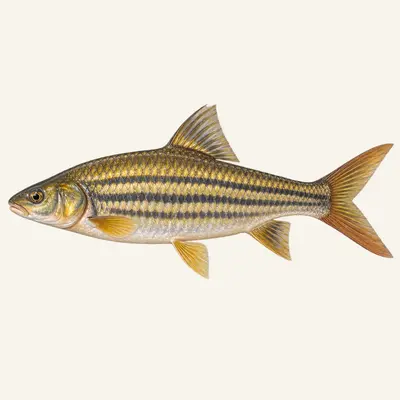
Northern straight-mouth nase
Pseudochondrostoma duriense · Cyprinidae
- Freshwater
- Carp & coarse
- Medium
- Size
40 cm
Where to fish
- River
Habitat icons: Flaticon
Found in the middle reaches of rivers, in areas with current. Feeds on plant matter supplemented by small invertebrates and detritus.
Calendar
Identifying it
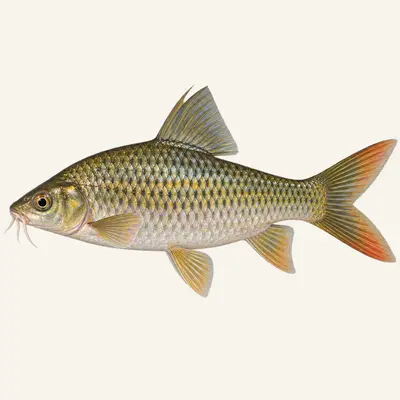
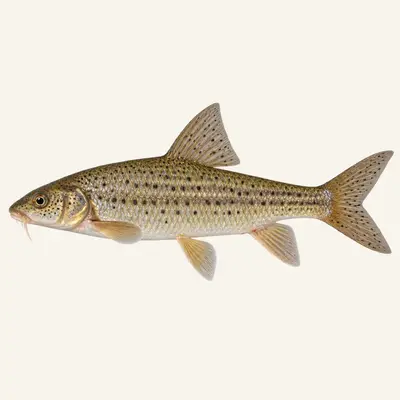
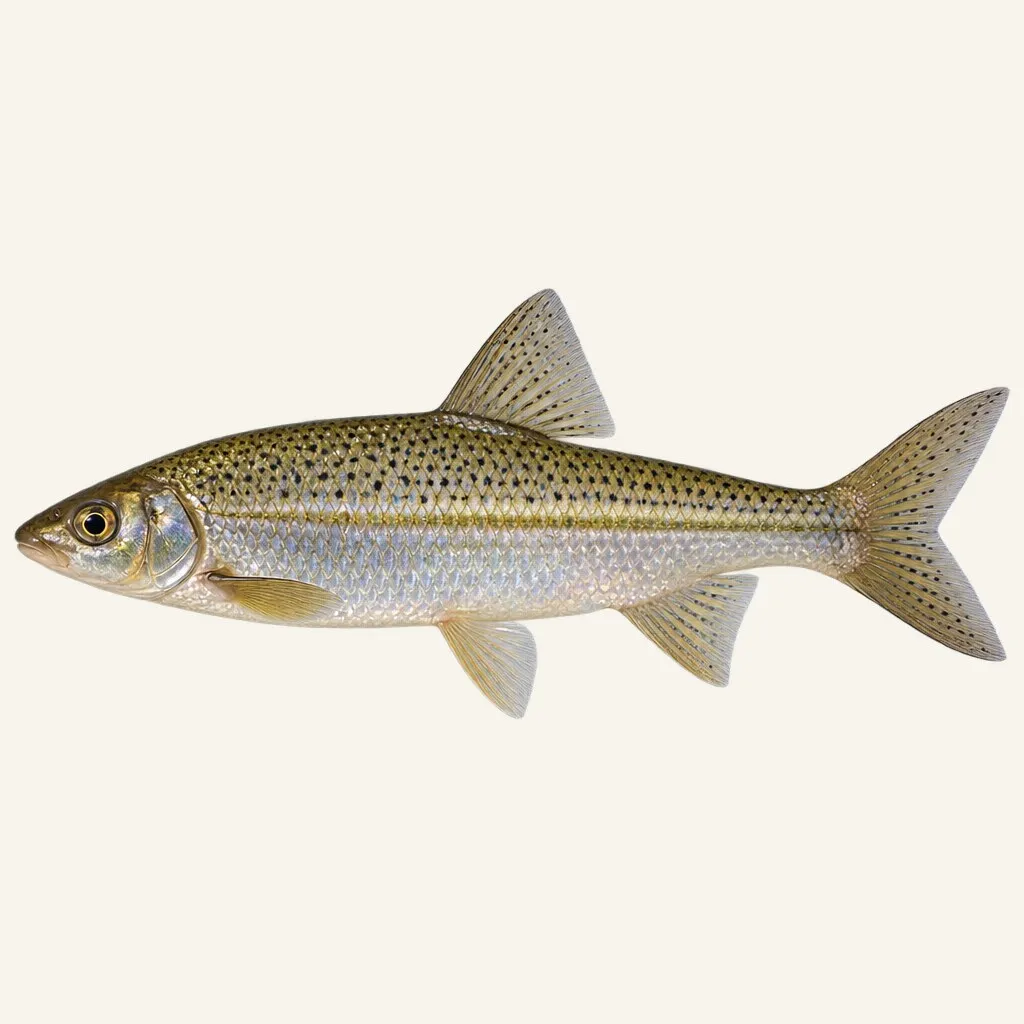
One of the identification characters comes with a postcode attached. The upper half of the body carries numerous small black dots — and the diagnosis assigns that stippling only to fish from Portugal and Galicia. It is a character that is valid in part of the range and unstated for the rest, which is rare enough in a key to be worth memorising before a fish taken elsewhere is named on it.
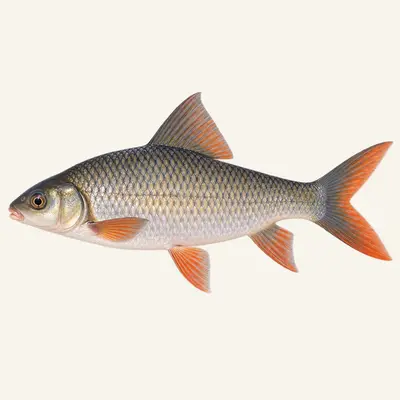
The characters that hold everywhere are duller and more reliable. The edge of the lower jaw is slightly arched. The lateral line carries 60 to 70 scales with three or four more on the base of the tail, which is fine scaling for an animal of this build. The anal fin usually shows eight and a half branched rays and the gill arch 18 to 24 rakers.
The wrist of the tail supplies a proportion that can be judged rather than measured: its depth goes 1.9 to 2.1 times into its length, so it is twice as long as it is deep, and the eye settles that at a glance.
Breeding
Spawning runs from April to June, and the useful detail sits in front of it: shoaling is reported as strongest during the pre-spawning migration. That is the point in the year when the entire adult population of a reach travels as one body.
An annual movement of that kind does not have to be long to be fragile. It only has to be possible — every year, in both directions, on a river whose summer flow is already the limiting factor. A migration that fails leaves the adults alive and in place, which is why nothing about the reach looks different afterwards.
The water it needs
The middle stretches of rivers, in the sections where current is maintained. The fish lives in shoals, which makes the reading of a reach binary — it holds them or it does not, and there is no thin scattering to be searched out in between.
Nothing in the record puts this species in still water, and nothing puts it in the headwaters. It occupies the band where a river is already substantial and still moving.
Areas
- Gravelly shallows
- Shaded banks
- Moderate currents
- Stream confluences
Techniques
- Bolognese fishing
- Light feeder
- Float fishing
- Bottom fishing
Baits
- Maggots
- Bloodworms
- Bread flake
- Corn kernels
What it eats
Adults live on plant material, with small invertebrates and detritus behind it.
No cyprinid has teeth in its jaws; the work is done further back, on the pharyngeal bones in the throat. This species carries five of them on each side, in a single row. Five large teeth in one file grind and crush — they do not cut, and they do not need to. Soft fibrous material and the fine matter that settles with it are exactly what such an arrangement is for, and the 18 to 24 gill rakers sort the same load on the way in.
Between the arched jaw edge at the front and the five-tooth mill at the back, the entire feeding apparatus of this fish is set up for material that does not move.
How to catch it
A plant feeder does not come to an imitation of prey, and there is no point trying to make it. Bread flake, corn and soft pastes match the diet directly; maggots and bloodworm cover the invertebrate fraction, which is real but secondary.
The presentation goes to the bed in moving water — a light feeder, a Bolognese float run through, or a simple bottom rig held in the gravelly shallows, along shaded banks and at the confluences where a tributary drops its load. The mouth is low-slung and the jaw edge only slightly arched, so a bait sitting proud of the bottom is a bait above the fish.
Shoaling settles how a session is spent. A swim that produces one fish will produce several; a swim that produces nothing in the first twenty minutes is a swim to leave, and covering ground beats sitting it out.
Conservation · Near Threatened (IUCN) — This species is in decline. Release your catch quickly and handle it with care — wet hands, as little time out of the water as possible.
Regulations
Check the local regulations in force (legal size limits, closed seasons, bag limits).
For guidance only. Legal sizes, quotas and open seasons vary by location and season: always check the local regulations in force before fishing.
Other names
The English name states a character the diagnosis contradicts. Northern straight-mouth nase describes a straight mouth; the published description of this species records a lower jaw whose edge is slightly arched. The name is doing generic work — it separates the group from the arched-mouthed grazers of the same rivers — and it overstates the case for this member of it.
Every other name in the catalogue points at one river instead. French boga du Douro, Spanish boga del Duero, Portuguese boga-do-Douro, and the epithet duriense in Latin: four names, one basin, and the fish occupies more than that basin alone.
That leaves the qualifier northern to do the separating in English, against congeners further south on the same peninsula. It is the least memorable part of the name and the only part that identifies anything.
Sources: fishbase.se · api.gbif.org