Mud carp
Cirrhinus molitorella · Cyprinidae
- Freshwater
- Carp & coarse
- Medium
- Size
15–55 cm
- Weight
0.0–1.5 kg
- Water temp.
22–26 °C
- Depth
5–20 m
Where to fish
- Pond
- River
Habitat icons: Flaticon
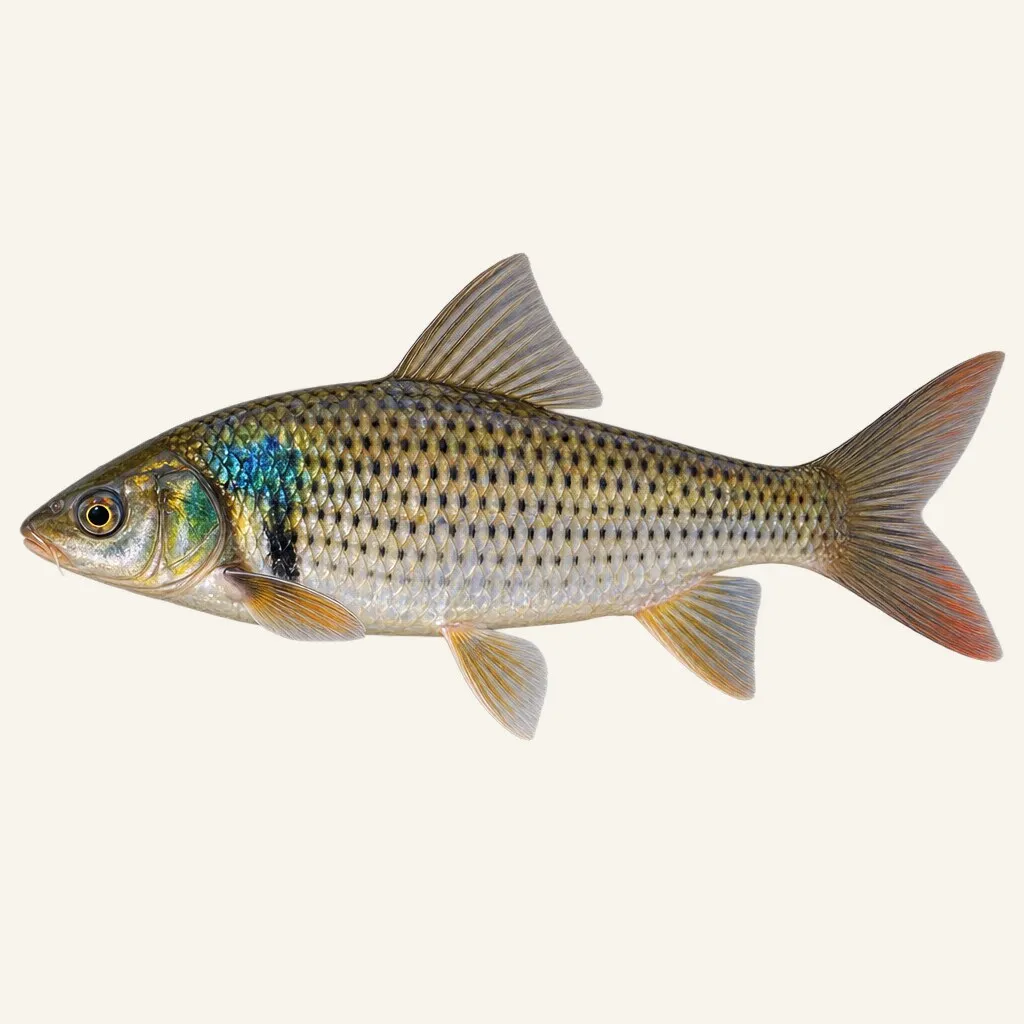
Medium-sized Asian cyprinid with a fusiform, silvery body and thick lips adapted for scraping algae and detritus from hard substrates.
Calendar
Recorded in 6 countries
Cambodia · China · Laos · Taiwan · Thailand · Vietnam
GBIF occurrence records — native and introduced populations combined.
Identifying it
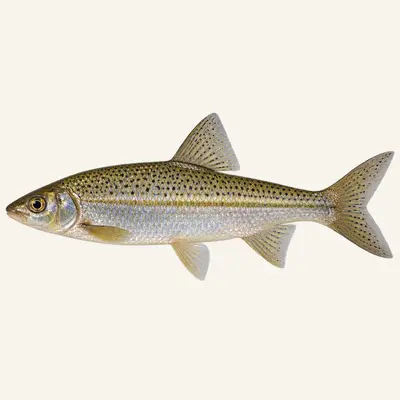
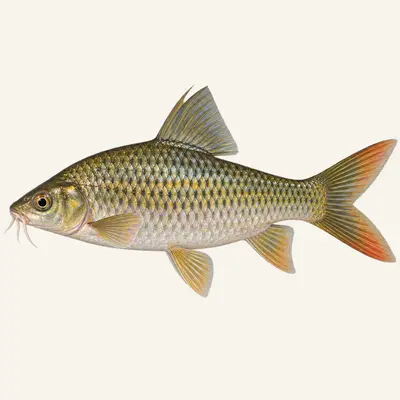
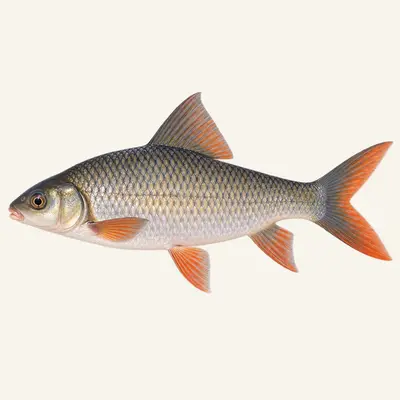
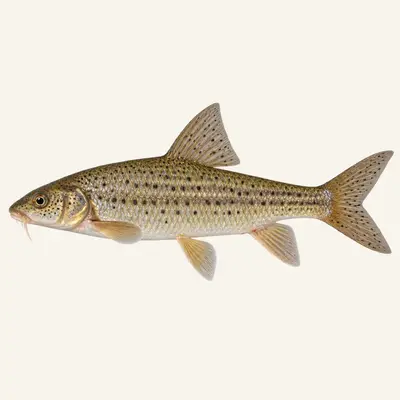
The character that names this fish apart from its congeners dies with it. Each scale on the upper flank, the middle of the body and sometimes the lower flank carries its own discrete mark; when the marks come up strongly the whole fish looks reticulated, as though a net had been laid over it. They are there on a fish just out of the water and on a specimen recently preserved, and they go. Nothing in the genus has anything comparable, so identification depends on colour that will not wait.
The shoulder mark works the same way and is more useful. This species carries a humeral blotch that is vivid bluish green in life; the other Cirrhinus carry theirs in black or blackish blue. Behind the pectoral base there is usually a conspicuous dark bar as well. The record has to be made at the waterside; an hour later there is nothing left to photograph.
The countable characters do not fade. There are 37 to 43 scales along the lateral line, counting those on the caudal base, and seven to eight and a half rows between the lateral line and the origin of the dorsal fin. The dorsal has 11 to 15 soft rays and no spine, and the vertebral count runs 34 to 38.
The water it needs
It lives from mid-water down to the bed of large and medium rivers, between about 5 and 20 metres, in water of 22 to 26 degrees. Both ends of the river's character suit it: it is found in rapids and it is found in slow deep reaches, which is a wider tolerance of current than most grazers show.
The rains change the address entirely. When the water rises the fish move into flooded forest and graze there, on surfaces that were dry ground a month earlier and will be dry ground again — an annual pasture that exists for a few months and produces most of the year's growth.
One preference is stated flatly and matters more than it looks: this species wants flowing water, and it is not known to build up in impoundments. A reservoir does not become a mud carp fishery by being filled.
Areas
- Flooded plains and rice paddies
- Slow-current river banks
- Freshwater ponds
- Submerged weed beds
Techniques
- Bottom fishing with small natural baits
- Light feeder
- Float fishing
- Fixed-line pole fishing
Baits
- Bloodworms
- Flour paste
- Cooked rice grains
- Small earthworms
- Filamentous algae
What it eats
Under the gill cover of a fish barely the size of a hand there are 65 to 85 gill rakers on the lower arm of the first arch alone. That is a retaining screen, and it explains a diet the fish would otherwise have no way of handling: it grazes, scraping algae, phytoplankton and detritus off whatever it can reach, and a scraper swallows water and grit with everything it takes loose. The rakers keep the crop and let the rest through.
Beyond the grazing the record calls it omnivorous, which here means it does not refuse animal matter rather than that it hunts for any.
How to catch it
Two situations, one species, no method in common. In the river the fish are spread through the water column of a big channel, in current, at depths that put them out of reach of light tackle; on the flood they are dispersed across submerged forest in shallow water, feeding on surfaces.
The diet rules out anything that imitates a moving animal. What works is fine, floury and vegetal, presented on or just off the bottom, in small pieces suited to a small mouth — the common length of the species is that of a modest fish, and a large one is genuinely unusual rather than merely a good catch.
Because the fish grazes rather than hunts, it also gives very little away when it takes. Discreet terminal tackle and a hook small enough to be swallowed with a mouthful of scrapings do more for the result than any amount of bait.
Conservation · Near Threatened (IUCN) — This species is in decline. Release your catch quickly and handle it with care — wet hands, as little time out of the water as possible.
Conservation
The two facts that decide the future of this species are in its habitat notes rather than in any assessment. It prefers running water, and it does not proliferate behind a dam. Every barrier built on the Mekong, the Chao Phraya or the Nanpangjiang therefore subtracts habitat from it without substituting anything: the reach above the wall becomes water the fish does not colonise, and the flood that put it into the forest becomes a flood that can be held back.
The second pressure comes from the hatcheries, and it is easy to miss because it looks like a solution. Wild stocks of this species are strongly migratory. Cultured stocks have probably lost that behaviour. Releasing farmed fish into a river adds bodies to it and does not add a migration, so the population that results may never make the movement its own renewal depends on. Stocking is not restoration here, and the difference will not show up in a catch return.
Regulations
Check the local regulations in force (legal size limits, closed seasons, bag limits).
For guidance only. Legal sizes, quotas and open seasons vary by location and season: always check the local regulations in force before fishing.
Other names
Mud carp is the standard English name and it points at the substrate the fish scrapes, not at the taste of it. The genus name is built on the Latin for a tendril, after the barbels; the epithet molitorella is a diminutive formed on the Latin for a miller, which sits oddly well on an animal that spends its life grinding a film off stone.
The literature needs handling with care. The genus was revised in 1997, and species in it had been confused with one another before that, so a record of mud carp published earlier may refer to a neighbour rather than to this fish. That revision is the reason the fading scale marks matter at all: they are what the revision used to draw the line.
The fish itself has two markets and they are separated by size. Large ones are sold fresh. Small ones go into prahoc, the Cambodian fermented fish paste, where the size that makes a poor fillet is no drawback at all.
Sources: fishbase.se · api.gbif.org