Mrigal carp
Cirrhinus mrigala · Cyprinidae
- Freshwater
- Carp & coarse
- Medium
- Size
99 cm
- Weight
13 kg
Where to fish
- Canal
- Lake
- River
Habitat icons: Flaticon
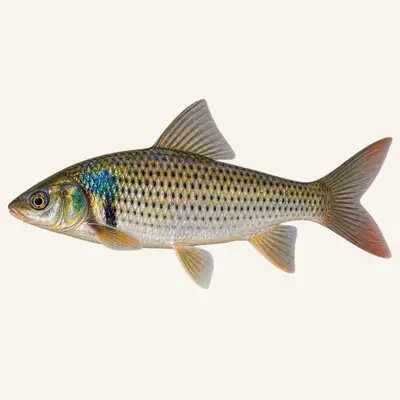
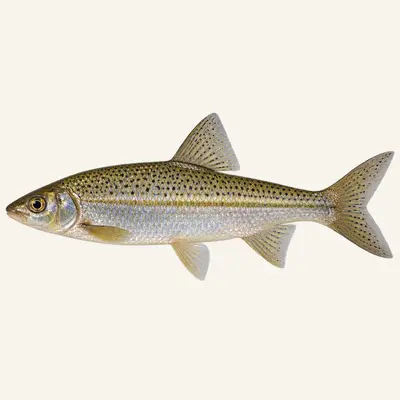
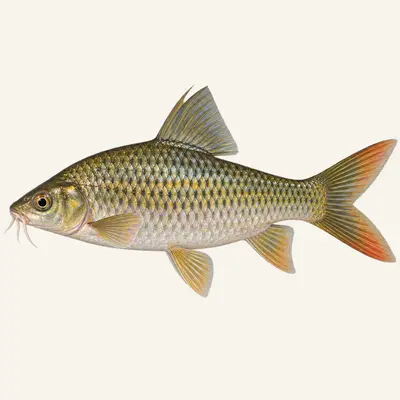
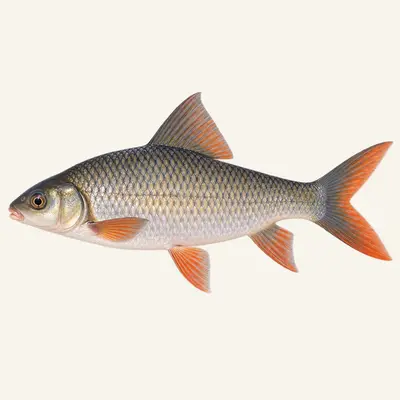
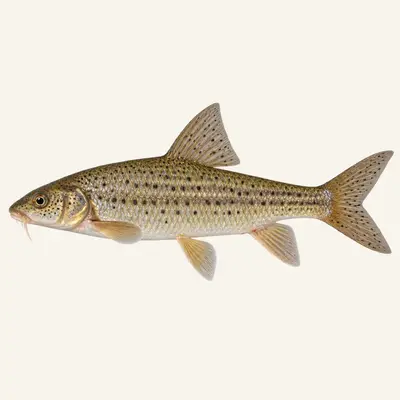
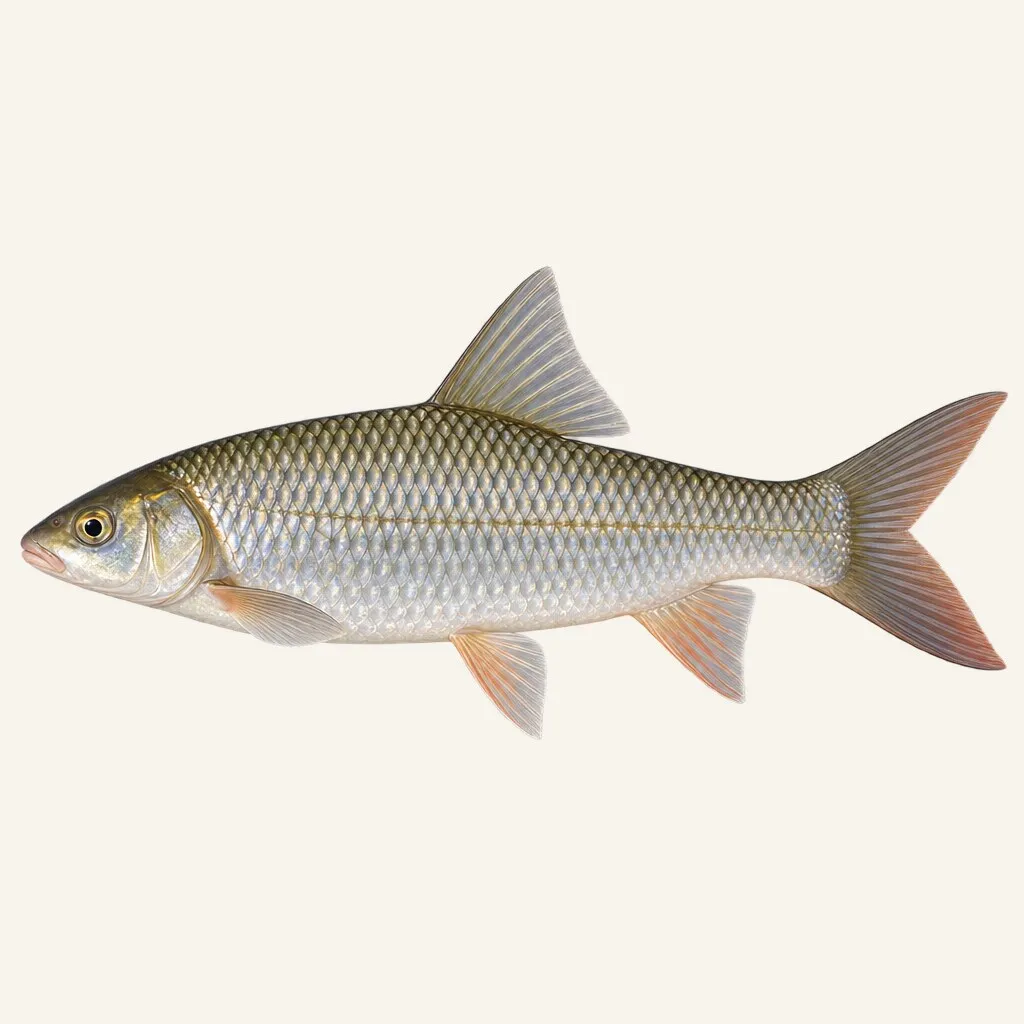
The mrigal is a slender cyprinid with a rounded snout and subterminal mouth, recognizable by its well-defined scales and silvery coloration.
Calendar
Recorded in 9 countries
Bangladesh · China · Hong Kong SAR China · India · Laos · Myanmar (Burma) · Pakistan · Thailand · Vietnam
GBIF occurrence records — native and introduced populations combined.
Its range
The native waters are the northern river systems, across Pakistan, India, Nepal and Bangladesh. Peninsular India, to the south of them, is on record as an introduction: the fish was carried inside the borders of the country it is most identified with, and the southern rivers where it is taken for a resident received it from a hatchery.
The entry for its uses says what carried it. There is an aquaculture profile beside this species and no capture-fishery profile at all, which for a cyprinid of its size in that part of the world is a statement about what the fish is for. It travelled as a farm animal, along the routes farming took, and where it now swims in a river it usually got there by escaping or being released rather than by spreading.
Areas
- Large calm rivers
- Silty reservoir bottoms
- Agricultural canals
- Upstream dam areas
Techniques
- Bottom feeder fishing
- Pole fishing
- Bolognese fishing
- Match fishing
Baits
- Fermented bran
- Rice flour dough balls
- Groundnut cake
- Plant silt
- Cooked rice
What it eats
The mrigal works the floor of the water and nothing above it. Silt, fine organic matter and the film that settles on the bed are what it lives on, taken downwards off a hard or soft bottom. That feeding position is the single fact from which the rest of the species follows, including the reason it is almost never stocked on its own.
South Asian pond culture puts three carps into the same water deliberately. Catla carries a large upturned mouth and works the ceiling. Rohu occupies the middle. The mrigal has the floor. None of the three reaches into what the other two are eating, so one pond carries all three at densities that would starve any one of them alone, and the harvest comes off three depths instead of one. Yield rises without a gram of extra feed, purely from the arrangement.
That is what the phrase Indian major carps actually names: not a group of relatives, but a set of tiers that fit together. Chinese pond culture arrived at the same reasoning with a different cast — one species on higher plants, one on molluscs, one straining plant plankton, one straining animal plankton. Two traditions, two lists, one idea about how to divide a pond.
It also explains how these fish left Asia. A hatchery importing a composite system imports every level of it, since a level left out is a resource nobody eats. The species moved in company, and the introduction records show them arriving in company.
How to catch it
There is no interception to plan for. A fish that grazes silt and fine detritus off the bottom is not ambushed on its way past something; it has to be assembled around, which means a bed of finely worked groundbait pressed into the substrate rather than laid on top of it, with a small hook lost in the middle. Fermented and floury preparations belong to that logic — they hold as a cloud low down and smell of what the fish is already swallowing.
The take reflects the same anatomy. A mouth angled at the bottom does not chase and does not turn away hard, so the indication tends to be a lift and a slow drift rather than a run, and a rig heavy enough to pin the bait will simply not register it.
Across most of its present range the fish is met in still or barely moving water — ponds, canals, the slack margins of reservoirs — because that is where it has been put. A river mrigal is the exception, not the model.
Regulations
Check the local regulations in force (legal size limits, closed seasons, bag limits).
For guidance only. Legal sizes, quotas and open seasons vary by location and season: always check the local regulations in force before fishing.
Other names
Mrigal is a vernacular name taken whole into English and then into the scientific epithet, unchanged. The species has no descriptive English name at all: no colour, no shape, no river in it. That is what happens when a fish is named by the people who farm it rather than by naturalists writing about it from a distance, and it is worth noticing how rare it is among the fish in this catalogue.
The word carp in mrigal carp carries no information. English attaches it to nearly every large cyprinid, and this fish stands no closer to Cyprinus than a barbel does. Cirrhinus, the genus, is built on the Latin for a curl or tendril and refers to the barbels; the genus holds a handful of Asian species, several of them separated on colour marks that fade within hours of death.
Sources: fishbase.se · api.gbif.org