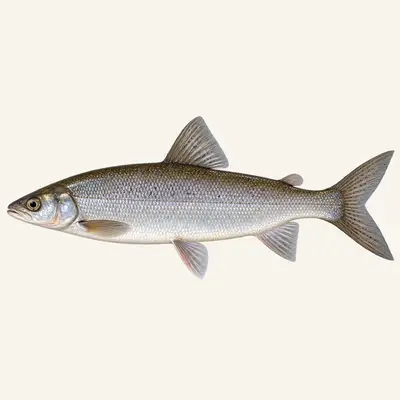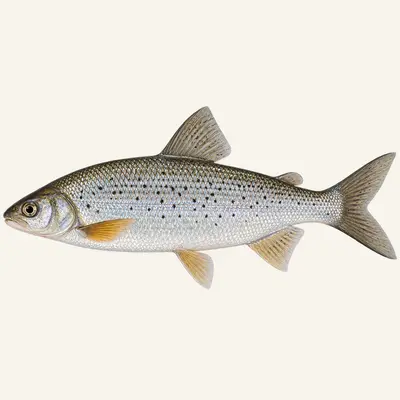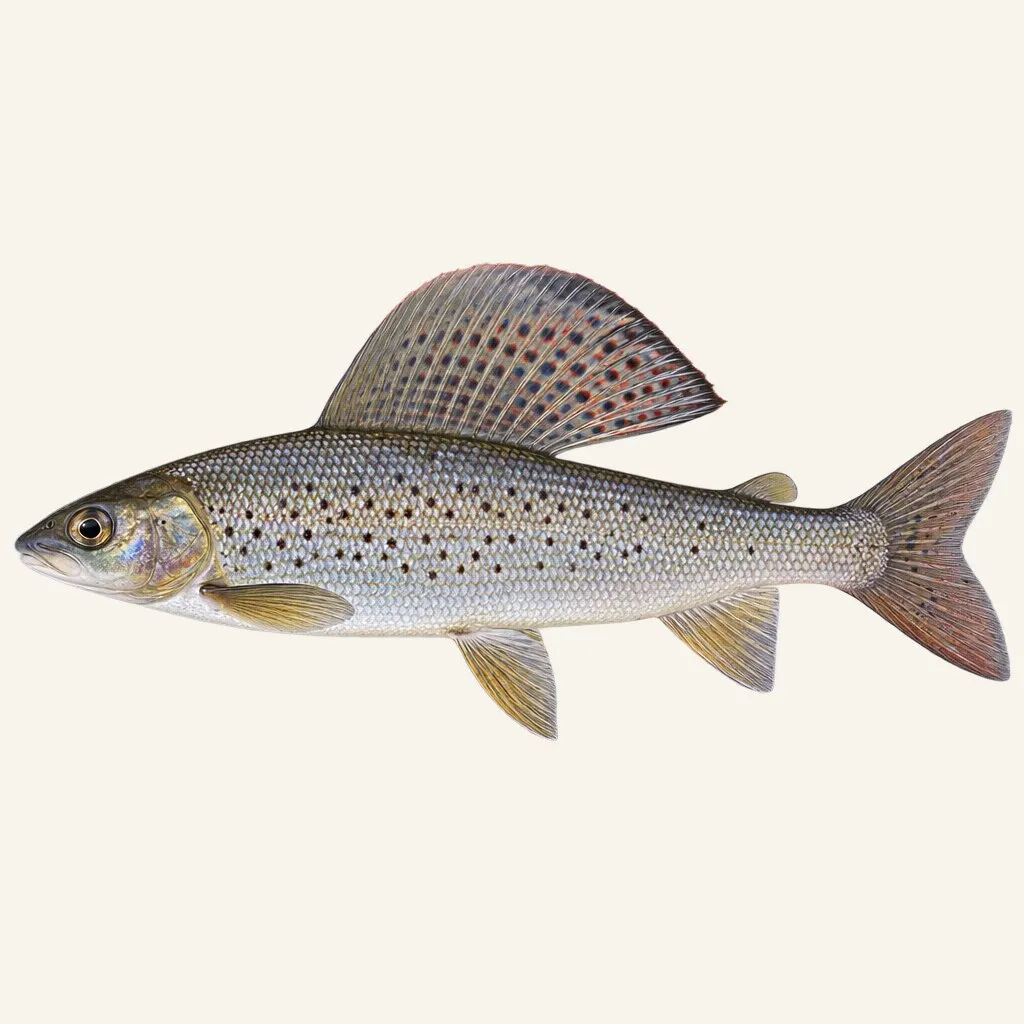
Mongolian grayling
Thymallus brevirostris · Salmonidae
- Freshwater
- Salmonids
- Hard
- Size
39 cm
Where to fish
- River
Habitat icons: Flaticon
Found in landlocked basins. Usually associated with cold, clear waters.
Calendar
Recorded in 1 country
Mongolia
GBIF occurrence records — native and introduced populations combined.
Its range
The species lives in landlocked basins — closed systems with no outflow to the sea. These are the lake and river systems of central Asia that connect to nothing.
It generally shares that water with Arctic grayling, and the two possibly interbreed. Two grayling species in one closed basin is an unusual arrangement, and the question of whether they mix remains open.
Identifying it
The dorsal carries 18 to 20 soft rays and 4 to 8 spines, the anal 8 to 12 rays and 3 or 4 spines. The body is fusiform and the snout short, which is what the specific name records.
The water it needs
The most useful thing known about it is seasonal. In autumn and winter it forms large shoals at the point where rivers and streams enter the lakes.
That concentration at tributary mouths is the only aggregating behaviour recorded for the species, and it is what makes it reachable at all.
Areas
- Mongolian mountain rivers
- Riffles and runs
- Oxygenated flats
- Rocky banks
Techniques
- Dry fly fishing
- Light nymphing
- Toc fishing
- Ultra-light spinning
Baits
- Small dry flies
- Light nymphs
- Insect larvae
- Bloodworms
- Small spoons
What it eats
It is omnivorous and occasionally predatory.
That is a departure in a genus where most species stay with invertebrates: this one takes fish when the chance arises.
How to catch it
Season and place follow from one another. The large autumn and winter shoals form at lake-river confluences, and that is where prospecting makes sense; for the rest of the year the fish are scattered through basins that are both closed and large.
The omnivorous, sometimes predatory diet widens the choice. Invertebrate imitations work, but a lure imitating a small fish is not off the point — which it would be for most graylings.
Regulations
Check the local regulations in force (legal size limits, closed seasons, bag limits).
For guidance only. Legal sizes, quotas and open seasons vary by location and season: always check the local regulations in force before fishing.
Other names
Mongolian grayling in English. The specific name means short-snouted, though the comparison only holds against other graylings. It is among the largest members of the genus and the only one regularly described as predatory.
Sources: fishbase.se · api.gbif.org