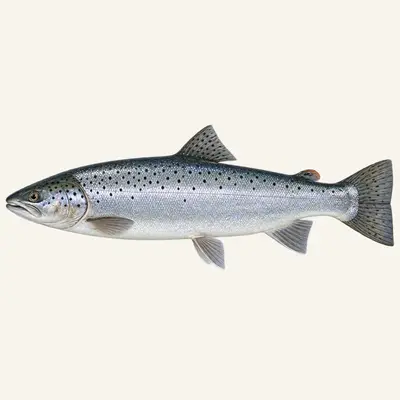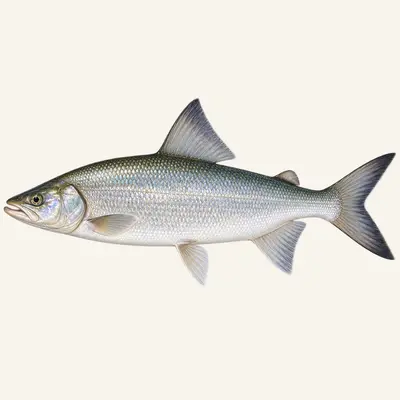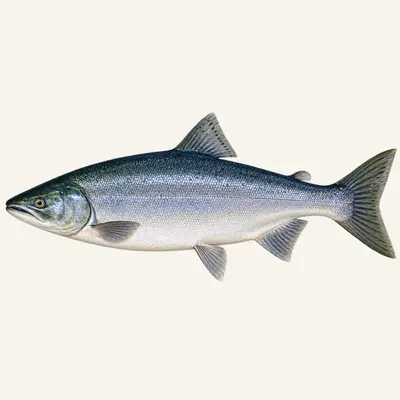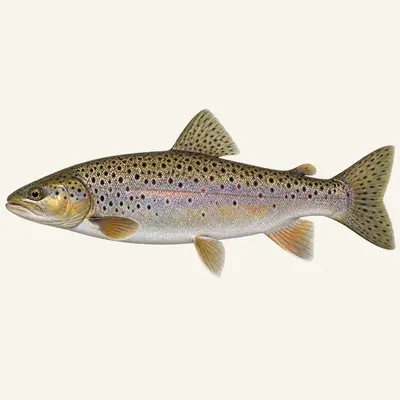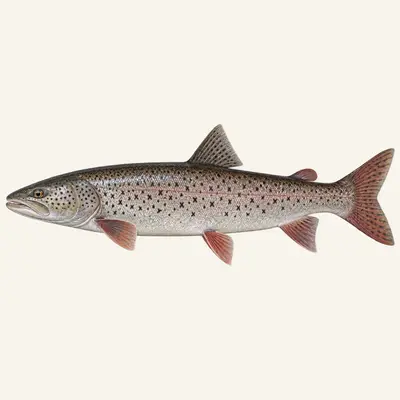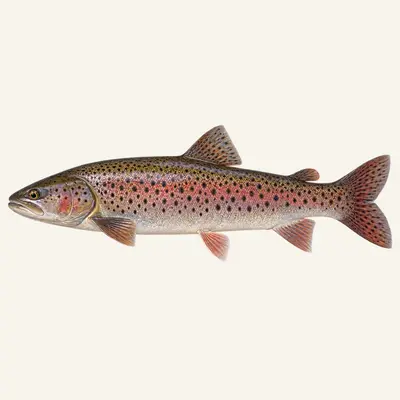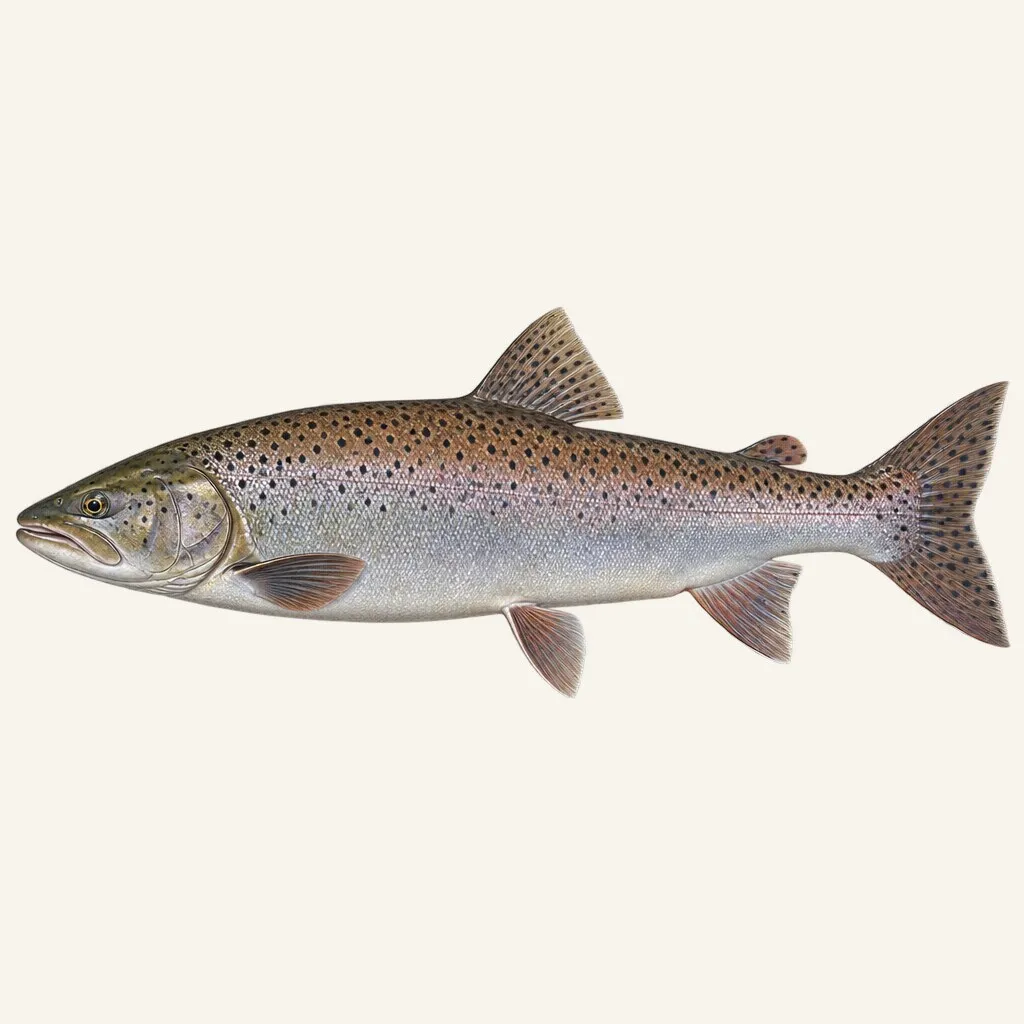
Sakhalin taimen
Parahucho perryi · Salmonidae
- Freshwater
- Salmonids
- Hard
- Size
50–200 cm
- Weight
0.8–24 kg
- Lifespan
16 years
- Depth
0–100 m
Where to fish
- Estuary
- River
Habitat icons: Flaticon
Lower and middle reaches of rivers and lakes. A sea-run form occurs along the eastern coast of Hokkaido
Calendar
Recorded in 2 countries
Japan · Russia
GBIF occurrence records — native and introduced populations combined.
Its range
The species holds the northwest Pacific in the Sea of Japan, from the southern Kuril Islands and Primorskii Krai in Russia to Hokkaido, between the 42nd and 50th parallels.
That is a narrow band of latitude and a short list of coasts. Each river within it functions as its own population, with the sea as the only connection between them.
Breeding
Mature fish spawn in spring, in river branches rather than in the main channel, and the female lays 2,000 to 10,000 eggs on sandy or gravelly bottom.
Two to ten thousand eggs is a modest figure for a salmonid of this scale, and the range is wide enough to say that size matters a great deal to output. A side channel is also a fragile place to put them: branches are the first features a river loses when it is straightened or when its flow is regulated.
The water it needs
Adults usually occupy the lower and middle reaches of rivers, and lakes. A sea-run form is found on the east coast of Hokkaido, reaching depths of 100 m.
This is what sets the species apart in its genus. Taimen and huchen are wholly freshwater fish that need one long uninterrupted river; this one adds the sea, and therefore needs an estuary and a passable lower course as well. The list of things that can break is longer, and a dam low in a short coastal river does not shorten the habitat — it severs the life history.
Areas
- Large pools in Sakhalin rivers
- Strong current zones
- Downstream of rapids
- Coastal river mouths
Techniques
- Large fly streamer
- Heavy spinner
- Surface lure
- Live bait fishing
Baits
- Large streamers
- Worked dead fish
- Heavy spinners
- Local live bait
What it eats
The young feed mainly on aquatic insects. Fish over 30 cm are completely piscivorous.
That threshold is unusually precise, and it is useful: below 30 cm the fish is an insect feeder, above it there is no mixed phase at all. A river that stops producing forage fish stops producing adult Hucho perryi, whatever its insect life is doing.
How to catch it
Fishing for this species is closed or tightly restricted across most of its range, and what applies is a question for the competent authority before setting out. The reason is not obscure: small isolated river populations of a very large, slow-growing predator.
Where it is fished, the lower and middle river is the context, and the 30 cm threshold in the diet sets the scale of what an adult will take — fish patterns and nothing smaller.
The common length is 50 cm, and the species is recorded to 16 years of age. The gap between the ordinary fish and the biggest ones is the widest in the genus, and it says how few now reach the top of the range.
Conservation · Critically Endangered (IUCN) — This species is threatened with extinction. Always release it (no-kill), handle it with the utmost care and check local rules — fishing for it may be prohibited.
Conservation
Three things compound, and they are specific rather than general.
Spawning happens in river branches — the side channels that channelisation removes first. The sea-run form needs an estuary and a passable lower course, which no other Hucho requires. And a fecundity of two to ten thousand eggs gives less margin than a large salmonid usually has.
Add a range confined between two parallels, split across islands and short coastal rivers, and each population stands alone.
Regulations
Check the local regulations in force (legal size limits, closed seasons, bag limits).
For guidance only. Legal sizes, quotas and open seasons vary by location and season: always check the local regulations in force before fishing.
Other names
Sakhalin taimen in English, also Japanese huchen. Itō in Japanese, where the fish has become the salmonid people speak of having seen rather than caught. The specific name honours Matthew Perry, whose expedition to Japan in the 1850s brought back the material from which the species was described.
Sources: fishbase.se · api.gbif.org