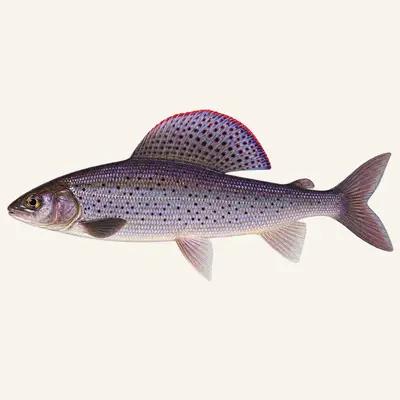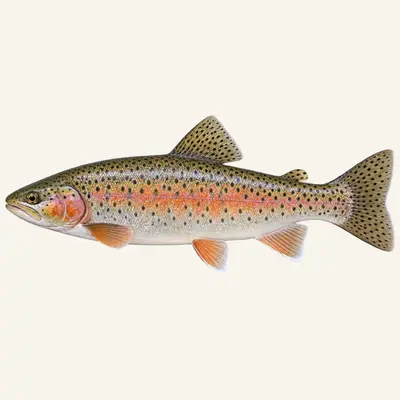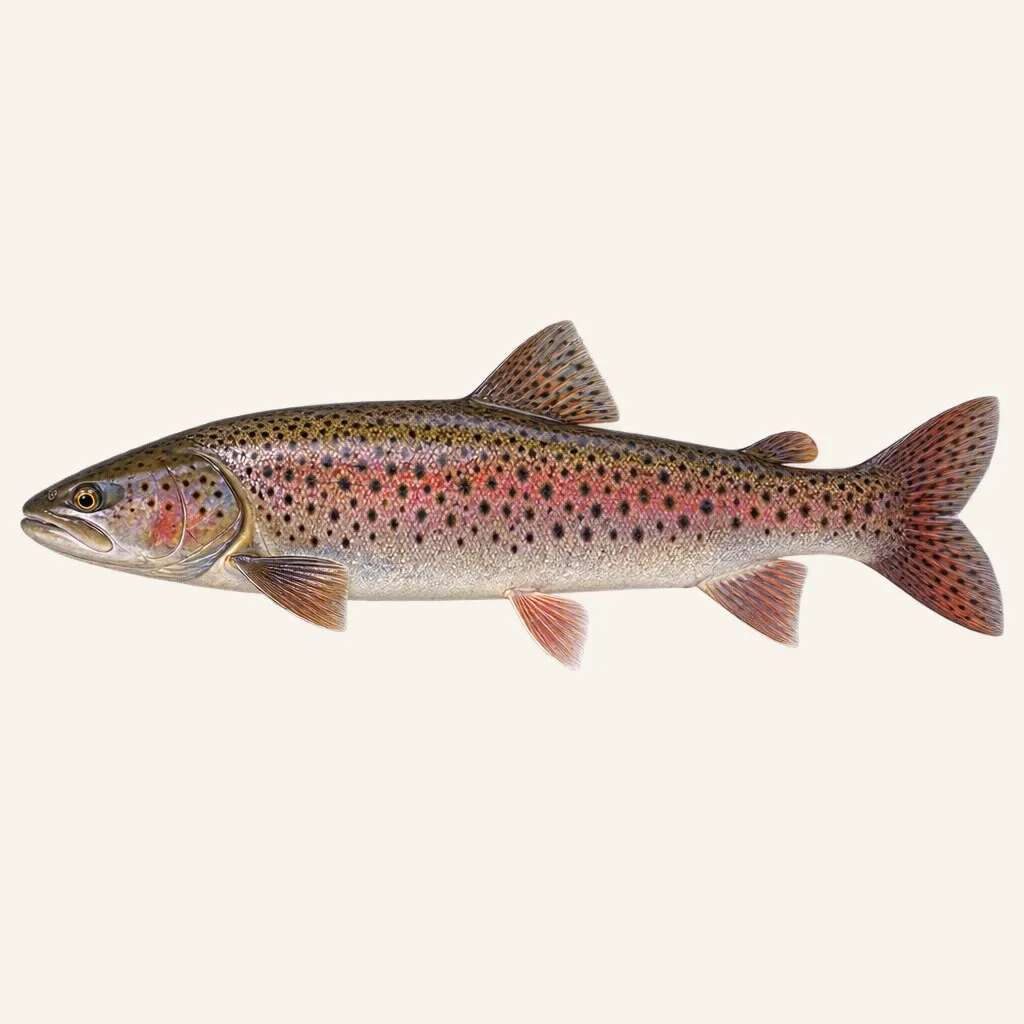
Tumen lenok
Brachymystax tumensis · Salmonidae
- Freshwater
- Salmonids
- Hard
Where to fish
- River
Habitat icons: Flaticon
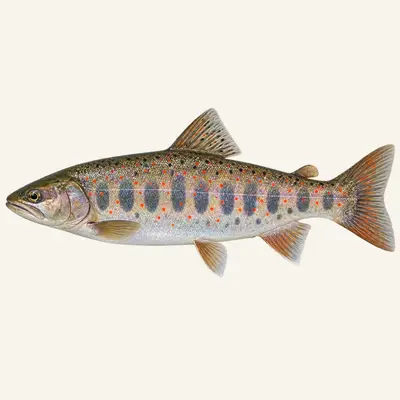
Robust salmonid with a fusiform, lightly spotted body, closely related to the common lenok, endemic to rivers of the Tumen basin in East Asia.
Calendar
Recorded in 1 country
Russia
GBIF occurrence records — native and introduced populations combined.
Its range
Three localities, and they do not agree with the name. The checklist behind this page records the species from the Amur River drainage in Russia, from Sakhalin Island, and from the Tumen, with the Korean locality of Yen-gan. The catalogue entry above calls it endemic to the rivers of the Tumen basin. Those are not the same range, and the wider of the two is the one with a source attached to it.
Sakhalin is the part needing an explanation, because a river fish does not cross a strait. It points at a geography that no longer exists: with sea level lowered through the glacial periods, the island was joined to the mainland and its watercourses drained into the Amur network. The present range is what was left of that network when the sea came back up, which is why the species sits on both sides of open water.
The Tumen adds a problem of another kind. It is a border river along its lower course, and a fish named after a boundary between states is a fish whose monitoring, catch statistics and protection are divided between administrations that hold none of them in common.
The shortness of the list should be read as a statement about effort rather than about the fish. No prey, no spawning season, no fecundity, no size and no longevity have been published for it, and the measurements block on this page is empty because the catalogue has nothing to put in it.
Identifying it
Nothing about this animal's anatomy is published in the summary behind this page. No length, no weight, no ray counts, no colour, no age. The distribution rubric is the file.
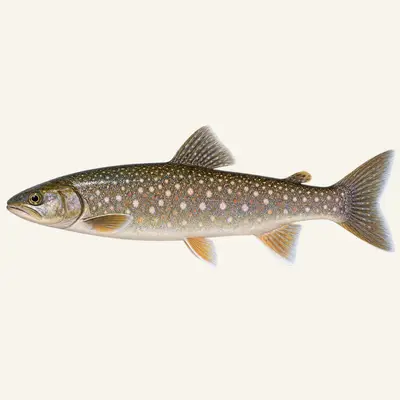
Such description as exists comes from the catalogue entry rendered above, and it is comparative in a way worth using rather than paraphrasing: a robust salmonid with a fusiform, lightly spotted body, closely related to the common lenok. The entry for the lenok in the same catalogue says stocky, covered in small dark spots. Side by side, the two texts separate the species on how heavily it is marked and how it is built, which is a comparison this repository makes itself and the only one available.
It should be taken for what it is — a description written to tell two fish apart, not a diagnosis. Nothing in it supports a claim that either species carries a character the other lacks.
Areas
- Tumen basin rivers
- Deep pools
- Gravel riffles
- Moderate current zones
Techniques
- Wet fly fishing
- Euro nymphing
- Light spoon
- Light spinning
Baits
- Wet flies
- Nymphs
- Small spoons
- Insect larvae
- Earthworms
Regulations
Check the local regulations in force (legal size limits, closed seasons, bag limits).
For guidance only. Legal sizes, quotas and open seasons vary by location and season: always check the local regulations in force before fishing.
Other names
Every language names it after the Tumen, and so does the epithet. The convention is convenient and misleads in exactly one way: the fish is recorded from a whole drainage and an island, while its name points at a single river.
That is the usual fate of a species separated late from a larger one. The name taken is the locality the examined specimens came from, not the area the animal occupies, and the Qinling lenok of this catalogue was named the same way, after a mountain range in China. Only the common lenok escaped it, by keeping the bare Russian word.
Anything published on Brachymystax before the genus was divided may be about any of them. An older account saying lenok, with no place attached, cannot be assigned to a species now.
Sources: fishbase.se · api.gbif.org