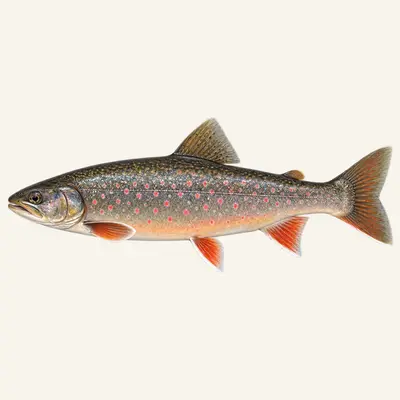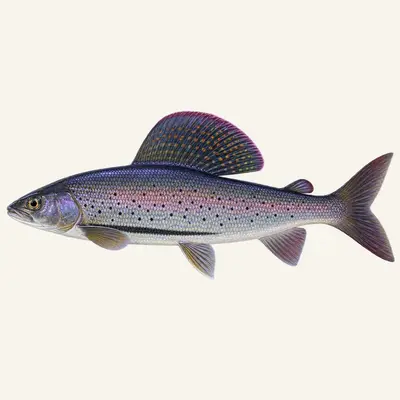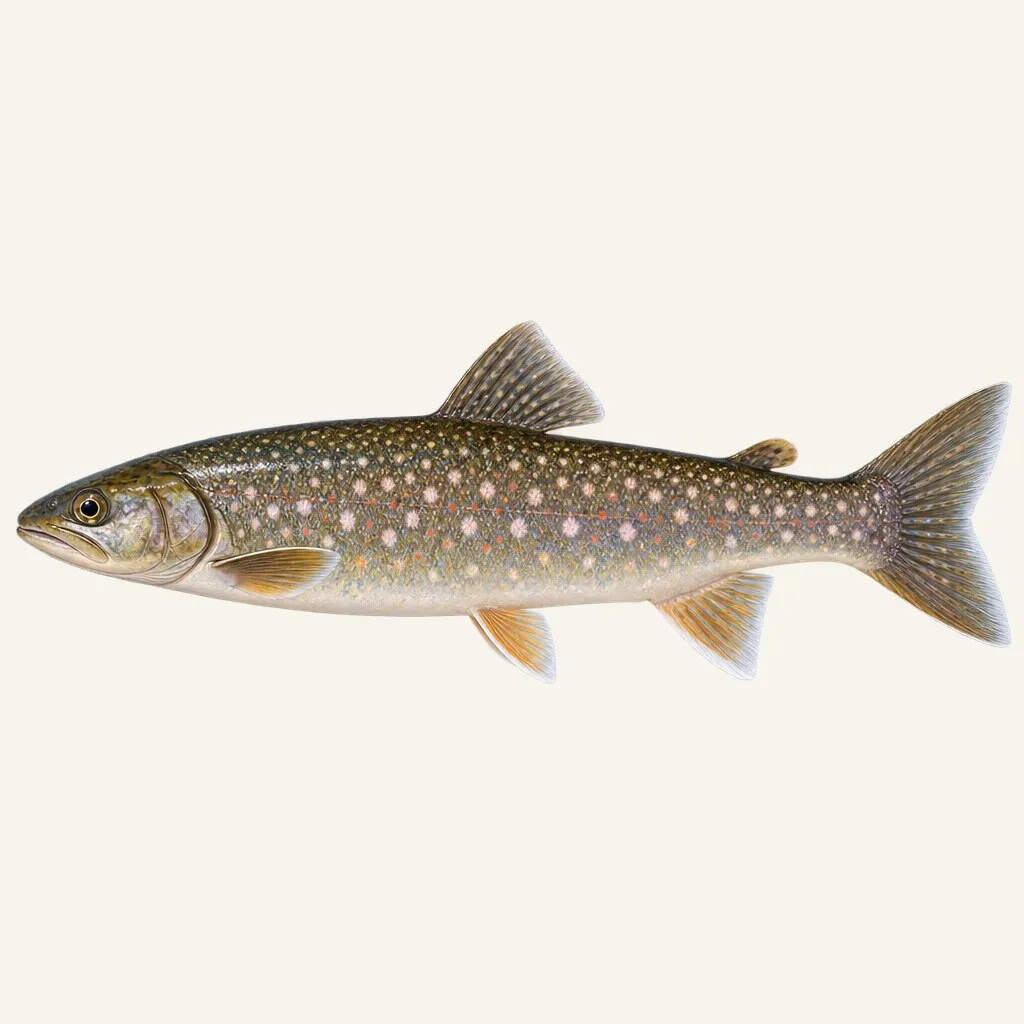
Whitespotted char
Salvelinus leucomaenis · Salmonidae
- Freshwater
- Salmonids
- Medium
- Size
120 cm
- Weight
15 kg
- Lifespan
9 years
- Depth
0–50 m
Where to fish
- Lake
- River
Habitat icons: Flaticon
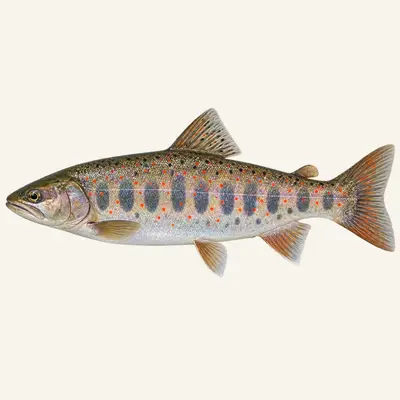
The white-spotted char is a freshwater salmonid from the cold rivers and lakes of East Asia (Japan, Kamchatka, Sakhalin), identified by its cream-white spots on a dark greenish or brown background. It inhabits well-oxygenated mountain streams and deep lake waters where it preys on small fish and invertebrates.
Calendar
Recorded in 2 countries
Japan · Russia
GBIF occurrence records — native and introduced populations combined.
Its range
The species holds the northwest Pacific: Japan and the northeastern Korean Peninsula, through Sakhalin and the Kuril Islands to Kamchatka.
That is an island-and-peninsula range rather than a continental one, and it matters for the resident form. Each cold headwater on each island is effectively its own population, with no route to the next, so what looks on a map like a single distribution is in practice a long line of separate small ones.
Breeding
Pairing is distinct — one male to one female, rather than the crowd of satellites that attends many salmonid spawnings.
The sea-run form runs on a fixed schedule. Young enter the sea at two years old and return to the rivers to spawn at four years or older. That gives at least two years of marine growth before the first spawning, and it is what produces the size difference between the two forms.
The water it needs
The species exists in two forms, and they use quite different water.
The landlocked form prefers cold streams, below 15°C. Summer records put the fish in water of 13 to 15°C — a ceiling with no margin in it, and one that a warming summer erases rather than shifts.
The sea-run form is anadromous, reaching depths of 50 m at sea, within an overall temperature range of 4 to 18°C.
Areas
- Rapids and flat runs
- Plunge pools
- Riffle zones
- Mountain stream confluences
Techniques
- Dry fly
- Nymph
- Short streamer
- Toc fishing
Baits
- Local dry flies
- Artificial nymphs
- Earthworms
- Small streamers
What it eats
It is carnivorous, feeding on insects and plankton.
Plankton in the diet of a char is worth noticing. It implies feeding in open water rather than picking drift from a current, which fits a fish that spends part of its life at sea and part in lakes.
How to catch it
Which form you are fishing for decides everything. The resident is a cold-stream fish with a hard ceiling at 15°C, so it holds the coldest water in a catchment through the summer. The sea-run fish arrives on a schedule and is a different proposition in size and in timing.
A diet of insects and plankton points at small imitations rather than at fish patterns, which is unusual for a char that grows as large as this one.
The maximum recorded age is only nine years — fast growth for a cold-water char.
Conservation
The 15°C ceiling on the resident form is the mechanism, and it is arithmetic rather than opinion: summer water that already sits at 13 to 15°C has nowhere left to go. Each warm year pushes the resident populations further up their catchments, and the ones already at the top have no further to move.
The sea-run form needs the river passable in both directions on a two-year and four-year cycle, which makes any barrier costly out of proportion to its size.
Regulations
Check the local regulations in force (legal size limits, closed seasons, bag limits).
For guidance only. Legal sizes, quotas and open seasons vary by location and season: always check the local regulations in force before fishing.
Other names
White-spotted char in English, ame-masu and iwana in Japanese — the two names distinguishing the sea-run and resident forms, which English does not. That distinction is useful, since the two are so different in size and habits that treating them as one fish loses most of what matters.
Sources: fishbase.se · api.gbif.org