Thracian chub
Squalius orpheus · Cyprinidae
- Freshwater
- Carp & coarse
- Medium
- Size
20–30 cm
- Weight
0.1–2.0 kg
Where to fish
- River
Habitat icons: Flaticon
Chub endemic to Greece - Many Squalius species occur across the Mediterranean
Calendar
Recorded in 2 countries
Bulgaria · Greece
GBIF occurrence records — native and introduced populations combined.
Its range
The range runs from the Maritza to the Struma, taking in parts of Greece, Bulgaria and Turkey: Thrace and Aegean Macedonia, bounded by two rivers rather than by a coast or a watershed.
That is a narrow allocation for a chub, and the reason is drainage geometry. Each Aegean river descends its own slope to a closed sea without meeting its neighbours, so a fish that settles in one is sealed into it, and the genus in this corner of Europe has broken up accordingly. This species was only separated from the rest in 2006, on material collected in the Evros.
Identifying it
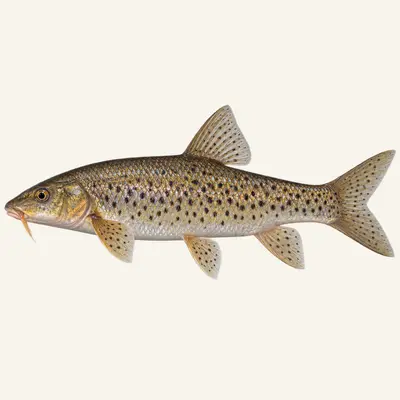
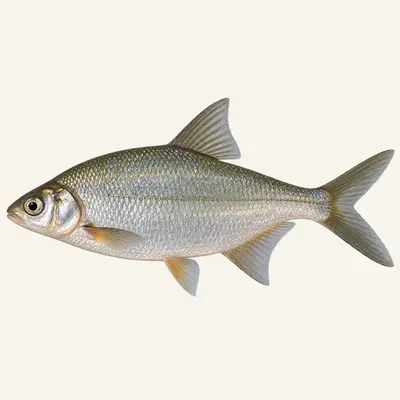
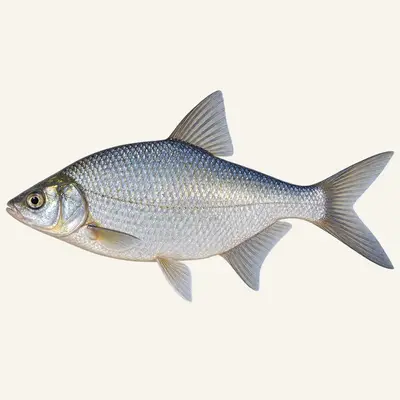
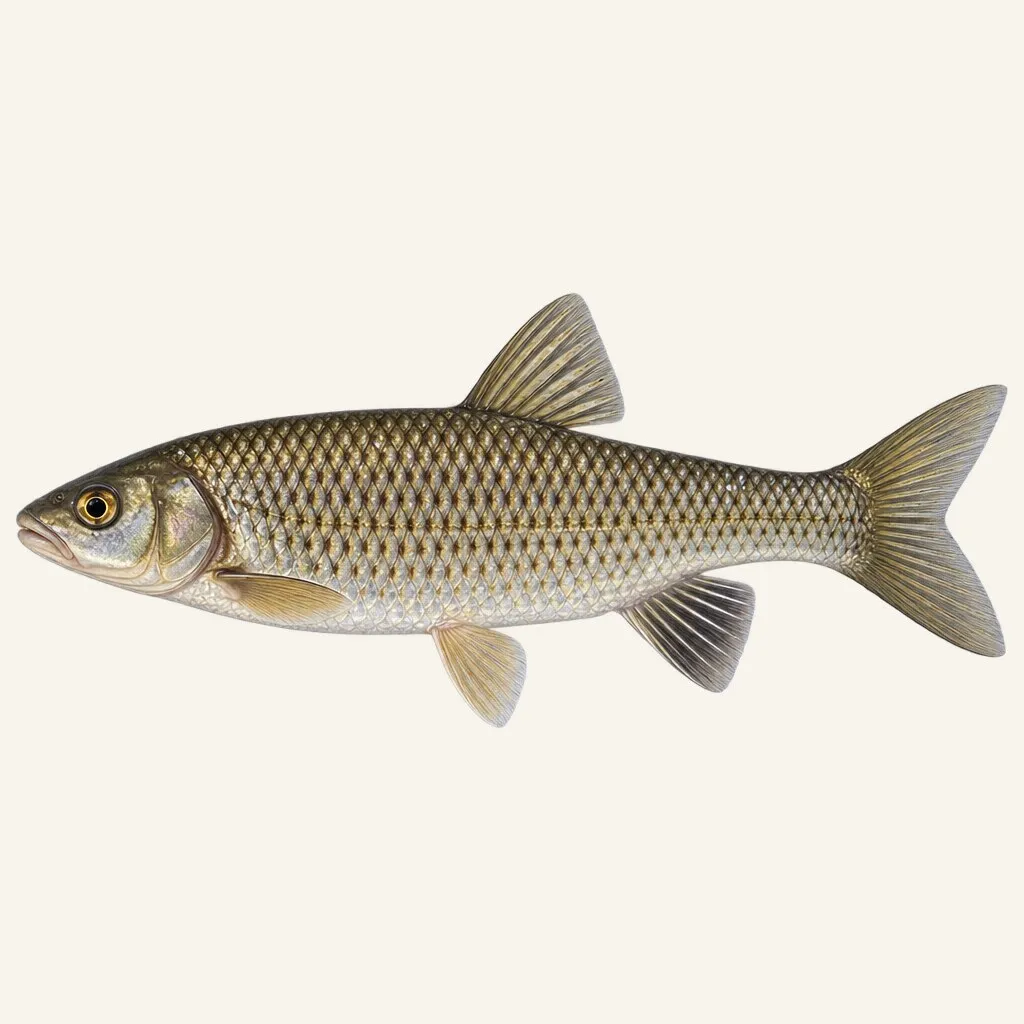
The flank gives nothing away, and that absence is the character. The free margin of each scale is only faintly picked out, and the body of the scale is pigmented as well, so the two tones sit too close together for any figure to assemble itself. Underneath, the scale pocket is dark brown. Lifted out of the water the side reads as an even, dull field.
The mouth is the second character and the easier one. It is subterminal, and the upper lip juts conspicuously past the lower jaw, sometimes far enough forward to cover its tip. Head length equals body depth or slightly exceeds it, and works out at 26 to 29 per cent of standard length.
The anal fin carries the useful detail: blackish membranes between clear rays, and a rear edge bowed outwards. On a specimen over about 10 cm standard length, spread that fin and measure from the tip of the first branched ray to the tip of the last — the span comes to 1.0 to 1.3 times the depth of the caudal peduncle, so barely more than the peduncle itself.
Counts finish the job. 44 to 46 scales along the lateral line plus two, eight and a half branched rays in the dorsal and the same in the anal, and a dorsal fin that starts directly above the base of the pelvics.
Breeding
Eggs go down in shallow water over a gravel bed. The adult spends its year in pools; the eggs need a shallow shelf with some movement across it. Those are two different pieces of water, and in a stream this size they can lie a few dozen metres apart.
The double requirement is where the species is thin. A pool survives a hard summer and still holds fish. A gravel shelf that silts over, or that the river no longer reaches, ends recruitment while leaving every adult in place — and nothing about the population looks wrong for several years afterwards.
The water it needs
Streams and rivers, small to fairly large, from standing water to moderate current — and inside them, the pools. That last point is the one to carry. This is not a fish of the riffles and not a fish of ponds, but a tenant of the slack hollows, and the hollows are where the search starts.
Areas
- Gravelly river riffles
- Grassy margins
- Moderate current zones
- Shaded pools
Techniques
- Light lures
- Baits
Baits
- Micro lures
- Worms
What it eats
Feeding happens in the water column and in the upper layers, on terrestrial insects that have fallen in. The species is otherwise omnivorous, but the specific mention is what counts: it is unusually precise for a small cyprinid, and it names the method by itself.
A fish that watches the ceiling and takes what drops off the bank is worked differently from one that grubs through the bed. The wooded margin is the swim, the surface drift is the presentation, and a laid-on insect imitation is in keeping with what the animal actually eats.
How to catch it
Two facts organise the session. The fish sit in pools, and they eat what comes out of the trees.
The water to work is therefore the shaded hollow under overhanging growth, on the film or just beneath it, rather than the current tongues. In standing or barely moving water anything that sinks drops out of the layer being watched, so weight is the enemy: fine hooks, small baits, and a drift begun upstream of the fish.
Late summer changes the arithmetic. Where the river is drawn down, the pools shrink to a fraction of their spring volume and the fish pack into what is left. The concentration that makes them easy to find is the same event that puts them at risk, which is a reason to leave a shrunken pool alone rather than a reason to fish it.
Conservation
Several populations are under pressure from water abstraction in the dry season, and the mechanism goes straight at the one part of the habitat this fish cannot do without.
A pool-dwelling species depends on a volume remaining in the hollow. Pumping a small Thracian river in August does not reduce its living space, it deletes it, and the bank insects it lives on then fall onto dry gravel. There is nowhere to withdraw to either, because the pool was already the refuge — the deep water of the system, not a retreat from it.
Regulations
Check the local regulations in force (legal size limits, closed seasons, bag limits).
For guidance only. Legal sizes, quotas and open seasons vary by location and season: always check the local regulations in force before fishing.
Other names
Orpheus chub in English. The epithet points at the mythical poet of Thrace, the region this fish occupies, which makes it one of the few species placed by legend rather than by geography or by the name of a describer.
The rivers are the real difficulty. One drainage carries three names — Maritza in Bulgarian, Evros in Greek, Meric in Turkish — and the literature uses all of them: the original description gives the type material as coming from the Evros, while range statements tend to say Maritza. Anyone reading two sources on this species is liable to think they cover two different countries.
Sources: fishbase.se · api.gbif.org