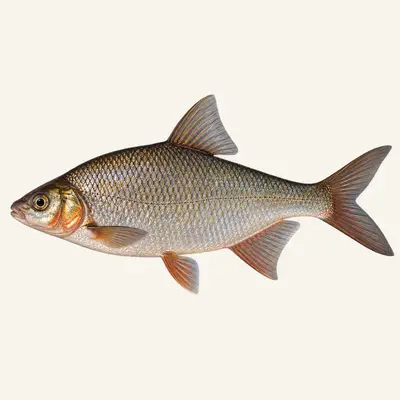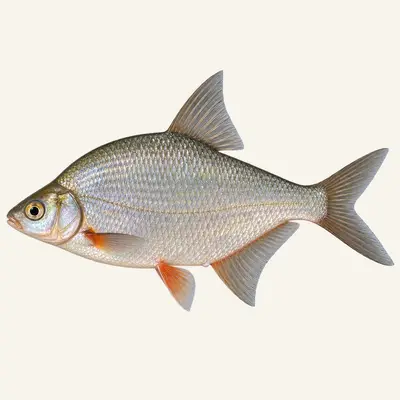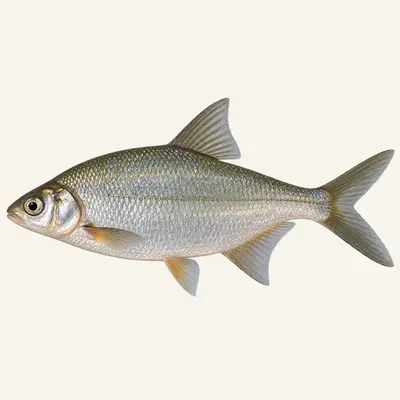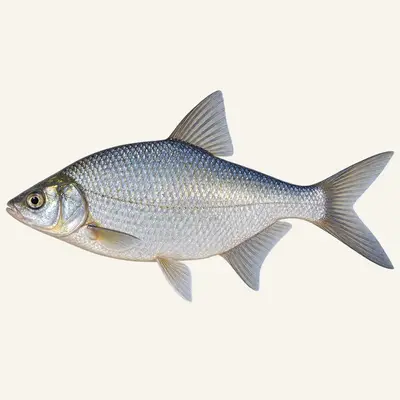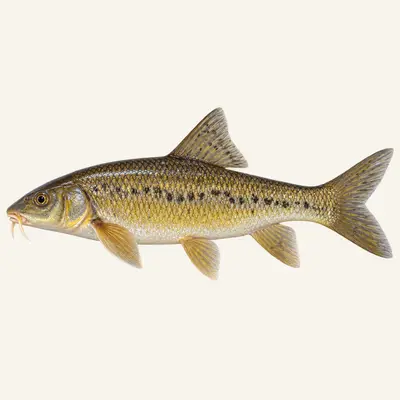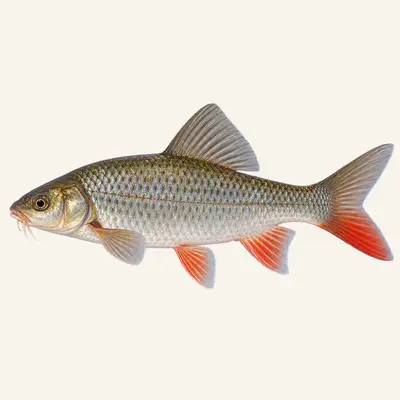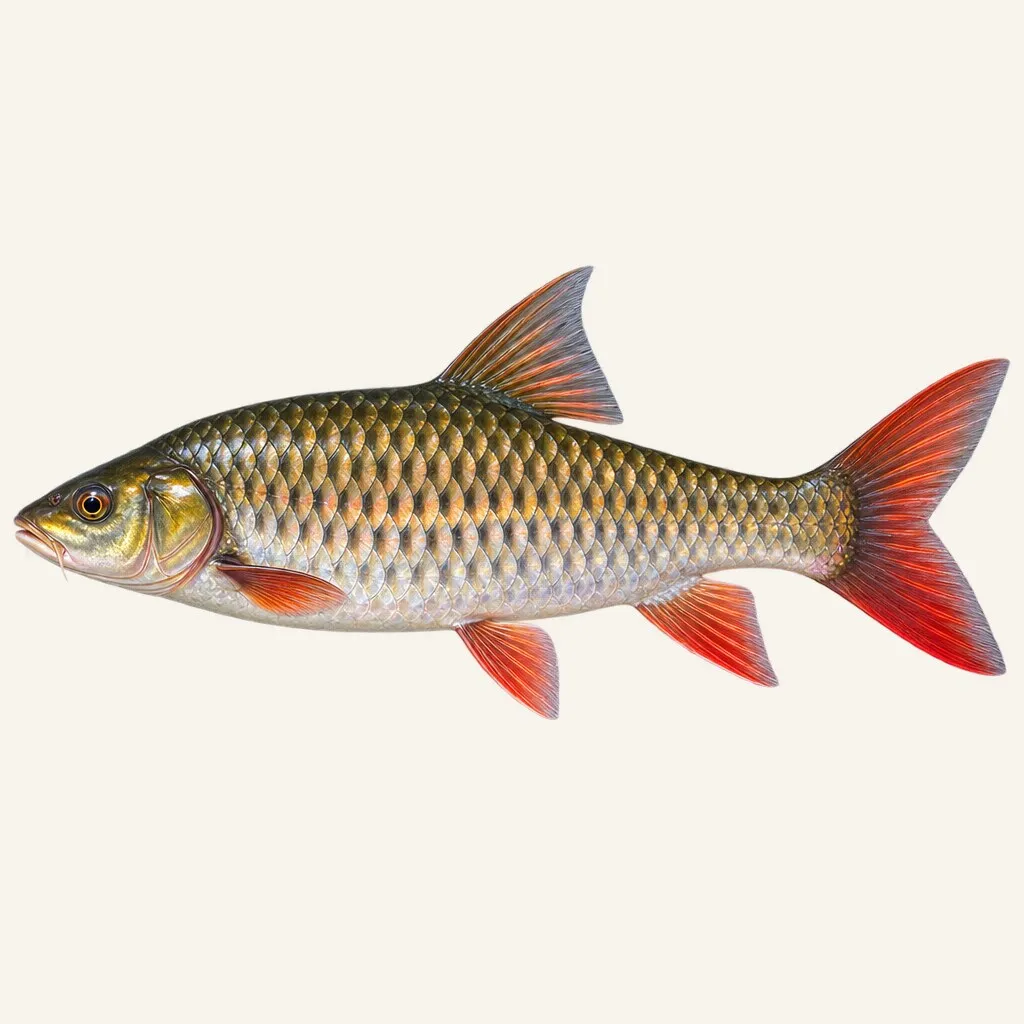
Tor barb
Tor tor · Cyprinidae
- Freshwater
- Carp & coarse
- Medium
- Size
18–200 cm
- Weight
0.1–9.0 kg
- Lifespan
10 years
- Water temp.
15–30 °C
Where to fish
- River
Habitat icons: Flaticon
Red-finned mahseer - coarse fish, Asia (India)
Calendar
Recorded in 4 countries
Bangladesh · India · Nepal · Pakistan
GBIF occurrence records — native and introduced populations combined.
Breeding
The two length figures in this species' file do not agree about what a normal fish is.
Common length — the size that recurs across the records held for it — is 17.5 centimetres. Length at first maturity is 36. The fish that databases have most often had in front of them is less than half the length at which the species begins to breed, and that gap is a statement about what is being caught, not about how the animal grows.
The spawning season is given as March to September, over stones and gravel. Seven months is an extraordinarily wide window for one river. It is far more likely to be several populations with different timings, spread across a range that runs from the Himalayan foothills to the plains, averaged into a single line.
Longevity contradicts itself in the same file. The species is described as long-lived, while the maximum age actually reported for it is ten years. One of those two statements is wrong and nothing in the record indicates which.
The water it needs
The recorded depth range for this fish starts at 15 metres.
That figure is worth holding against the other great mahseer of the same slope, which is listed at nought to one metre. Two congeners sharing rivers, and their published depths do not overlap at any point. Whichever is closer to the truth, they are not to be searched for at the same level, and a rig that works for one is in the wrong part of the water column for the other.
The setting is otherwise familiar: rivers, lakes, and fast streams over rock. But one sentence goes further than description. The species is recorded as growing better in a river with a rocky bed — and a substrate that changes growth rate is not a preference, it is a food supply.
The thermal band, 15 to 30 degrees, is wider than a range described as Himalayan would suggest, and it is what allows one species to occupy a very long stretch of altitude.
Areas
- Deep pools below rapids
- River confluences
- Rocky high-current flats
- Gravel island edges
Techniques
- Bottom fishing with dough balls
- Wet fly fishing
- Drift fishing
- River feeder fishing
Baits
- Barley bran dough balls
- Maggots
- Freshwater crustaceans
- Corn kernels
- Earthworms
What it eats
It grazes. Filamentous algae come first in the record, then chironomid larvae, water beetles and crustaceans.
Everything on that list either grows on stone or lives among it, which is the mechanism behind the growth statement above: a sanded or silted river does not produce any of it, and a fish tied to that menu does not thrive there whatever the flow looks like.
The published diet also carries a negative worth noting carefully, because it is a matter of what the text says rather than what the animal does. No fish appears anywhere in the list for this species, where the account of its congener on the same rivers opens its diet with fish. Two documents describing two mahseers, and only one of them records predation.
For bait selection the weighting is what matters. Barley bran dough balls, corn and earthworms address a fish that rasps growth off rock and picks larvae out of it; a presentation imitating a fleeing prey animal is working against the documented diet rather than with it.
How to catch it
Choose the reach on its bed before anything else. Rock produces the food; a sanded stretch with a handsome current produces very little, and the difference is not visible from the bank until nothing happens for an afternoon.
Depth is the second decision, and it follows the record: this is bottom fishing in water that pushes, with enough weight to hold a rig down on a rough bed, rather than the surface-layer work that suits its relative.
The monsoon then splits the year into three fishing situations, and a swim learned in one of them is worth nothing in the other two. Before the rains the fish are in the lower reaches. As the water rises they travel toward the headwaters. When the rains end they come back down. Three positions, three sets of water, one species.
Add the altitude range and the transferability of local knowledge drops further still. Clear fast water anywhere between 15 and 30 degrees will hold this fish, and what those rivers have in common is the rock, not the layout.
Conservation
What this species is missing is a count.
Its assessment could not reach a conclusion for want of data, and the rest of the file shows why: a spawning season given to the nearest six months, a longevity claim contradicted by the only measured age, and the largest sizes on record traceable to a single report from 1897 that nothing modern supports. None of those is a figure a management decision can rest on.
Two dependencies are nevertheless clear, and they point at the same risk. Eggs go onto clean stones and gravel. Food grows on rock. Fine sediment — from aggregate extraction, from eroding slopes, from the still water behind a dam — removes both at once, filling the spaces between stones where the eggs sit and coating the surfaces the adults graze.
On top of that sits the requirement to travel twice a year between the lower river and the headwaters. Feeding on rock, spawning on gravel, and passing freely between the two are three conditions, and a single structure across the channel can defeat all three.
Regulations
Check the local regulations in force (legal size limits, closed seasons, bag limits).
For guidance only. Legal sizes, quotas and open seasons vary by location and season: always check the local regulations in force before fishing.
Other names
Tor tor is a tautonym: the same word used for the genus and for the species. Names built that way almost always mark a fish that was labelled with the ordinary local word for it and never given anything further, and tor is exactly that — a South Asian vernacular taken into the nomenclature whole.
English is the only one of the six columns in this catalogue that does not use the word mahseer for this species. It says tor barb, filing the fish by its relationships; French takes red-finned mahseer from the colour, German Tor-Mahseer and Italian mahseer di Tor keep the epithet.
Spanish and Portuguese produce the real problem. Both call this fish golden mahseer, and both give the identical name to Tor putitora. Two species, one name, in two of the six languages — so a record in either is unusable without a binomial beside it, and the English name, plain as it is, at least points at one animal.
Sources: fishbase.se · api.gbif.org