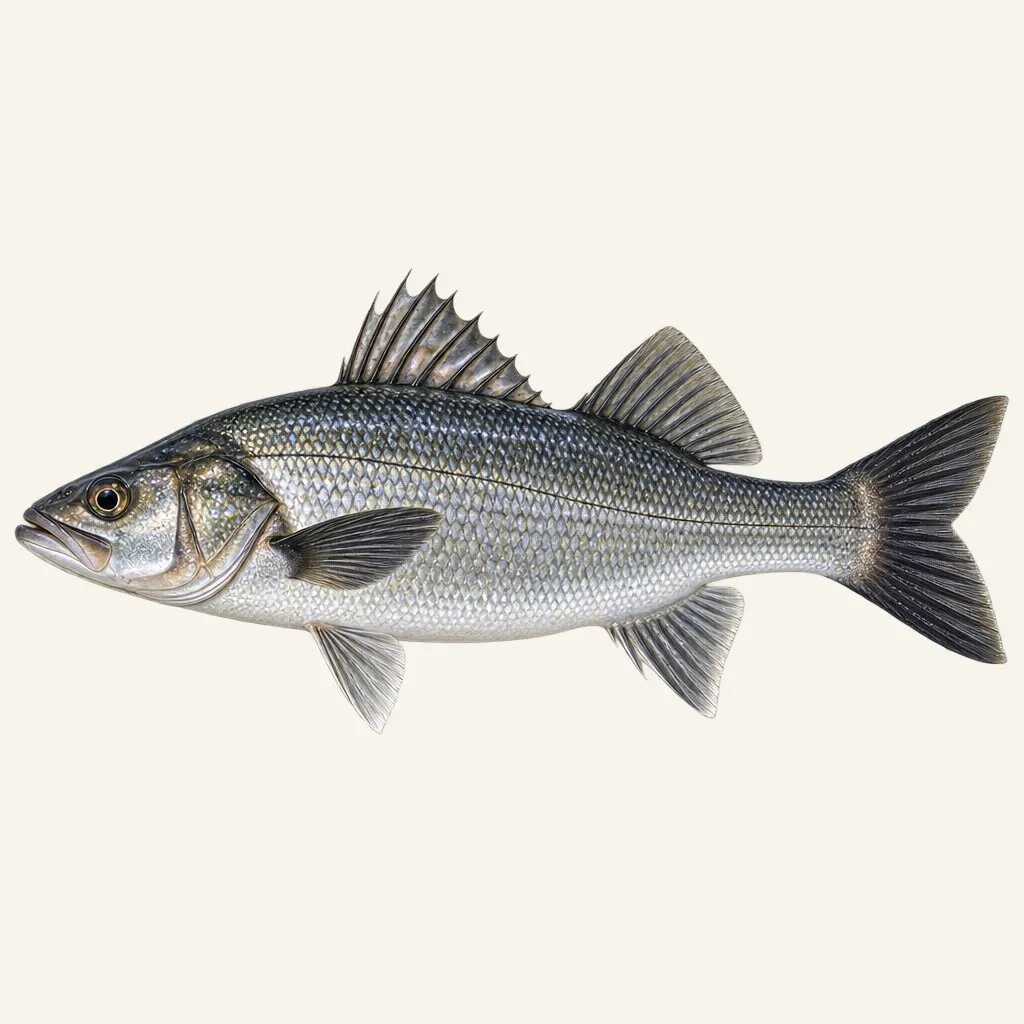
Blackfin seabass
Lateolabrax latus · Lateolabracidae
- Saltwater
- Coastal
- Medium
- Size
94 cm
- Weight
9.1 kg
Where to fish
- Estuary
- Rocky shore
Habitat icons: Flaticon
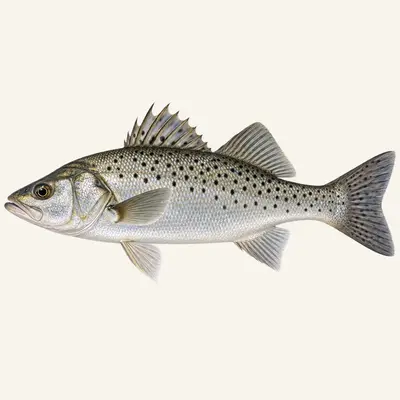
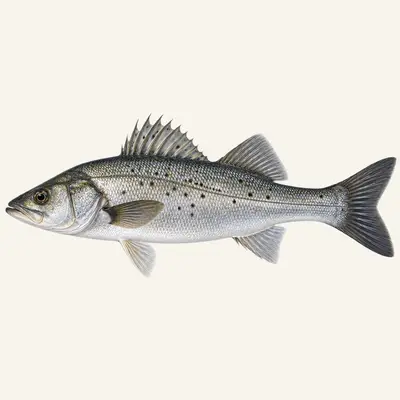
The blackfin seabass is a coastal fish of East Asian temperate to tropical waters, with an elongated silver body and a slightly bluish back. It inhabits estuaries, bays, and rocky areas close to the shoreline.
Calendar
Recorded in 2 countries
Japan · South Korea
GBIF occurrence records — native and introduced populations combined.
Identifying it
No fin formula, no proportion, no scale row is published for this fish in the sources consulted. There is no key to work from, which is an unusual thing to have to write about a species that supports a commercial fishery.
What there is amounts to an outline: an elongate silver body with a faintly bluish back, on a coastal fish of temperate to tropical East Asia. The six names this catalogue carries agree on one further character, the dark fins. They may well be translating one another rather than reporting six separate observations, but the fins are the only field mark anyone has offered for this animal.
The epithet adds a third. Latus is Latin for broad, and it is a statement about the depth of the body — one word long, and the closest thing to a measurement on record here.
The water it needs
Estuaries, bays and rocky ground close to the shoreline. That is the whole of the habitat description, and every term in it is a shallow, inshore term: nothing places this fish offshore, and nothing gives a depth band.
The genus supplies the rest by inference rather than by record. Its documented members move between salt, brackish and fresh water, and the fishing techniques attached to this one are estuary techniques. The salinity boundary is where to start looking, not where the sources say the fish is.
Areas
- Coastal estuaries
- Marine rocky areas
- Coastal seagrass beds
- River mouths
Techniques
- Cast-and-retrieve with soft lures
- Light jigging
- Live bait fishing
- Coastal drift fishing
Baits
- Soft lures
- Live shrimp
- Small live fish
- Squid strips
How to catch it
What is published on this seabass runs to three lines: it is fished commercially, it is held to be a sport fish, and its reference description is a 1984 catalogue of the fishes of the Japanese archipelago. No depth, no prey list, no spawning season, no bottom type.
So anyone looking for it works by analogy with the Japanese seabass, whose coasts it shares. The analogy has a limit worth keeping in mind. Two species held apart by Japanese ichthyologists are held apart on constant differences — of shape, of counts, of habitat — and those differences are exactly what the summary sheet fails to report.
Soft lures, light jigging, live bait and a drifted bait describe the fishing of a coastal predator. They are a place to start. They are not an observation of this species.
Conservation
The species has never been assessed. That is not a clean bill of health: it means no state of its populations has been established, and a decline would currently go unremarked.
Two circumstances make it hard to follow. It shares its coast with the Japanese seabass, incomparably better documented and farmed commercially besides, and nothing guarantees that the landings of the two are separated on the quay. A species counted together with another disappears from the statistics before it disappears from the sea.
Regulations
Check the local regulations in force (legal size limits, closed seasons, bag limits).
For guidance only. Legal sizes, quotas and open seasons vary by location and season: always check the local regulations in force before fishing.
Other names
Blackfin seabass is the English name, and it is the only one of the three East Asian Lateolabrax names in this catalogue that describes the animal instead of naming a country. Japanese seabass is given to two of the three. Chinese seabass — which is the name the descriptive text on this page opens on — is ordinarily applied elsewhere in the genus.
The practical consequence is short. Country names here identify nothing, and a record that gives one without the binomial has not identified a fish.
Sources: fishbase.se · api.gbif.org