Chinese seabass
Lateolabrax spilonotus · Lateolabracidae
- Saltwater
- Coastal
- Medium
- Size
16–102 cm
- Weight
8.7 kg
Where to fish
- Estuary
- Rocky shore
Habitat icons: Flaticon
Found in the moving waters of inshore rocky reefs. Juveniles may ascend rivers and return to the sea to spawn.
Calendar
Recorded in 5 countries
China · Hong Kong SAR China · Japan · South Korea · Taiwan
GBIF occurrence records — native and introduced populations combined.
Identifying it
There is no key. Under this name the sources publish no count, no proportion and no measurement of their own: the summary sheet resolves to the Japanese seabass, and everything legible there is a description of that animal. The catalogue and the reference database do not even agree on which binomial is valid.
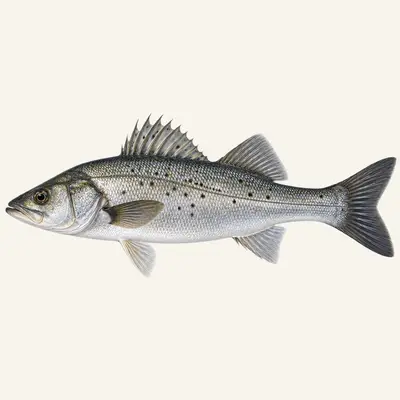
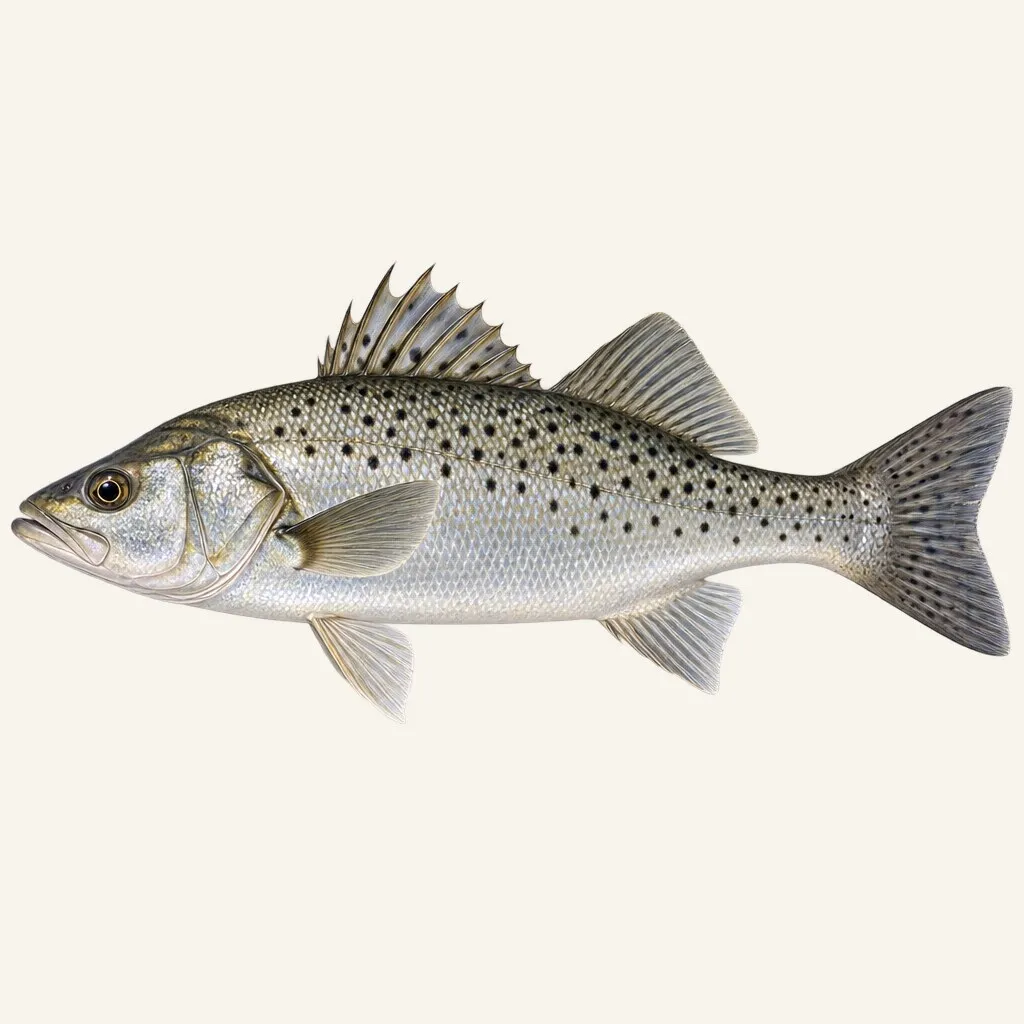
One character can be attributed to this fish with confidence, because the people who described it chose it twice. Both epithets in circulation name a speckled animal — maculatus in Latin, spilonotus in Greek for a spotted back. Where nothing else agrees, the spots do.
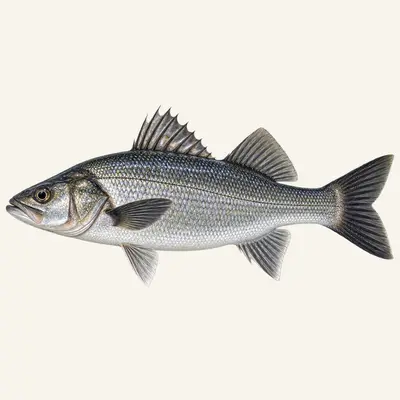
The spots identify nothing on their own. Young European sea bass are spotted too and lose the marks with age, so a speckled silver bass in the hand is a fish to examine rather than a fish to name.
Areas
- Estuaries and brackish zones
- Marine rocky coasts
- Coastal seagrass
- Harbors and artificial structures
Techniques
- Surface lure casting
- Light coastal jigging
- Live bait fishing in estuary
- Jighead cast-and-retrieve
Baits
- Surface lures
- Live shrimp
- Small live fish
- Soft lures
How to catch it
The documentation available under this name is the Japanese seabass's: reefs in moving water, juveniles running up rivers, a winter spawning offshore. Transposing it would amount to describing another species on this page, so none of it is written here.
Two things survive the subtraction. The first is the position in the genus. The Lateolabrax that are documented at all tolerate fresh water as readily as salt, and the methods listed against this one — surface lures, light jigging, live bait, a jighead worked in the estuary — are river-mouth methods. That is the side to search.
The second is a note-keeping instruction. Where several species of the genus meet, a silver speckled capture is not identified until it has been examined, and a photograph is worth more in a notebook than a name. Badly separated ranges get corrected that way and no other way.
Regulations
Check the local regulations in force (legal size limits, closed seasons, bag limits).
For guidance only. Legal sizes, quotas and open seasons vary by location and season: always check the local regulations in force before fishing.
Other names
This catalogue gives Japanese seabass as the English name of two entries, this one and Lateolabrax japonicus. It is not a slip to be tidied away: it reproduces what the literature does. Five of the six names carried here are built on the other species — spotted Japanese bass in Spanish, Italian, German and Portuguese, plain Japanese seabass in English. The vernacular says what the science says. This fish is named by reference to a neighbour, for want of a description of its own.
English contributes a second collision. Spotted seabass is the established English name of Dicentrarchus punctatus, an Atlantic fish in another family, so the obvious descriptive name for this one is already spoken for.
On the scientific side, the name retained as valid here is Lateolabrax spilonotus while fisheries writing uses Lateolabrax maculatus freely. The databases resolve one into the other, which is precisely how a page compiled under one name comes back carrying the biology of the other.
Sources: fishbase.se · api.gbif.org