Goujon de l'Amour
Perccottus glenii · Odontobutidae
- Freshwater
- Predators
- Easy
- Size
15–25 cm
- Weight
0.0–0.3 kg
- Lifespan
7 years
- Water temp.
15–30 °C
Where to fish
- Pond
- River
Habitat icons: Flaticon
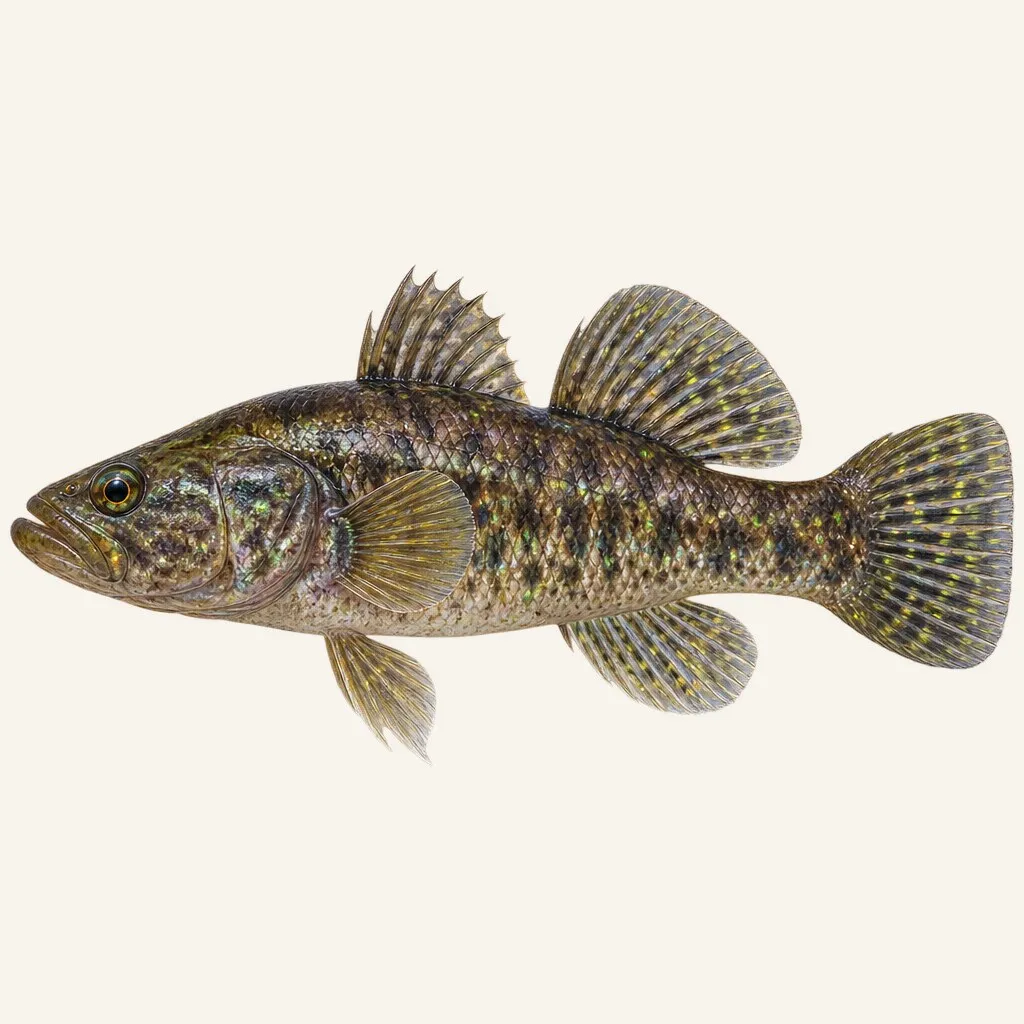
Highly problematic invasive Asian species - Large head with a sculpin-like appearance
Calendar
Recorded in 5 countries
China · Germany · Poland · Russia · Ukraine
GBIF occurrence records — native and introduced populations combined.
Its range
The first recorded introduction of this fish was inside its own drainage. It is native from the Tugur, on the Sea of Okhotsk, and from the Amur south to the Yangtze and Fujian; within the Amur it was historically known from the middle and lower river together with the Zeya, Sungari and Ussuri and the Khanka basin. The population in the Shilka, in the upper Amur, is listed as introduced.
Europe came afterwards, and at least one country there reports adverse ecological impact following the introduction. The record files the species under potential pest, which is not a heading many entries in this catalogue carry.
Between 39°N and 54°N and between 106°E and 141°E, the native range is a continental block of standing water. The European occurrence is something else: a set of separate arrivals, every one of which had to be carried.
Identifying it
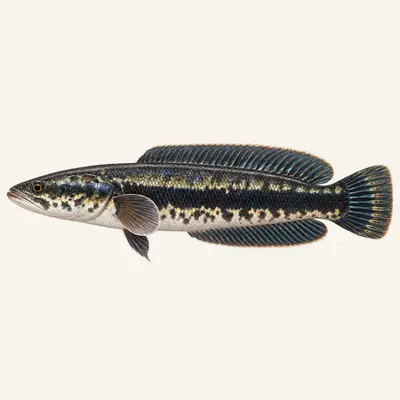
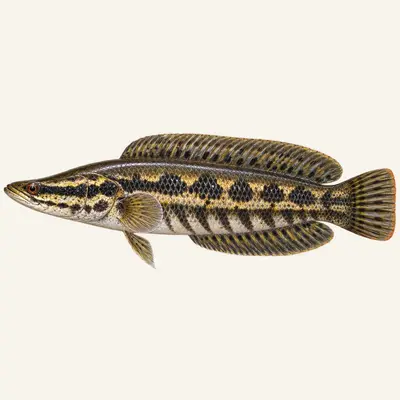
A spawning male is unmistakable, and briefly so. A hump rises on the nape, the body goes black, and bright green spots come up over the flanks and on the unpaired fins. For as long as that lasts, no key is needed.
Outside the season the published diagnosis is explicitly comparative: it lists the characters separating this fish from other European freshwater species, which makes it one of the few comparisons in this catalogue that can be quoted rather than deduced. Two dorsal fins, the first with 6 to 8 simple rays and no spines, the second with two or three simple and 8 to 12 branched. No barbels. Pelvic fins not fused into a disc, which is what keeps it apart from the gobies it gets grouped with. No lateral-line canals.
The count fields at the head of the same record call those first-dorsal elements spines. The diagnosis says the fin has none. It is one fin described twice under two conventions, and the diagnosis is the half written for identification.
Breeding
The eggs go in a single row, close to the surface. They are elongate, 3.8 by 1.3 mm, carry sticky filaments, and are usually attached in that one line to submerged structure — roots, leaves, whatever is standing in the water. A clutch is a thread rather than a mass, and it is placed in the top few centimetres of a stagnant pond: the warmest water available, the best oxygenated, and the first to go if the level drops.
Spawning is repeated in batches through May and June at 15 to 20 degrees, and the male guards the eggs and then the pelagic larvae.
First spawning comes at one to three years and about 6 cm standard length. That is a very low bar, and set beside several clutches a season it means a population can be founded by animals nobody would look at twice.
The water it needs
It avoids current — fast current and slow current alike. The phrasing in the record is worth pausing over, because most fish said to prefer still water will still turn up in a gentle flow. This one is placed in lentic water: lakes, ponds, backwaters and marshes with dense submerged vegetation, with a stated preference for stagnant rivers and for bogs.
Two capacities then remove nearly every limit such water would otherwise impose. Poorly oxygenated water is tolerated. And the fish survives its water body drying out, or freezing solid, by digging into the mud and going dormant in it.
The second one defeats the standard remedies. Draining a pond and letting it freeze through are the two cheap ways of clearing an unwanted fish out of a small water, and both are conditions this animal is on record surviving. The temperature band it has been logged in, 15 to 30 degrees, describes a growing season and says nothing about the winter it spends underground.
Areas
- Calm waters
- dense vegetation
Techniques
- Worms
- Larvae
- Small fish
Baits
- Light line
- Micro lures
What it eats
Tadpoles are on the prey list, and amphibian larvae are on the list of what the species removes. Those are two separate statements in the record and they should be read together: in small water bodies this fish is described as extirpating almost all other fish species and amphibian larvae.
A pond is precisely the wrong size of water for this fish to arrive in. A voracious predator in a shallow vegetated pool, with nothing above it in the chain, works through a fauna that has no refuge and nowhere to go. The record calls it a most serious threat to aquatic fauna wherever it occurs, and lists a wide range of invertebrates alongside the tadpoles and the fish.
The practical consequence for anyone assessing a water is that the damage does not stay inside the fish community. Ponds and ditches are where amphibians breed, and ponds and ditches are the habitat this species is placed in.
How to catch it
The record lists the species as a potential aquarium fish, and that line is a vector rather than a recommendation. An animal that comes through anoxia, drought and being frozen into mud is an animal that survives a bucket, a tank and a journey, and the route by which it entered Europe is the route it keeps using between waters once it is there.
As a quarry there is not much to it. Fifteen centimetres of common size, in ponds, marshes and peat cuttings, puts it outside most fisheries, and the entry here pairs light line and micro lures with worms, larvae and small fish.
Its value to an angler is as information. A stocky little predator with no barbels, no fused pelvic disc and no lateral-line canals, taken from a European pond, is the record of an introduction and not a note about local fauna. Reporting it is worth more than keeping it.
The one available action is negative and effective: nothing alive goes from one water into another. That is the route the species used, and it is the only one a person holding a rod can close.
Conservation
This section runs the other way round. What is at risk in a water holding Perccottus glenii is everything else in it, and the measures that would normally deal with that are the measures this animal is proof against.
Take them in order. Drying the pond out fails, because it burrows into the mud. Letting the water freeze through fails, for the same reason. Deoxygenating it fails, because poor oxygen is tolerated anyway. Fishing it out fails against a predator that spawns from 6 cm, in several batches, in its first or second year.
The real limit is the current it refuses. It does not colonise running water, and that puts an actual boundary around the risk: a system of stagnant ponds is exposed, and a reach with flow in it is not the same proposition. That distinction is what an assessment of a new water rests on, and it is the useful sentence in the file.
Regulations
Classified as invasive in several countries
For guidance only. Legal sizes, quotas and open seasons vary by location and season: always check the local regulations in force before fishing.
Other names
Both English names are about sleeping. Amur sleeper and Chinese sleeper follow the family and its relatives, called sleepers for the long motionless spells they spend on the bottom, and each of them at least says which part of the world produced the fish.
The English entry in this catalogue does not. It carries Goujon de l'Amour, the French name, unchanged — a gap in the naming rather than a synonym, and worth knowing about for anyone looking the species up here by an English name. Italian and Brazilian Portuguese take the genus name instead. German builds Amurgrundel, an Amur goby, filing the fish with a family the diagnosis above is careful to keep it out of.
Glenii is a patronym, and says nothing about the animal.
Sources: fishbase.se · api.gbif.org