Jari peacock bass
Cichla jariina · Cichlidae
- Freshwater
- Predators
- Hard
- Size
34 cm
Where to fish
- Estuary
- River
Habitat icons: Flaticon
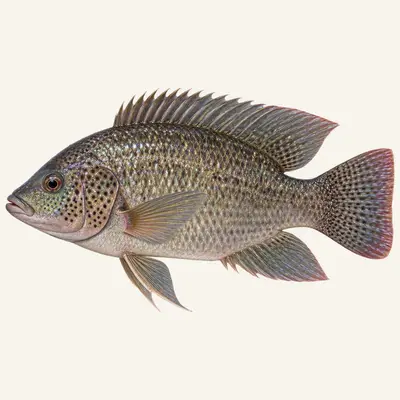
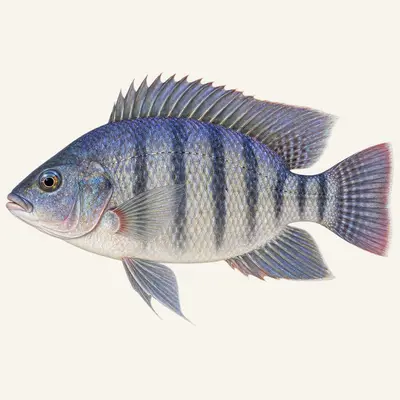
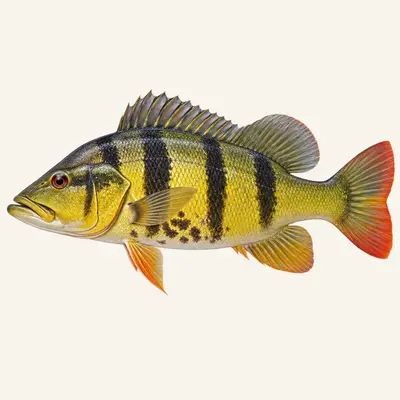
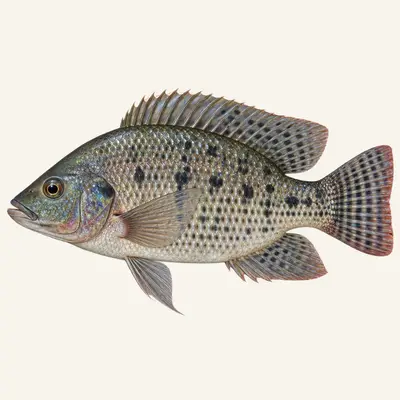
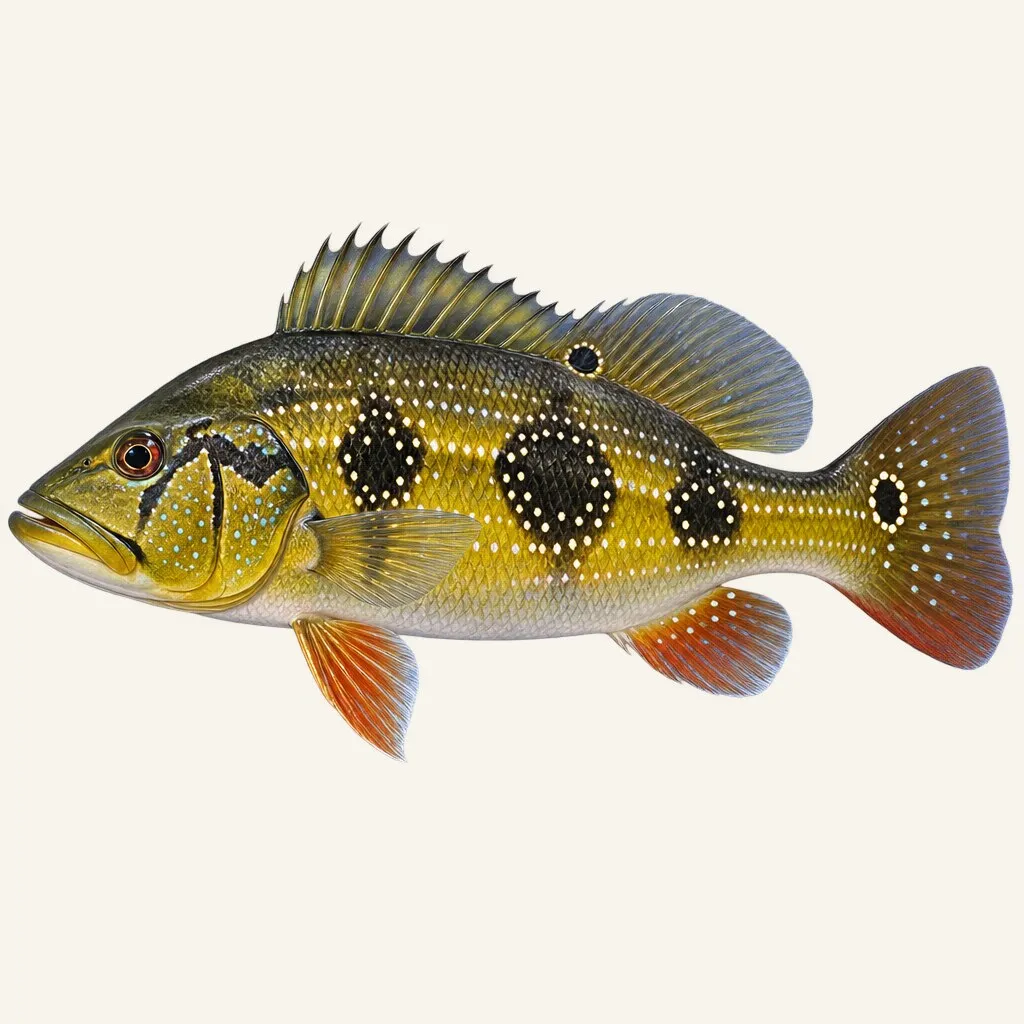
The Jari peacock bass is a predatory cichlid from the dark-water Jari River basin in Brazilian Amazonia, with a robust body marked by irregular dark blotches and a distinctive caudal spot.
Calendar
Recorded in 1 country
GBIF occurrence records — native and introduced populations combined.
Identifying it
The dorsal fin is bare. The scale cover that extends onto it in the rest of the genus is missing here, or reduced to almost nothing, and it is the single character that names this species without argument.
Counts confirm what the colour will not. The dorsal usually has 15 spines and 16 soft rays where the genus formula runs to 17 rays, though one congener shares that reduced ray count, so the fin count narrows the field without closing it. The vertebral column totals 34 — eighteen plus sixteen — where every other species in the genus lines up 35 or 36. The fish is built with one segment fewer than its relatives, which is a structural difference rather than a marking, and it does not vary with age or condition.
Colour puts it among the spotted species: rows of pale marks along the side, and large ringed blotches taking the place of the vertical bars in adults. A ringed black spot sits just under the soft part of the dorsal, shared with C. pinima and with nothing else. In the other spotted species the bars below the upper lateral line are typically entire; here the pattern resolves into separate ringed blotches instead. Its counted scale row is high, 100 to 108, where C. thyrorus stays between 77 and 90.
Small, for a peacock bass. The published length is taken from the snout to the base of the tail, not to the tip of the fin.
Areas
- Shaded forest riverbanks
- Dark-water creeks
- Leaf litter zones
- Tributary mouths
Techniques
- Slow edge cast and retrieve
- Light jigging
- Live bait fishing
- Subtle surface lures
Baits
- Dark soft plastic lures
- Light jigs
- Small live fish
- Natural-toned minnow lures
- Light spoons
Regulations
Check the local regulations in force (legal size limits, closed seasons, bag limits).
For guidance only. Legal sizes, quotas and open seasons vary by location and season: always check the local regulations in force before fishing.
Other names
The epithet points to the Jari.
What is known about the fish very nearly ends with the description that gave it the name. There is no diet on file, no spawning season, no account of the water it lives in. One breeding male has been examined: it showed three blotches ringed with white dots, standing in for the first two bars, and that single fish is the whole of what is recorded about the species in breeding condition.
That thinness is itself worth knowing. Growth figures, sizes and behaviour circulating for the spotted peacock bass do not carry over here without checking, and the species this one is compared against in the key — C. pinima, C. thyrorus, C. vazzoleri — are neighbours in a diagnosis rather than stand-ins for it. On the evidence of the vertebral count, it is not built like them either.
Sources: fishbase.se · api.gbif.org