Largemouth bass
Micropterus salmoides · Centrarchidae
- Freshwater
- Predators
- Medium
- Size
40–97 cm
- Weight
0.9–10 kg
- Lifespan
23 years
- Water temp.
10–32 °C
- Depth
0–6 m
Where to fish
- Lake
- Pond
- River
Habitat icons: Flaticon
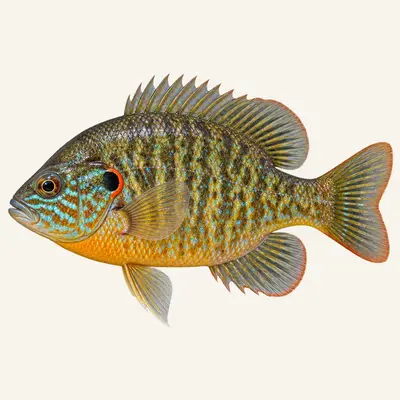
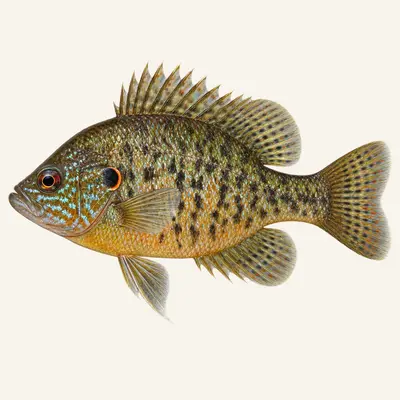
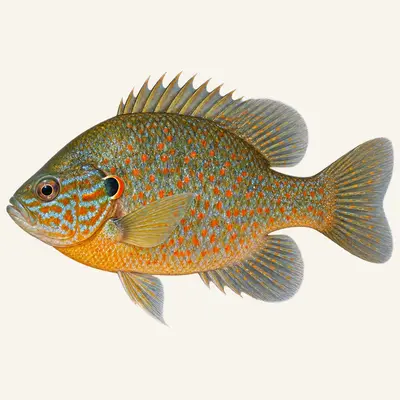
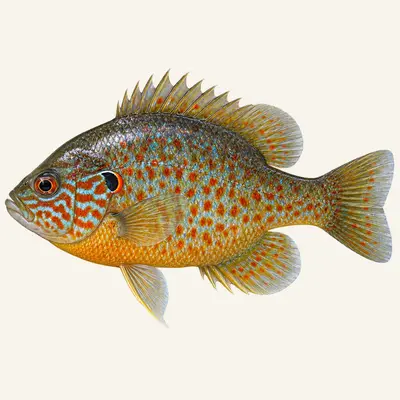
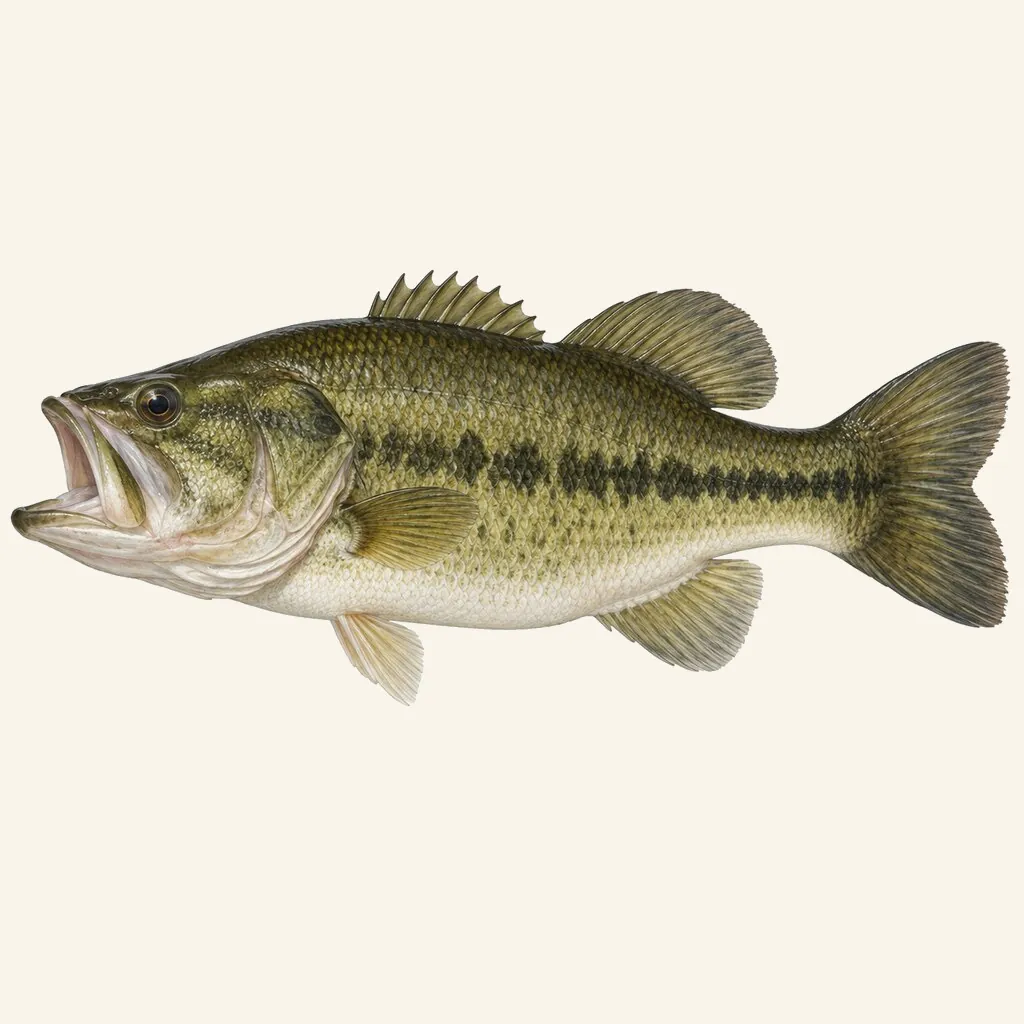
The largemouth bass is a robust centrarchid recognizable by its prominent mouth whose corner extends beyond the rear edge of the eye, with a stocky body featuring olive-green flanks marked by a dark lateral band.
Calendar
Spawning: fish are vulnerable. Check local rules — closed seasons vary by country.
Recorded in 13 countries
Colombia · France · Italy · Japan · Mexico · Norway · Portugal · South Africa · South Korea · Spain · Switzerland · United States · Zimbabwe
GBIF occurrence records — native and introduced populations combined.
Its range
The native range is eastern North America: the St Lawrence and Great Lakes systems and the Mississippi basin, from southern Quebec across to Minnesota and down to the Gulf, plus the Atlantic and Gulf drainages from North Carolina through Florida and into northern Mexico. For most readers in English, that is home water, and the fish in it is the default freshwater predator rather than an exotic.
That native outline stops around 46 degrees north, and the species is classed as subtropical. The northern edge is a temperature edge, and it is the reason introductions into cold water so often produce a population that survives without ever producing many large fish.
Everything outside North America was deliberate. This fish was exported as a sport species and is now on every continent that has warm still water, which makes it one of the most successfully transplanted freshwater fish in the world. The bill for that arrived later: a number of countries report damage to their native fauna where it established. In European water it avoids current and keeps to closed systems, and it turns up in estuaries at salinities as high as 13 parts per thousand.
Identifying it
Close the mouth and look at where the upper jaw ends. On this fish it reaches past the back of the eye; on a smallmouth or a spotted bass it stops short of it. Where the three overlap, that one line settles the argument and nothing else needs checking.
The second mark is the ragged dark stripe running the length of the flank, from the eye to the base of the tail. It is hard-edged on young fish, blurred on heavy ones, and can fade almost to nothing on an old fish out of stained water, which is why it works as a supporting character and not as the deciding one.
The dorsal fin is nearly cut in two by a deep notch, ten spines in front and 11 to 14 soft rays behind. The anal carries three spines and 10 to 12 rays, and the backbone runs to 30 or 32 vertebrae. The body is fusiform with an oval section, olive to dark green over the back, chalky underneath.
Breeding
The male does all of the parental work and turns aggressive for the duration. He clears a nest on a soft bottom in shallow water, a scrape somewhere between 25 and 203 mm deep, and holds the ground around it against everything that comes near.
A female is not committed to one of them. She may spawn with several males on several different nests, which spreads a season's eggs across separate sites and separate guardians, so a single failed nest does not cost her the year.
Then comes the number that matters more than any other on this page. The male guards and fans the eggs and the fry for about 29 days. Four weeks, on station, keeping silt off the eggs and driving away anything that approaches, on a fish that stops feeding properly for the duration. Spawning runs from spring into summer and begins when the water reaches 15 degrees.
The water it needs
Lakes, ponds, swamps, backwaters, creek pools and rivers of any size, generally over mud or sand. Reservoirs and impoundments suit it especially well, which is a large part of why it dominates fishing across so much of its range: the twentieth century built millions of hectares of exactly the habitat it wants.
What it looks for is quiet clear water with an overgrown bank. Cover is not an amenity, it is the structure of the territory itself. Drowned timber, lily pads, stumps, docks, weed edges: the fish lives in these rather than near them.
Working depth is shallow, from the surface down to about 6 m, which puts the species within reach of a bank angler for most of the year. Temperature tolerance is broad, 10 to 32 degrees, but appetite is narrower than tolerance: feeding shuts down below 5 degrees and again above 37. Herons, bitterns and kingfishers take the young, which is one more reason the shallow cover matters.
Areas
- Weed beds
- structure
- submerged wood
- banks
Techniques
- Lures
- Live baits
- Crayfish
Baits
- Jig
- Soft worm
- Crankbait
- Spinnerbait
- Topwater
- Frog
What it eats
Adults take fish, crayfish and frogs; juveniles work through crustaceans, insects and small fish. Cannibalism happens without being the rule.
One line changes how the calendar reads: this fish does not feed while it is spawning. Whatever a bass on a bed does to a lure passing over it, eating is not the motive. The strike is territorial, aimed at removing a threat from above the eggs, and a fish caught that way was never feeding at all.
How to catch it
Aggression is as good a lever as hunger here, and that is what makes the fishing what it is. A lure entering the territory of a fish with a full stomach still gets hit, which opens up a far wider range of presentations than a strictly hunger-driven predator would allow, and explains why so much tackle development has happened around this one species.
The fishing happens in the cover, not beside it. Timber, pads, weed and hard structure hold the fish inside them, which is why weedless rigging exists and why an accurate cast landing 30 cm from the right stump beats a beautiful cast into open water every time.
Temperature sets the pace. Between 5 and 37 degrees the fish eats and outside that band it does not, and within the band the best activity comes in the warm water of spring and autumn rather than at the peak of summer.
The spawn puts a decision in front of anyone fishing shallow in the spring. A guarding male attacks anything that comes over the nest and is therefore easy to catch, and taking him off leaves four weeks of work undefended and a nest that predators will find within minutes. Plenty of anglers pass visible beds for that reason alone, and the practice is argued about in every state where it happens.
The mouth is wide and the membrane in it is thin. It tears under a hard pull, and the fish jumps to throw the hook, so slack given at the moment it clears the water saves more fish than any amount of drag pressure.
Conservation
The nest, again, is the thing that fails. Four weeks of shallow-water guarding is a long exposure to anything that changes the water level, and reservoir drawdown at the wrong point in the spring strands or abandons a whole cohort of nests. Repeated disturbance over that window does the same thing more slowly. Neither shows up as a problem until a year class is missing several seasons later.
Outside the native range the issue is the opposite one. An efficient predator in still water reworks whatever fauna it finds, and the transport of fish between watersheds continues in spite of the rules against it, largely because the species is popular enough that somebody always wants one closer to home.
Longevity is worth knowing before deciding what to do with a big one: 23 years is the maximum reported age. A large female in a mature fishery represents two decades of a lake's productivity, and the fisheries that hold their size are generally the ones where those fish go back.
Regulations
Minimum size 30-40cm depending on the area / Catch-and-release encouraged
For guidance only. Legal sizes, quotas and open seasons vary by location and season: always check the local regulations in force before fishing.
Other names
Largemouth bass is the standard name, and black bass is the collective term for the whole genus, which also holds the smallmouth, the spotted bass and a set of river specialists. Regional names are common: bucketmouth in much of the country, green trout along the Gulf, and achigan à grande bouche in Quebec.
Bass is where things get slippery. The word covers striped bass, white bass and sea bass, which are temperate basses and sea perches from other families, and in Britain and Europe bass on its own means the European sea bass, a marine fish. None of these are related to this one, which is a sunfish. That matters when reading a regulation, a menu or a fishing report written on the other side of an ocean.
The genus name means small fin, taken from a description written on a damaged specimen, and the species epithet likens the fish to a salmonid. Both are wrong about the animal, and both are permanent.
Sources: fishbase.se · api.gbif.org