South European nase
Protochondrostoma genei · Cyprinidae
- Freshwater
- Carp & coarse
- Easy
- Size
15–22 cm
- Weight
0.0–0.2 kg
Where to fish
- River
Habitat icons: Flaticon
Small cyprinid endemic to the rivers of central and northern Italy.
Calendar
Recorded in 1 country
GBIF occurrence records — native and introduced populations combined.
Its range
The genus holds one species, and that species did not put itself on both sides of the Apennines.
Its own range lies on the Adriatic slope, between the Soča and the Vomano, across Italy and Slovenia. Everything on the Tyrrhenian side arrived by hand: Tuscany and Latium have received it in the Arno, the Ombrone and the Tiber, and the Centa and the Magra hold it too. Those are the drainages of another endemic, Barbus tyberinus, and central Italy has become the place where displaced fish are put down.
So the map is now made of two parts with opposite trends. The half the species evolved in is contracting under pressures it did not create. The half it was carried into is holding, and adds nothing to the security of the animal, because a population in the wrong basin is a population that cannot be put back.
Identifying it
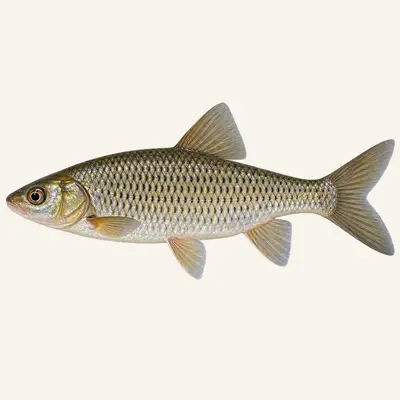
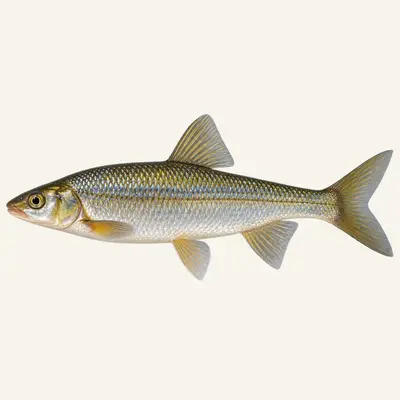
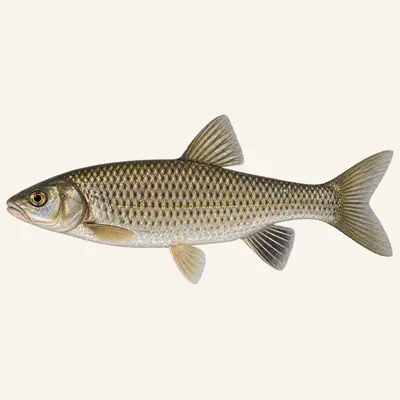
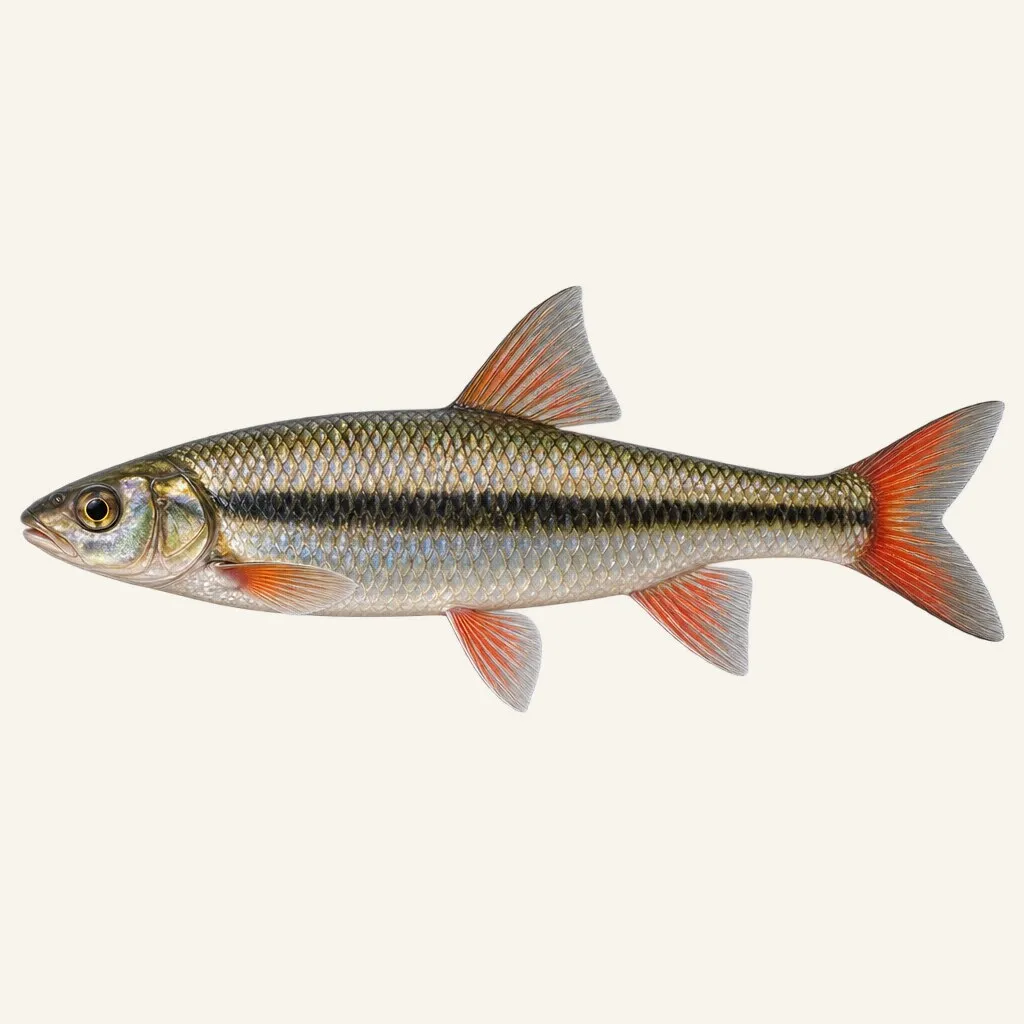
A broad dark band runs down the middle of the flank, unbroken from the head to the base of the tail. That band is the character the diagnosis leads with, and it is the one that answers the question this fish now raises most often on its own rivers.
Because a second grazer has been put into them. Chondrostoma nasus, carried into the Soča from outside, holds the same water and does the same work, and its published description records a silvery flank with no broad dark band along its middle. The two accounts answer each other directly, which is the only kind of comparison worth making at the water's edge.
The mouth divides them again. Here it is arched, and the lower lip carries a cornified sheath that is thin but fully formed; in the introduced species the mouth is a straight transverse slit under the snout, with a thick sheath. Thin against thick, arched against straight — and both fish carry red at the base of the paired, anal and caudal fins, so colour of fin decides nothing at all between these two.
The rest is counting: 50 to 62 scales along the lateral line, eight and a half branched rays in the dorsal, 14 to 19 gill rakers, and a slender body whose depth is 20 to 27 per cent of standard length.
Breeding
The migration is short, and everything about it is collective.
Adults gather in large numbers and move up into the main tributaries, where they spawn in strong current over gravel. This is not a run of tens of kilometres; it is a brief displacement that concentrates a whole population onto a few hundred metres of bed for a matter of days.
The date is where the record loses its footing. Two spawning windows are published for the species, March to May and May to June. For an animal whose entire reproductive year is a gathering of a few days, a month of disagreement between sources is not a bibliographic detail — it is the difference between finding the event and finding an empty tributary. It also means nobody can say, from the literature alone, which weeks of flow matter most on a given river.
The water it needs
Middle reaches and the larger tributaries, in the piedmont zone, with moderate to swift current over gravel. The fish stays in groups throughout the year, which makes both its presence and its absence unambiguous: a reach either holds a shoal or holds none.
Areas
- Gravel shallows
- Natural weirs
- Rapid margins
Techniques
- Maggots
- Worms
Baits
- Bloodworms
- Maggots
- Small freshwater shrimp
What it eats
The lip suggests one thing and the diet rubric says another, and the diet rubric is the one to believe.
This species is recorded as omnivorous, taking aquatic insects first and the film of algae on stone second. The cornified sheath is there, but thin, and the animal is not the specialist scraper its relatives are. It works a clean gravel bed for what lives on and between the stones, and takes the growth off the stones as part of the same pass.
That distinction is worth holding on to, because it is what makes the introduced competitor a problem rather than a coincidence. Two fish with the same lip, on the same gravel, in the same reach, do not divide it for long.
How to catch it
Nothing targets this species. The fisheries entry is empty of interest, which means every fish taken is taken incidentally by someone fishing for something else, and there is no body of practice to draw on.
What the diet allows is small and natural: bloodworm, maggots, freshwater shrimp, presented close to the bottom in the gravel shallows, along the fast margins and in the runs below natural weirs. The mouth is arched and set low, so a bait has to be on the bed rather than above it.
The one instruction that is not technical is about the calendar. The gravel of a main tributary in spring is the spawning ground of the entire local population, and it is also the most obvious place to fish. Wading it, or working it hard at the wrong moment, costs a river more than a blank day costs an angler.
Conservation · Vulnerable (IUCN) — This species is threatened with extinction. Always release it (no-kill), handle it with the utmost care and check local rules — fishing for it may be prohibited.
Conservation
Two pressures are named — the introduction of other species, and the destruction of habitat — and the first of them has a documented face.
The account of Chondrostoma nasus states without hedging that where it has been introduced into the Soča it outcompetes and eliminates this fish. The mechanism needs no reconstruction: the larger of two grazers with the same equipment, in a river that only ever supported one, and the smaller one is an endemic with nowhere else to be.
Underneath that sits a monitoring problem. Nothing counts this species. There is no commercial catch, no angling record worth the name, and therefore no series in which a bad decade would show up as a falling line. Its decline can only be measured by surveys carried out for its own sake, on dates chosen in advance — and where those surveys are not funded, the fish disappears without producing a number.
Regulations
Check the local regulations in force (legal size limits, closed seasons, bag limits).
For guidance only. Legal sizes, quotas and open seasons vary by location and season: always check the local regulations in force before fishing.
Other names
Lasca is the name in the valleys where the fish lives, and it is the only common name that anybody uses. English has none; the catalogue writes South European nase, a phrase that gives a compass bearing rather than an animal, and German makes the same choice with Italienische Nase.
The scientific name says roughly the same thing in Greek. Protochondrostoma marks the genus as standing before Chondrostoma, the group it was detached from, and a monotypic genus very often carries the record of that separation in its name rather than any description of the fish. The epithet is a personal name in the genitive, so it describes nothing either.
Which leaves the practical point for anyone reading records: the words nase and Chondrostoma both cover a body plan shared by several species on these rivers, and one of those species has now been introduced into this one's water. A record naming a nase in the Soča is a record that has to be checked.
Sources: fishbase.se · api.gbif.org