Southwest European nase
Parachondrostoma toxostoma · Cyprinidae
- Freshwater
- Carp & coarse
- Easy
- Size
20–30 cm
- Weight
0.1–0.4 kg
Where to fish
- River
Habitat icons: Flaticon
An endangered French endemic species - Inferior mouth - Feeds on algae
Calendar
Recorded in 2 countries
GBIF occurrence records — native and introduced populations combined.
Identifying it
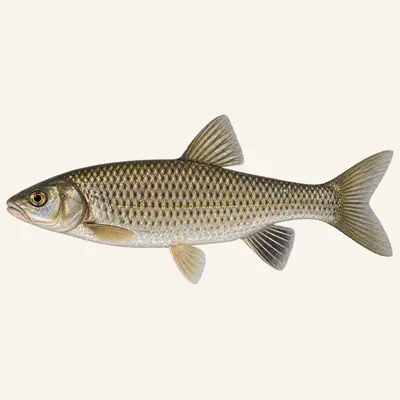
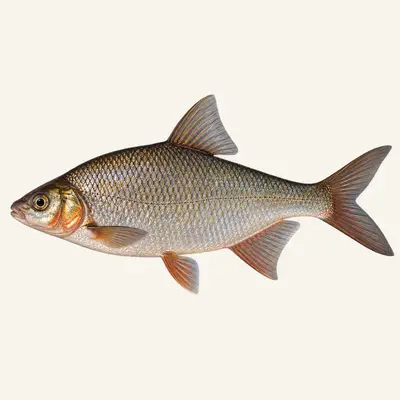
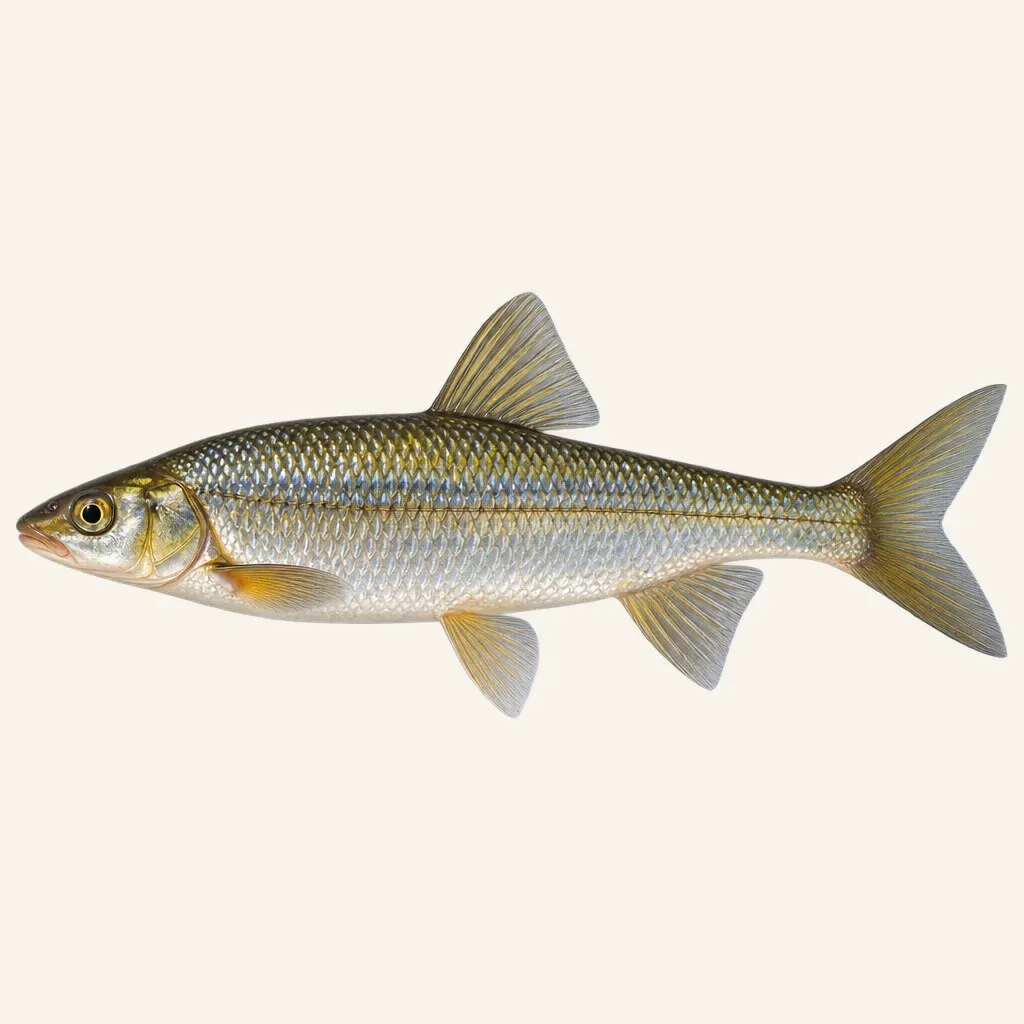
The mouth is the character of the group. It opens underneath the head, and the lower lip is armed along its edge with a horny plate that scrapes. That is the tool of a grazer, and it sets the Parachondrostoma apart from the cyprinids around them, which suck or snap.
The body is elongate and the tail carries 17 to 19 rays. Three dorsal spines and seven to nine soft rays, three anal spines and eight to eleven rays, 43 to 45 vertebrae.
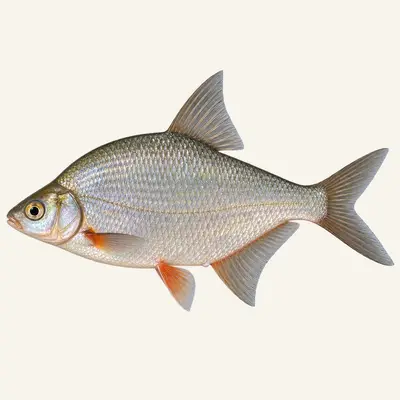
The common nase, a larger fish, frequently shares the same water. The two part on size and on the counts, and that matters more than it sounds: where both are present, naming a fish by eye is how hybrids go unnoticed.
Breeding
Spawning falls in May and June, and it happens in large shoals.
The eggs hatch in about eight days at 15 degrees.
A collective spawning on that scale concentrates the entire reproductive output of a reach into a few days and a single place. It is a strategy that works where the river is predictable, and it becomes a liability where it is not: a spate, a pollution incident or a dewatered channel at the wrong moment costs the whole year, not a share of it.
The water it needs
Small rivers with clear water over a bed of pebble and gravel, and water bodies of the low plains.
The documentation makes a point of calling this a long-lived species, which is unusual in a cyprinid of this size and has a consequence worth holding on to: the adults persist for years after recruitment has stopped. Presence is therefore not evidence that anything is working.
Areas
- Flowing rivers
- gravel bottoms
Techniques
- Maggots
- Worms
- Algae
Baits
- Earthworms
- Aquatic insect larvae
- Small caterpillars
- Maggots
What it eats
It feeds on invertebrates and on plants.
The horny plate on the lower lip scrapes the algal film off the pebbles, and it is that resource which explains the attachment to a clean bed. A stone under a layer of fines has nothing left on it to take. Substrate quality is not comfort for this fish, it is the larder.
How to catch it
Mostly it comes to hand by accident, while something larger is being fished for in the same water. An inferior mouth with a scraping edge is not built to take a bait presented in the ordinary way, and the species is not a target for anyone.
Where it is met, it is in a shoal over clean pebble and gravel in a small clear river. Finding one means finding a great many, which is the practical shape of a fish that lives and breeds in numbers.
May and June are when it is most exposed, gathered in one place and occupied with something other than watching the bank. A shoal found in spawning condition is best left where it is.
Conservation · Near Threatened (IUCN) — This species is in decline. Release your catch quickly and handle it with care — wet hands, as little time out of the water as possible.
Conservation
The species is threatened by the introduction of other species. That is the wording of the documentation, and it points at a specific mechanism: interbreeding with the common nase, moved into rivers outside its own range, dilutes an endemic grazer without reducing the number of fish anyone counts in the river. The census stays flat while the lineage goes.
Longevity compounds it, as it always does. A population can show adults for a decade after it has ceased producing pure young, and by the time the absence registers there is nothing left to work with.
Mass spawning is the third factor. Everything the reach produces in a year passes through a few days in one place, so any single badly timed event has the whole cohort in front of it.
Regulations
Check the local regulations in force (legal size limits, closed seasons, bag limits).
For guidance only. Legal sizes, quotas and open seasons vary by location and season: always check the local regulations in force before fishing.
Other names
French nase is one English name and Toulouse minnow is the other. The second is inaccurate — this is not a minnow — and it says something about how little attention the species has had outside France, where almost all of it lives.
French uses toxostome, and also sofie. The fish is an endemic of south-western Europe and nowhere else.
The specific name is built on the Greek for bow and mouth, after the arched lower lip that does the scraping.
Sources: fishbase.se · api.gbif.org