Ebro nase
Parachondrostoma miegii · Cyprinidae
- Freshwater
- Carp & coarse
- Medium
- Size
25 cm
Where to fish
- River
Habitat icons: Flaticon
Found in fast-flowing stretches but can survive in still water. Moves to the upper reaches to spawn.
Calendar
Recorded in 1 country
GBIF occurrence records — native and introduced populations combined.
Its range
The eastern Cantabrian slope, the Ebro and the drainages adjacent to it in the north-east, plus one adjoining headwater in the Tagus system.
That is one basin with an outlier, which is the pattern left either by a headwater capture or by a transfer. Whichever it was, it means the entire species sits in one corner of Spain, and the ordinary arithmetic of endemism applies: there is no elsewhere.
Identifying it
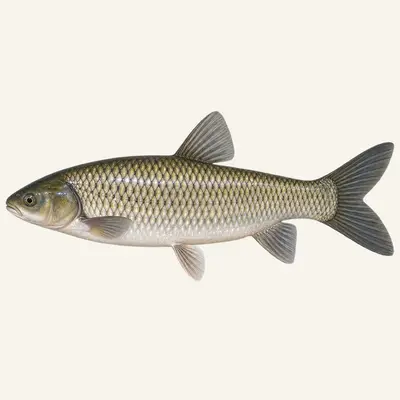
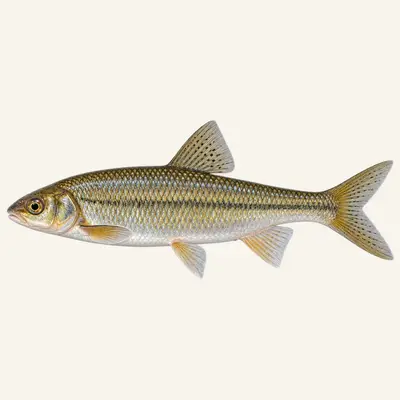
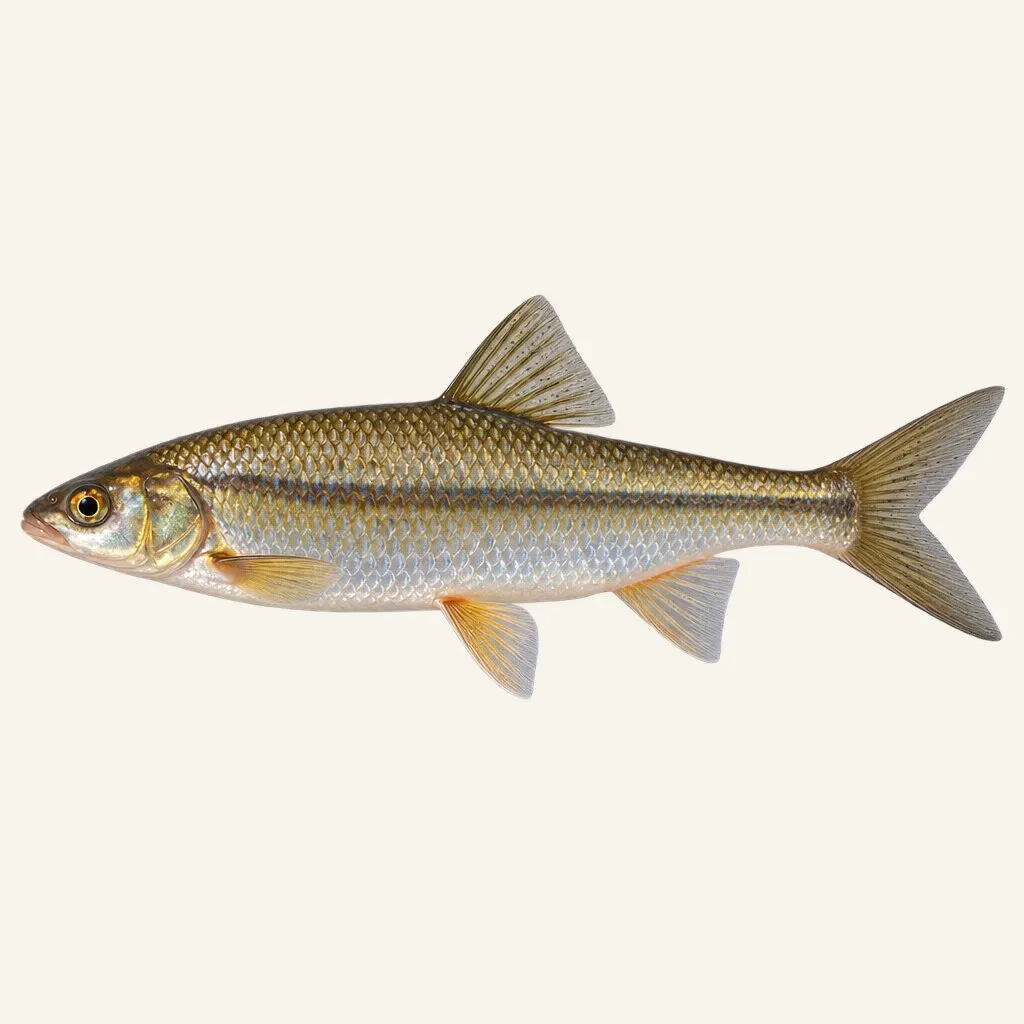
The diagnosis is a list of measurements, and there is no way round it: a slightly pointed snout with a rostral cap that stands out when the fish is viewed from below, 45 to 56 lateral-line scales plus three or four, body depth going 3.7 to 4.4 times into standard length, a caudal peduncle 1.5 to 1.9 times its own depth in length, 24 to 33 gill rakers, and pharyngeal teeth in a 7-6 or 6-6 arrangement.
None of that can be done at the water's edge. Separation from the congeners rests on counting, which is the general case in this genus and worth knowing before a catch is given a name.
The lower lip carries the same horny scraping edge as the rest of the genus, so the group is obvious even when the species is not.
The water it needs
Adults hold the fast-flowing reaches, though they survive in still water, and they move up into the headwaters to spawn over a bed of stone and gravel.
That upstream movement is the fact with consequences attached. A fish which has to reach the upper stretches to breed is stopped by any weir on any small tributary, and the adults will go on living perfectly well below it for years. The barrier does not kill anything; it simply ends the population, slowly, from a distance.
These are Iberian rivers in a Mediterranean climate, which adds the other half of the problem: the flow falls hard every summer, and a grazer tied to stone depends on whatever water is left over it.
Areas
- Gravel shallows
- Moderate-current margins
- Sandy-gravel zones
Techniques
- Float fishing
- Trotting
- Light feeder
Baits
- Maggots
- Filamentous algae
- Bread paste
- Bloodworms
What it eats
It preys on benthic diatoms.
That is an unusually precise statement of diet, and it is the sharpest description of the grazing habit anywhere in the genus — a vertebrate living on a microscopic film cultivated on rock. The film needs light and a clean surface to grow on. Fine sediment settling over the stones removes the crop without removing the stones, which is why substrate condition and food supply are the same question here.
How to catch it
Not a fish anyone sets out to catch. The mouth does not take a normally presented bait and the size is small.
Its presence carries information instead. A grazer with a horny lip on a given reach means the bed is still clean and still lit, which is more than a water-quality reading will tell about the same stretch. Where the species has quietly gone, the stones are the first thing to look at.
Conservation · Near Threatened (IUCN) — This species is in decline. Release your catch quickly and handle it with care — wet hands, as little time out of the water as possible.
Conservation
The accumulation is the one shared by every small-river Iberian endemic: a range confined to a few drainages, a climate that cuts the summer flow, agricultural abstraction that cuts it further, and introduced cyprinids that interbreed with the local stock.
To that list this genus adds a requirement of its own. An animal living off a diatom film on stone has nowhere to fall back to — mud offers it nothing, sand offers it nothing, open water offers it nothing. Habitat loss for a generalist means a reduced range; for this fish it means an absence.
And a weir between the adults and the headwater gravel finishes the sequence without touching a single fish.
Regulations
Check the local regulations in force (legal size limits, closed seasons, bag limits).
For guidance only. Legal sizes, quotas and open seasons vary by location and season: always check the local regulations in force before fishing.
Other names
Ebro nase in English, madrilla in Spanish. The second is the name actually used in the valleys where the fish lives, and the one a local angler will produce; the first exists mainly in databases.
The word nase itself is borrowed from the German for nose, after the projecting snout of the group. English applies it to several Iberian species which were all once filed under Chondrostoma, so it names a body plan rather than an animal. French has toxostome de l'Èbre, coined for want of an established vernacular.
Sources: fishbase.se · api.gbif.org