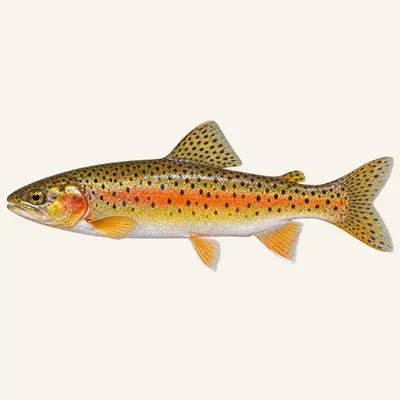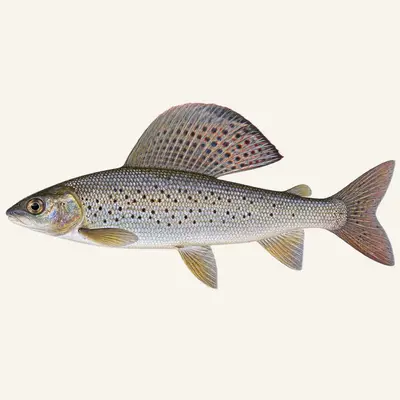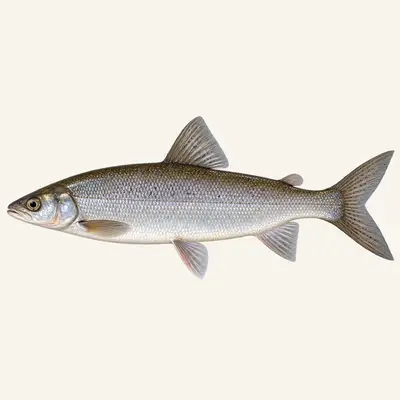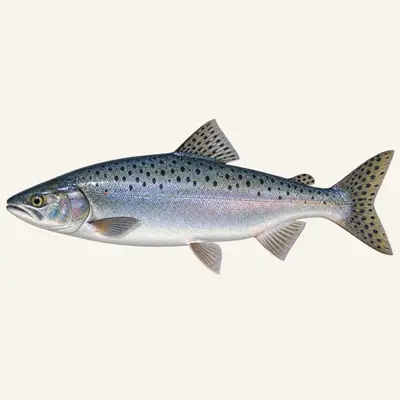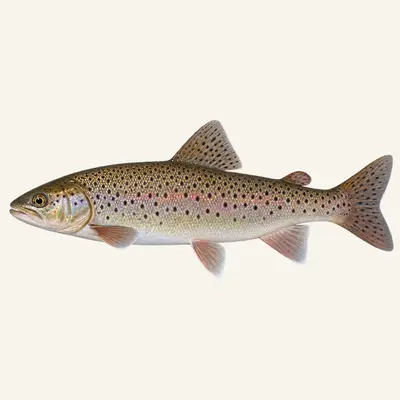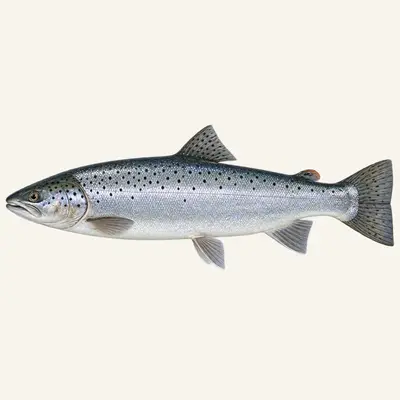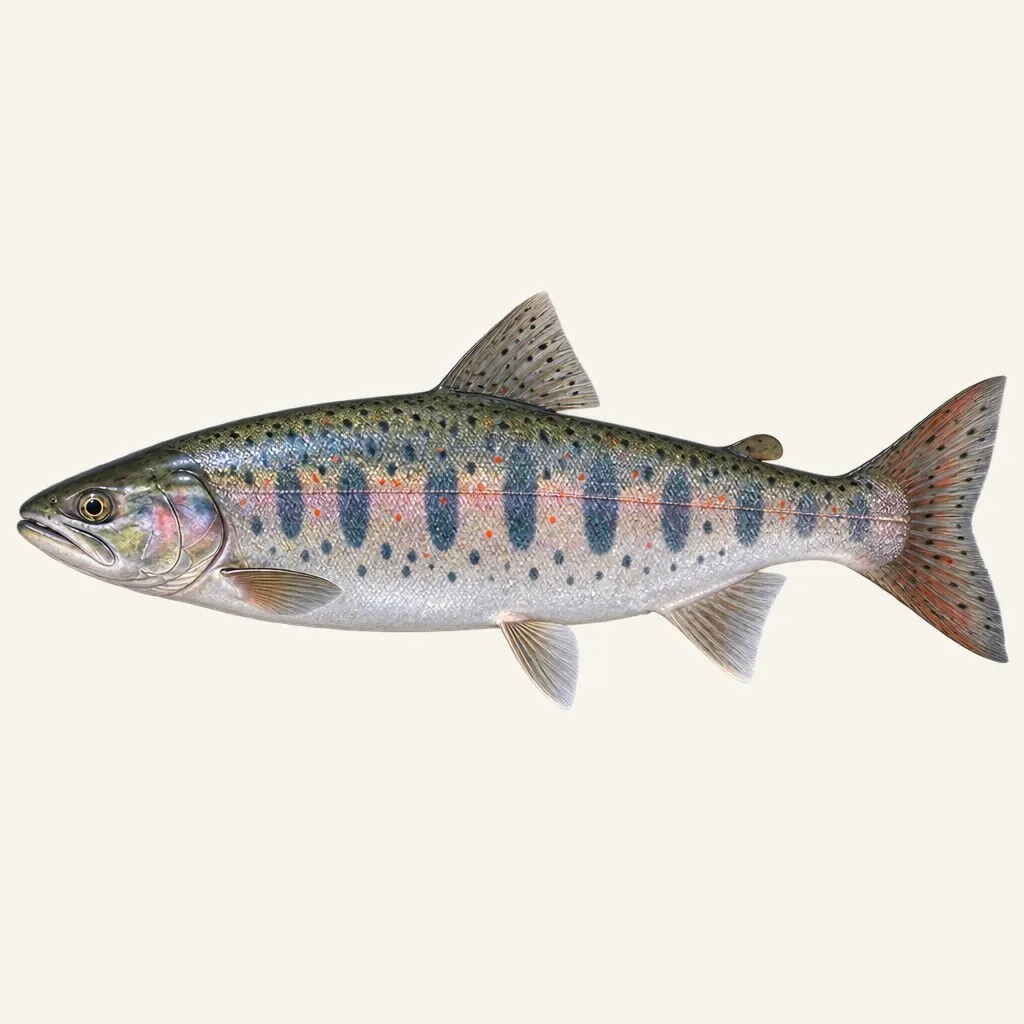
Masu salmon
Oncorhynchus masou · Salmonidae
- Saltwater
- Salmonids
- Medium
- Size
79 cm
- Weight
10 kg
- Depth
0–200 m
Where to fish
- Estuary
Habitat icons: Flaticon
Lives in headwaters and often holds a territory; it feeds mainly on insects but also on small crustaceans and fishes. The sea-run form moves downstream in schools and, after a short stay in the zone, enters the sea where it feeds on small fishes and pelagic crustaceans.
Calendar
Recorded in 3 countries
Japan · Russia · South Korea
GBIF occurrence records — native and introduced populations combined.
Its range
The longitudes on record for this salmon, 127 to 158 °E, never cross the Pacific. It is the only member of the genus to stay on the Asian side, between 34 and 65 °N — from the temperate rivers of the Japanese archipelago and the Korean peninsula in the south to the cold margins of the Sea of Okhotsk in the north.
Confinement to a single edge of the ocean sets it apart from every congener, all of which hold water on both continents.
Breeding
The pairing is clean: one male to one female, without the crowd of attendant males that surrounds spawning in the American members of the genus. Egg production is determinate — the stock is formed ahead of the season and released within it.
The eggs are then buried and left. Nothing watches over the nest once it is closed, which puts the whole weight of protection on the choice of substrate: with the gravel back across them, the only defence the batch has is the bed itself.
The water it needs
Two forms live in different worlds. The fluvial form stays in the headwaters, where each fish usually holds a territory, and does not drop down.
The sea-run form does the opposite. It moves downstream in schools, pauses only briefly in the brackish zone — the estuary is a transition here, not a rearing stage — and enters the sea, where it uses the bottom and open water down to 200 m.
The gap in size between the two follows directly from that split: a headwater fish stays small, while every large fish on record came back from the sea.
Areas
- Coastal rivers of East Asia
- Estuaries and river mouths
- Deep river pools
- Coastal marine zones
Techniques
- Fly fishing (streamers, nymphs)
- Light lure fishing
- Natural bait drift fishing
- Light spinning
Baits
- Salmon eggs
- Shrimp
- Earthworms
- Colorful soft lures
What it eats
In the river the diet rests on insects, with small crustaceans and small fishes alongside. Fish become a real part of the ration in individuals that reach a decent size.
At sea the ration changes in kind: small fishes and pelagic crustaceans. That difference is the entire explanation for the growth gap between two forms that came out of the same eggs.
How to catch it
The territorial habit of the river fish dictates the method. One individual holds a station and defends it, which means a good lie holds a fish and not a group, and a river is worked by moving from lie to lie rather than by pressing the one that has just produced.
The water concerned is headwater — clear, cold, and approached from close range. Cast shadow and the sound of a footfall count for as much as the choice of imitation.
An insect diet points to insect imitations, aquatic and terrestrial, and the periods of activity follow the hatches.
Regulations
Check the local regulations in force (legal size limits, closed seasons, bag limits).
For guidance only. Legal sizes, quotas and open seasons vary by location and season: always check the local regulations in force before fishing.
Other names
Cherry salmon is the usual English name and it translates the Japanese: sakuramasu, the sea-run form, is named for the cherry blossom that coincides with its return. Masu salmon is the alternative, taken straight from masu. The stream-resident form has a name of its own, yamame, and Japanese usage names life forms rather than species — the same animal answers to something else when it changes habitat. German has Masu-Lachs. The species is farmed as well as fished, and sold fresh and frozen.
Sources: fishbase.se · api.gbif.org