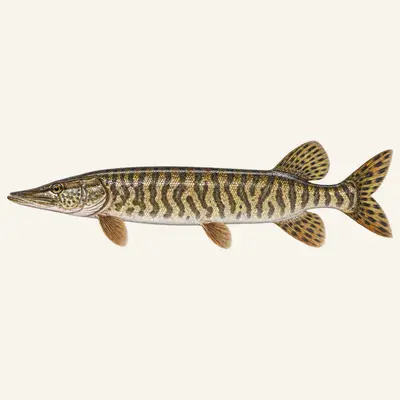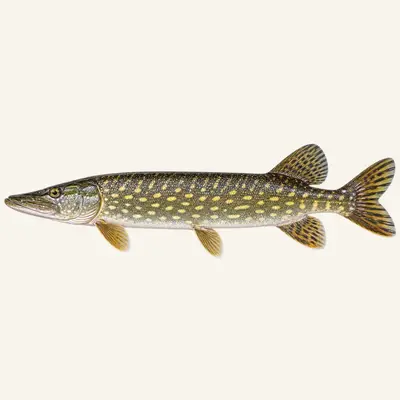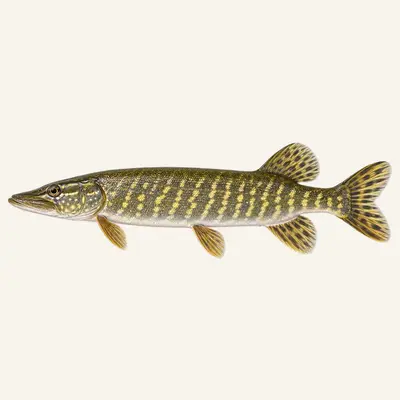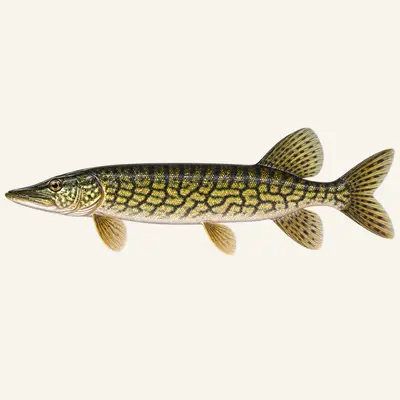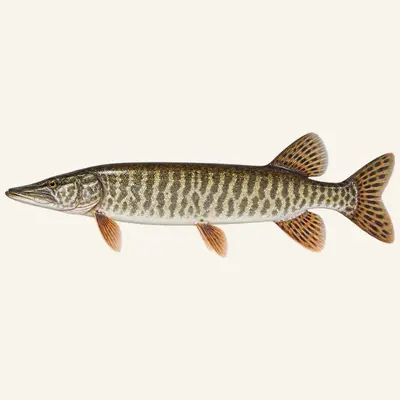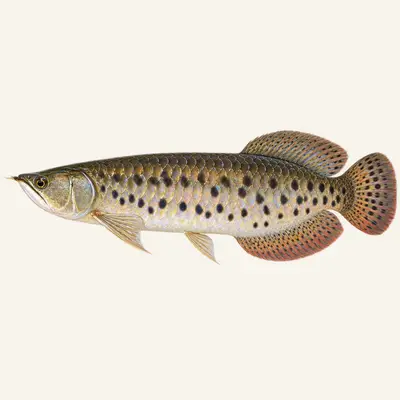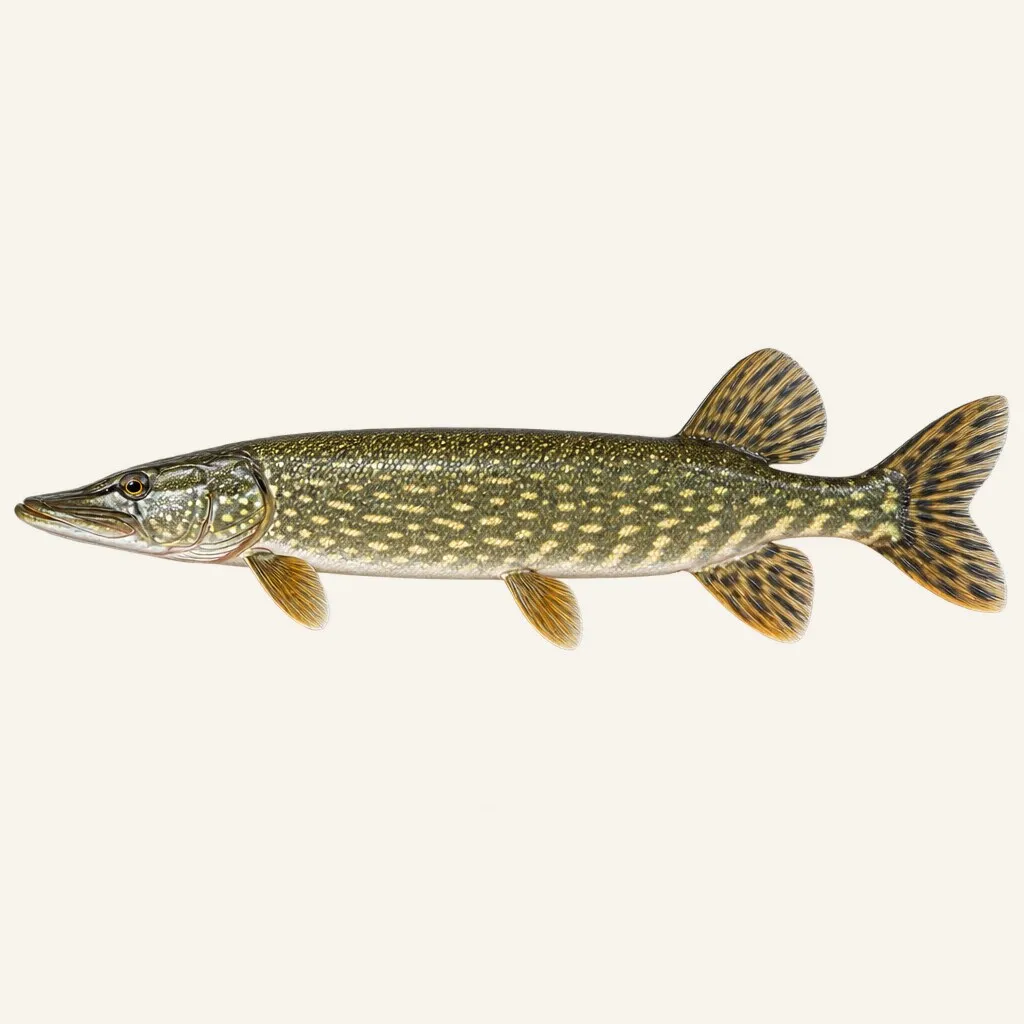
Southern pike
Esox cisalpinus · Esocidae
- Freshwater
- Predators
- Hard
- Size
60–110 cm
- Weight
1.5–15 kg
- Lifespan
13 years
Where to fish
- Lake
- River
Habitat icons: Flaticon
A pike population genetically distinct from the Danube basin
Calendar
Recorded in 2 countries
Croatia · Italy
GBIF occurrence records — native and introduced populations combined.
Its range
Central and northern Italy form the recognised core. Presence is judged possible in addition on the northeastern shores of the Adriatic and in Mediterranean France, without those populations having been formally attached to the species.
That range coincides exactly with a gap. The regions where this fish is found — central Italy, the Mediterranean side of France, the eastern flank of the Adriatic — are precisely the ones the northern pike was historically missing from. The pike of the Po plain was therefore never the pike of the Danube or the Rhine. It was something else, and nobody had separated it out.
The date of the description governs how the entire documentary record has to be read. The species was not named until 2011; until then its populations were counted, mapped and managed under the name of their northern neighbour. No earlier data distinguishes them, which makes any direct comparison with the state of things thirty years ago impossible.
Areas
- Weed beds
- backwaters
Techniques
- Lures
- Live baits
Baits
- Swimbaits
- Jerkbaits
How to catch it
The size references are not the ones applied in central Europe. The maximum recorded is 103 cm, the oldest fish on record was 13, and maturity begins from 30 cm. A metre fish here is the top of the range and not a step towards something bigger.
The practical consequence is a change of scale in tackle and in lures, matched to an animal that stops lower. The second consequence is documentary. In the Po basin and the subalpine lakes an angler holding a pike is very probably holding this species, and the report he makes of it — place, date, measurements — feeds just about the only continuous source of information there is on it.
Conservation · Vulnerable (IUCN) — This species is threatened with extinction. Always release it (no-kill), handle it with the utmost care and check local rules — fishing for it may be prohibited.
Conservation
Decades of stocking brought into these waters a congener that was not in them, and the damage is done through reproduction rather than through competition. The northern pike, introduced and reintroduced for sport, crosses with the local fish; every mixed generation moves the population a little closer to vanishing as a distinct entity, and not one dead fish marks the passage.
Habitat erosion runs alongside it: backwaters filled in, banks straightened, floodable ground lost, so much spawning surface subtracted. The appraisal of September 2023 puts the two causes together and finds both still at work. Among the European esocids this is the heaviest file of the lot.
What weighs here is therefore not settled at the water's edge but in the choice of what goes into the water, and in the administrative recognition of a species most Italian management texts still ignored fifteen years ago.
Regulations
Check the local regulations in force (legal size limits, closed seasons, bag limits).
For guidance only. Legal sizes, quotas and open seasons vary by location and season: always check the local regulations in force before fishing.
Other names
Cisalpinus means on this side of the Alps, borrowed from the name Rome gave the Po plain as seen from the south. It places the fish relative to the observer rather than to the mountains: this is a pike of the Italian slope. Italians say luccio cisalpino.
English has settled on southern pike, which is a poor choice in a genus whose southernmost member is the chain pickerel of Florida. Italian pike is the more serviceable of the two names for an English speaker, since it at least says where to look.
Sources: fishbase.se · api.gbif.org