Spotted Sorubim
Pseudoplatystoma corruscans · Pimelodidae
- Freshwater
- Catfish
- Hard
- Size
90–182 cm
- Weight
8.1–100 kg
Where to fish
- Estuary
- River
Habitat icons: Flaticon
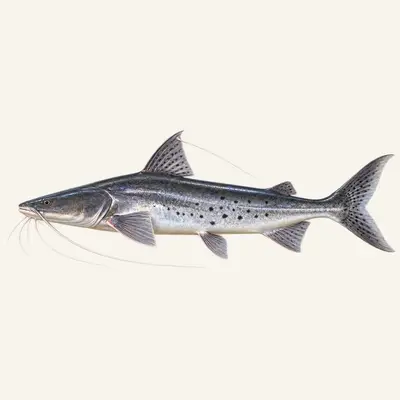
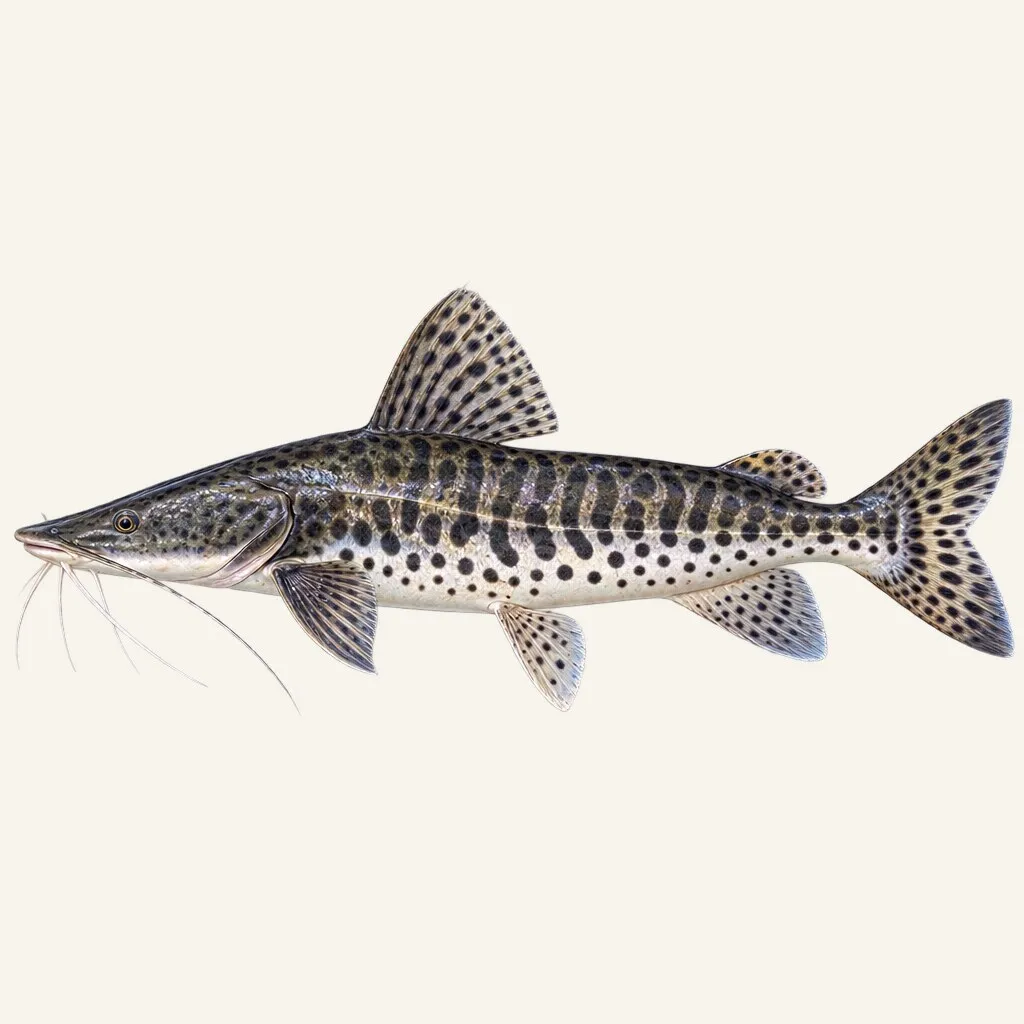
Large South American catfish with a silvery body covered in black spots, prized for its fighting power and its flesh.
Calendar
Recorded in 2 countries
Argentina · Brazil
GBIF occurrence records — native and introduced populations combined.
Identifying it
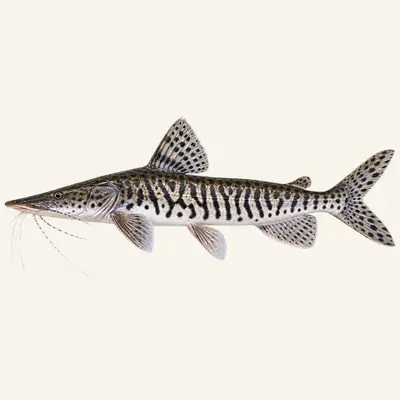
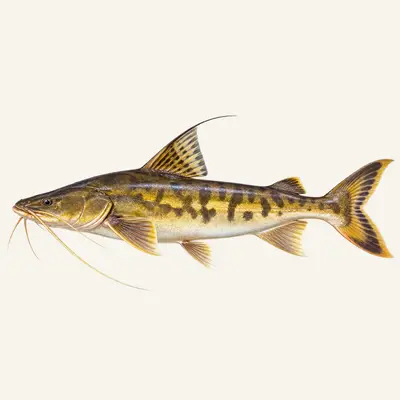
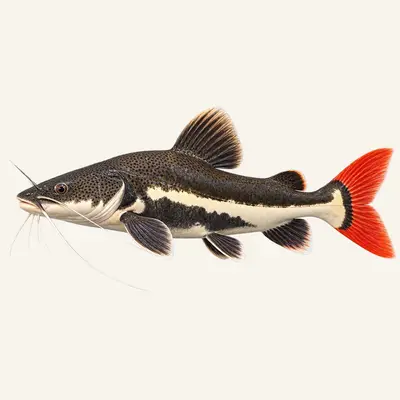
Black spots scattered over a silvery body. That is the whole visual argument, and it is enough where the two large sorubims share a river: the pintado is the spotted one, the cachara the barred one.
Breeding
Length at first maturity is 65.2 cm, and it is the single piece of biology the literature retains under this name. It places the pintado well above its close relative, whose males mature at 45 cm and females at 56.
The arithmetic that follows is worth stating flatly: a half-metre fish of this species is immature. On a large river catfish, a fishery that keeps that size class is taking animals which have never spawned.
Nothing else is published here — not the spawning season, not the fecundity, not the site. What is known about reproduction in the genus comes from the cachara, and it does not transfer: the two do not share a maturity size, a range or a build.
Areas
- Deep holes and pools
- River confluences
- Current seams
- Lagoons connected to the river
Techniques
- Livebait fishing
- Bottom bait fishing
- Casting large lures
- Drift fishing from a boat
Baits
- Live baitfish (lambari, sardinha)
- Cut fish baits
- Large soft lures
- Deep-diving crankbaits
How to catch it
The documentary vacuum is the dominant fact of this file. Depth, temperature, feeding time, prey — none of it appears under this name. For a species that is angled for, netted commercially and raised in ponds, that is an unusual blank.
It has a practical consequence. Everything in circulation about fishing for the pintado comes from accumulated experience on the Paraná, the Paraguay and the São Francisco, and not from a biological literature. That does not make it wrong. It means none of it has been checked anywhere else, and an observation made on one basin carries no guarantee on the next.
The blank is also a publication problem rather than a knowledge problem, at least in part. A fish is not farmed commercially until its reproduction is understood well enough to be repeated on demand, so a good deal is known about this animal in hatcheries that has never been written down about it in a river.
The one usable reference point remains maturity at 65.2 cm. It places a capture, which is more than nothing.
Conservation · Near Threatened (IUCN) — This species is in decline. Release your catch quickly and handle it with care — wet hands, as little time out of the water as possible.
Conservation
The assessment of December 2020 records a reduction in the populations and attaches several causes to it acting together rather than one. The detail of those causes is not in the source consulted here, but two facts frame the finding.
The first is late maturity. Spawning for the first time at 65.2 cm is late for a river fish, and a stock that renews itself slowly absorbs continuous pressure badly, whether the pressure comes from a net or from a rod.
The second is the farming. The pintado is produced in commercial aquaculture and the cachara is not. Rearing a large catfish in ponds beside the wild populations of the same species opens the same file everywhere it is done: escapes, and interbreeding with the river's own fish.
Regulations
Fishing is banned during the piracema and subject to minimum sizes that vary by Brazilian state; check local regulations.
For guidance only. Legal sizes, quotas and open seasons vary by location and season: always check the local regulations in force before fishing.
Other names
Pintado in Brazil, surubí pintado in the Spanish-speaking countries — both names say the spotted fish, in explicit contrast with the striped one. Spots and bars really are what separates the two species by eye.
The trap for anyone reading Portuguese-language statistics is surubim, which covers several species of the genus at once. A landing figure filed under that word does not state which fish it counted, and figures of that kind are most of what exists for the group.
Corruscans comes from the Latin coruscare, to flash, for the glitter of the flank.
Sources: fishbase.se · api.gbif.org