Kumakuma
Brachyplatystoma filamentosum · Pimelodidae
- Freshwater
- Catfish
- Hard
- Size
120–360 cm
- Weight
28–200 kg
Where to fish
- Estuary
- River
Habitat icons: Flaticon
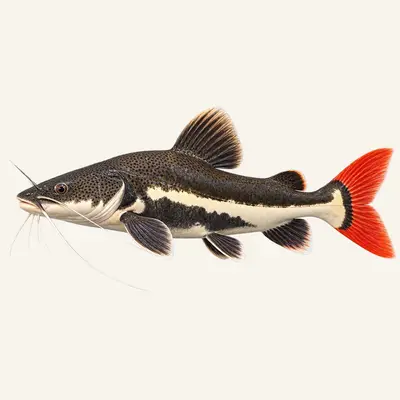
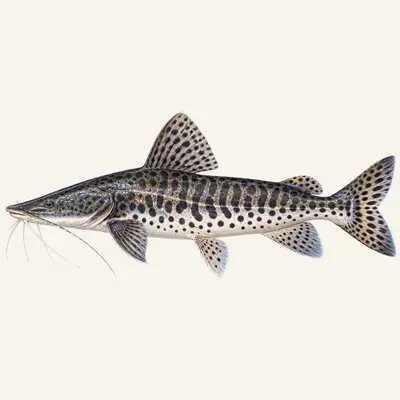
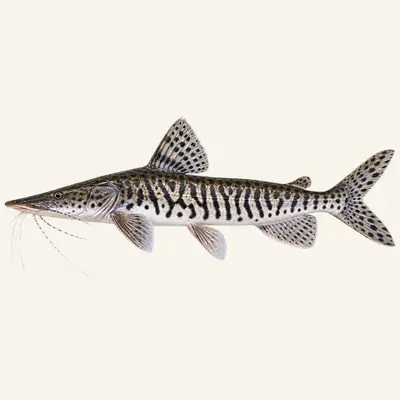
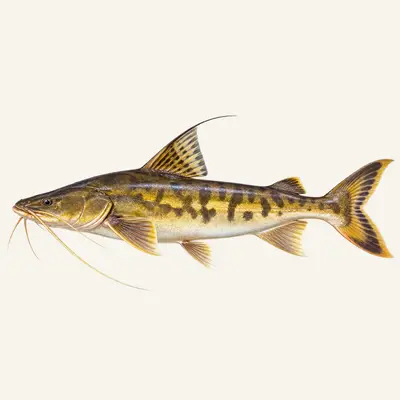
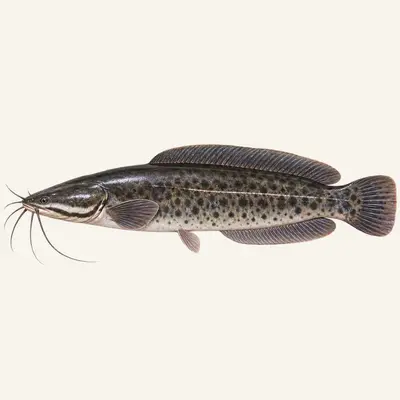
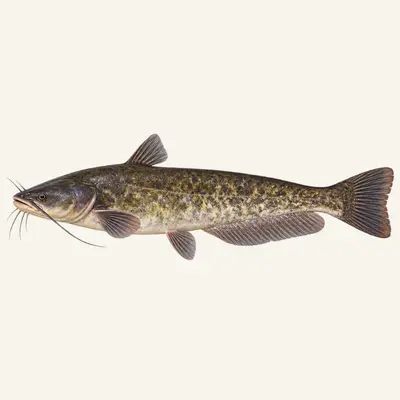
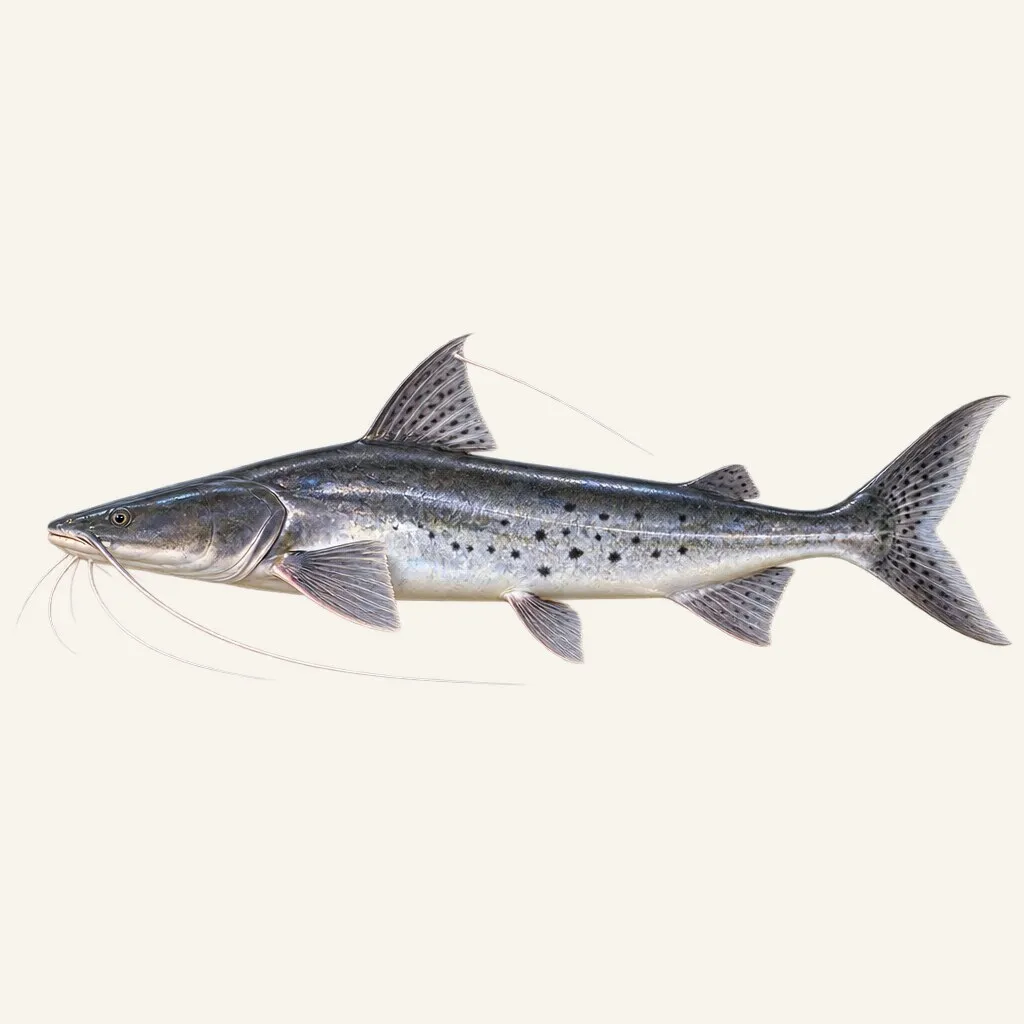
The piraíba is the largest catfish in the Amazon basin, belonging to the Pimelodidae family. It stands out for its imposing size, elongated silvery body and very long barbels. A migratory species, it undertakes extensive movements between freshwater and estuarine zones.
Calendar
Its range
Four sets of water carry this fish, and only one of them is the Amazon. The Orinoco is a second, the large rivers of the Guianas a third, those of north-eastern Brazil a fourth. A record from Argentina sits far south of all of it and rests on thinner evidence than the others.
Taken together those are not neighbouring basins. They are separate drainages that never meet inland, and what they have in common is a coastline. The published account supplies the link in one line: juveniles and subadults are found in the brackish water of river mouths. A young fish that tolerates salt can move between systems along the front where they all discharge, and an adult that cannot tolerate it never needs to.
The range is therefore better read as a single corridor with a salty lower end than as a scatter of isolated stocks. Every reach counts towards the whole, and the estuaries count twice, since they are the one thing all four systems share.
The water it needs
Soft bottoms. Sand and silt in the main channels, not boulder and not undercut bank — this is a fish of flat heavy volumes rather than of broken water.
The population sorts itself along that corridor by age. The nursery lies downstream in the mixed water of the mouths; the large animals hold the deep channels and scour holes of the main river, a long way above any tide.
Areas
- Very deep holes in the Amazon River
- Estuaries and tidal zones
- Large tributary confluences
- Main channels during low water
Techniques
- Large river bottom fishing
- Large live bait
- Dead bait on heavy rig
- Current drift fishing
Baits
- Large live fish
- Whole dead fish
- River eels
- Matrinchã or peacock bass
What it eats
The diet is fish, which surprises nobody for a predator of this build. What has also come out of the stomachs does surprise: parts of monkeys.
One item like that reorganises the picture. An Amazonian river runs under a closed canopy, and whatever the canopy drops lands on deep water. An animal large enough to swallow a primate is not choosing between its ordinary prey and a windfall — it takes what arrives, and a good deal of what arrives came from above rather than from the bed.
The same account records occasional attacks on people in parts of the Amazon. They are rare, they belong to older reports, and the species is otherwise classed as harmless.
How to catch it
The figure that governs tackle is the common length: 120 cm. Not a record, but the ordinary animal. A fish of that size is already beyond what predator gear built for pike or bass will survive, and terminal tackle is sized on that number rather than on any extreme.
The commercial gear indicates the presentation. Nets and longlines are what take this species, and a longline is nothing but a baited hook left lying on a soft bottom in the channel. Rod fishing that reproduces the same thing — bait on the deck, in moving water, the fish located by ground rather than by sight — is fishing where the animal actually is.
Because the corridor is stratified by age, the reach chosen decides the size caught. Working the brackish lower river means working the class of fish that has not grown yet; the large ones are upstream in the deep channel.
Conservation
Over-harvesting is named directly in the published account as the pressure on this species, and the gear explains why it bites so hard. A net retains whatever swims into it and a longline hooks whatever takes the bait. Neither selects, and an animal that reaches the dimensions shown above did not reach them in a few seasons.
The demand side is not in doubt either. The flesh is rated as excellent and the fishery is a commercial one, so the effort does not depend on anyone choosing to target the species for sport.
The second weakness is geographic. The nursery concentrates at the river mouths, which is the shortest, most accessible and most heavily worked stretch of the entire route. Pressure applied there removes no adults at all. It removes the years that would have produced them.
Regulations
Check the local regulations in force (legal size limits, closed seasons, bag limits).
For guidance only. Legal sizes, quotas and open seasons vary by location and season: always check the local regulations in force before fishing.
Other names
English is the odd language out. Five of the six names in the catalogue keep piraíba; English uses kumakuma, a word borrowed from the western Amazon and current almost nowhere else.
Piraíba is Tupi-Guarani, built on pirá, fish — the same element that opens piranha and pirarucu. No European language coined a name for this animal. Each took one that was already in use among the people who fished it, and the two words that ended up in circulation come from opposite ends of the basin.
Sources: fishbase.se · api.gbif.org