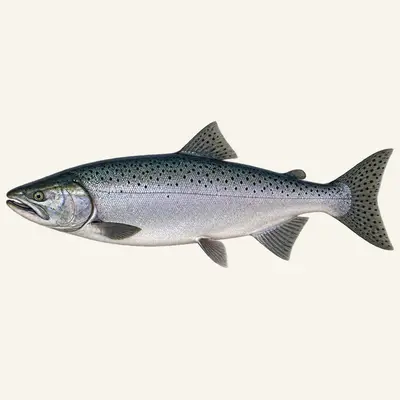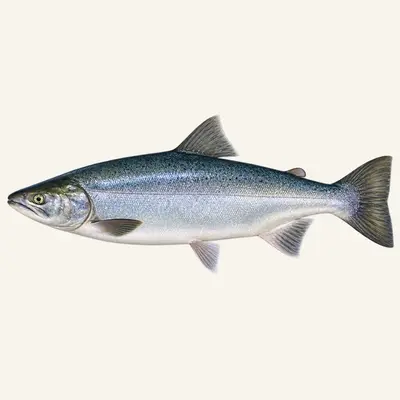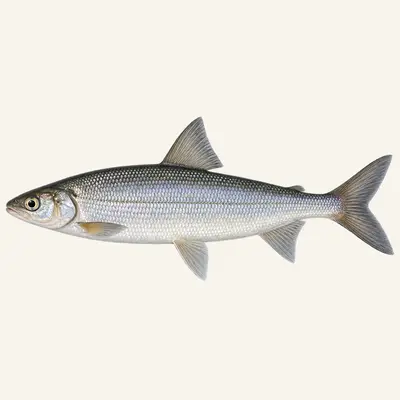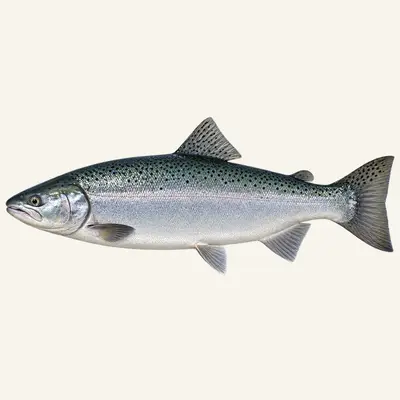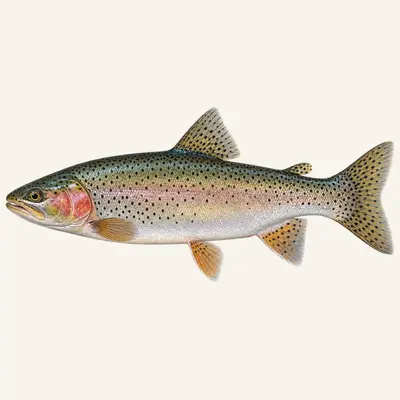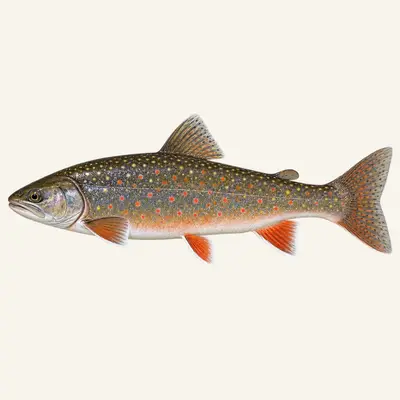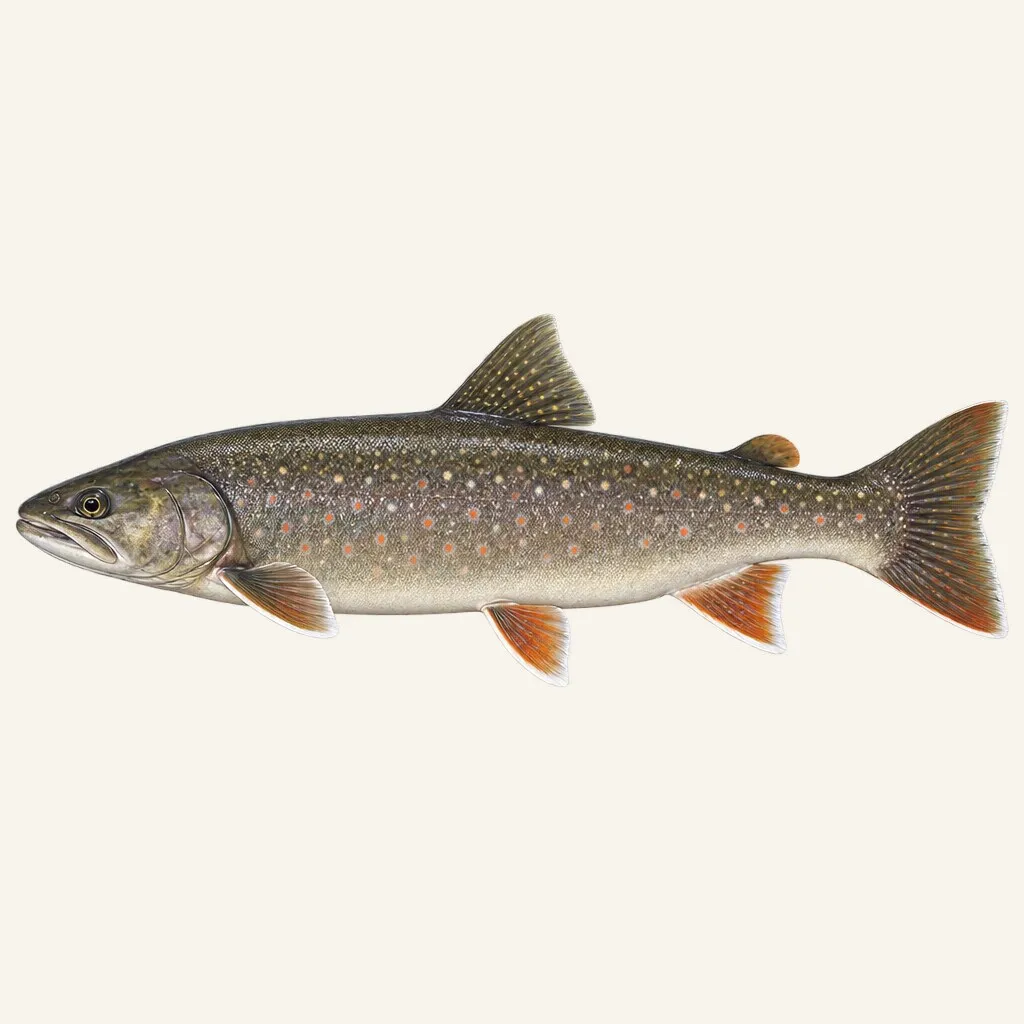
Bull trout
Salvelinus confluentus · Salmonidae
- Freshwater
- Salmonids
- Medium
- Size
63–103 cm
- Weight
2.9–15 kg
Where to fish
- River
Habitat icons: Flaticon
A char native to the cold, clear rivers of western North America, identifiable by its greyish flanks marked with pale spots and a faintly orange belly during spawning season. It favours fast-flowing, well-oxygenated stretches of water.
Calendar
Recorded in 2 countries
GBIF occurrence records — native and introduced populations combined.
Its range
The species holds coastal and mountain streams of Arctic, Pacific and Missouri River drainages, from extreme southern Yukon to the headwaters of the Columbia in northern Nevada and the McCloud River drainage in northern California.
Those southern outposts — Nevada, northern California — are the edge of the range and the warmest water it occupies. They are the populations with least room left.
Breeding
Maturity comes late and large: about 72 cm, in a reported range of 58 to 86.
Set that against a common length of 62.5 cm, and the arithmetic is uncomfortable. The fish an angler ordinarily meets has not spawned. A 62 cm bull trout is a good specimen and an immature one, and only the exceptional fish is above the threshold.
The lake form's young spend one to three years in the tributary before descending, which puts a second requirement on the small water: not just clean spawning gravel but a rearing habitat that holds for years.
The water it needs
Adults hold deep pools in large cold rivers and in lakes. The species is most common in high mountain country where snowfields and glaciers are present — a phrase that does more work than it looks like.
Snowmelt and glacier melt do not just make water cold, they keep it cold through the summer and hold the flow up when rain-fed rivers are dropping. A fish keyed to that regime is keyed to something that is leaving the mountains, and it cannot follow it uphill indefinitely.
It is rarely anadromous. The lacustrine form matures in lakes and spawns in tributaries, where the young stay for one to three years before dropping down.
Areas
- Rapids and waterfalls
- Plunge pools
- Moderate current zones
- Stream confluences
Techniques
- Dry fly
- Tight-line nymphing
- Light streamer
- Toc fishing
Baits
- Artificial nymphs
- Local dry flies
- Earthworms
- Small streamers
How to catch it
Deep pools in cold rivers and lakes, high in the catchment, near snow and ice. That is the search, and it puts the fishery in the least accessible part of a drainage.
The size arithmetic ought to change how a capture is handled. Maturity at 72 cm against a common length of 62.5 means most fish are pre-spawning, and a returned fish of ordinary size is worth more to the population than its weight suggests.
Fishing for this species is restricted or closed in much of its range, and what applies is a question for the competent authority before setting out.
Conservation · Vulnerable (IUCN) — This species is threatened with extinction. Always release it (no-kill), handle it with the utmost care and check local rules — fishing for it may be prohibited.
Conservation
Three things stack up, and none of them is fishing.
The dependence on snowfields and glaciers is the first, and it is not reversible by any local measure. The second is a rearing requirement: young of the lake form need a tributary that stays suitable for one to three years, not just for one spawning season. The third is late maturity at 72 cm, which means a population responds to anything — good or bad — across many years.
Introduced brook char is the fourth pressure and the most specific: the two hybridise, and the crosses do not rebuild bull trout.
Regulations
Check the local regulations in force (legal size limits, closed seasons, bag limits).
For guidance only. Legal sizes, quotas and open seasons vary by location and season: always check the local regulations in force before fishing.
Other names
Bull trout in English — a char, not a trout, like every Salvelinus. It was separated from Dolly Varden only in the 1970s, so any account written before then, and a good deal written since, may be describing either fish. Omble à tête plate in French.
Sources: fishbase.se · api.gbif.org