Cisco
Coregonus artedi · Salmonidae
- Freshwater
- Salmonids
- Medium
- Size
29–57 cm
- Weight
0.2–3.4 kg
- Lifespan
11 years
- Water temp.
0–26 °C
- Depth
0–64 m
Where to fish
- Lake
Habitat icons: Flaticon
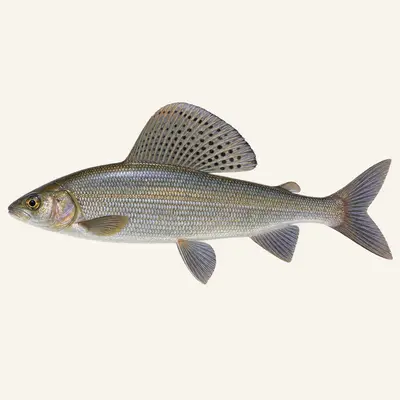
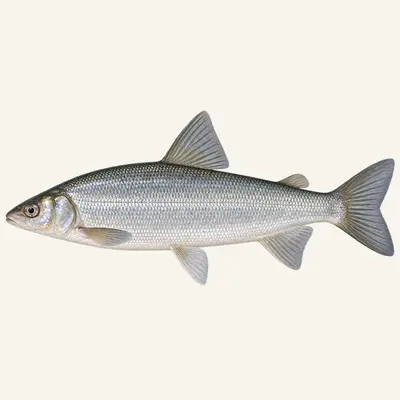
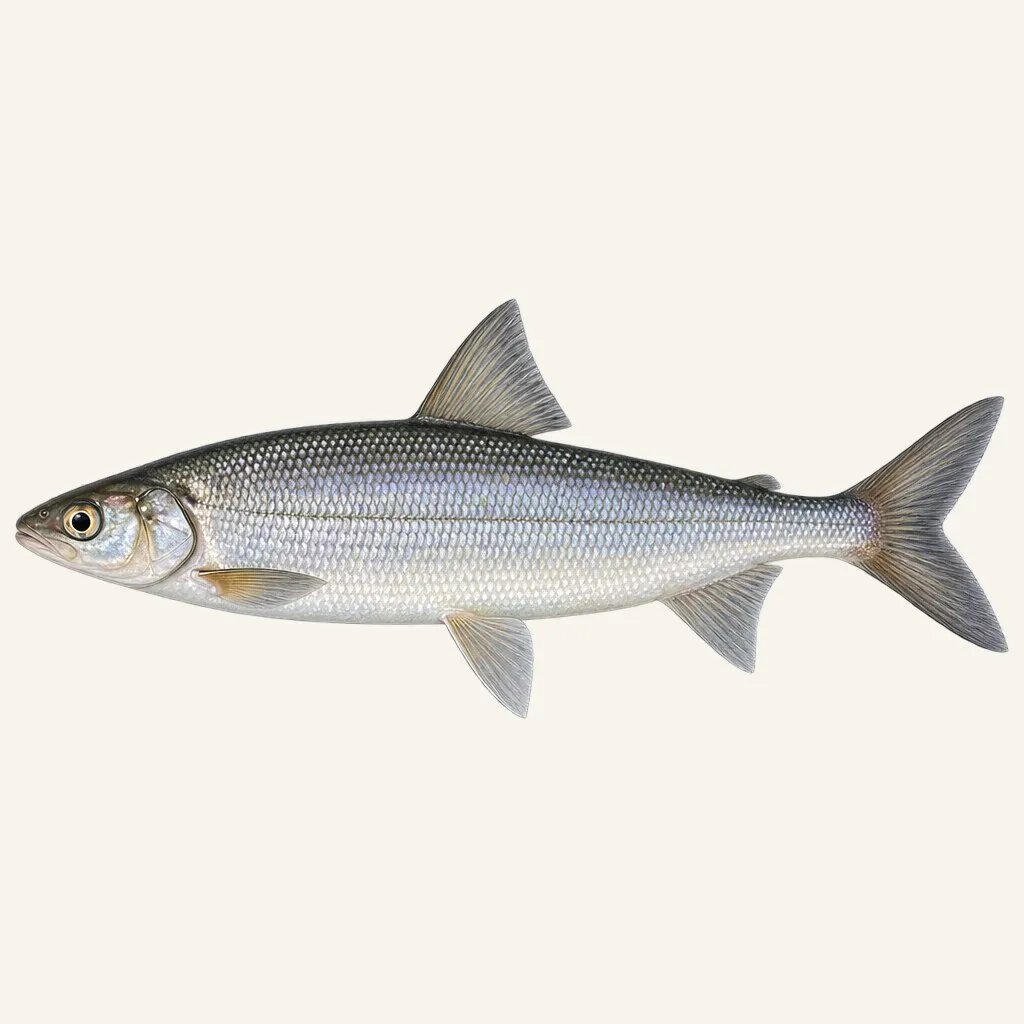
The lake cisco is a slender salmonid with silvery reflections, a slightly protractile mouth, and a silhouette resembling freshwater herring.
Calendar
Recorded in 2 countries
GBIF occurrence records — native and introduced populations combined.
Its range
The range covers the Atlantic and Arctic basins from Quebec across to the Northwest Territories, and reaches south into the St Lawrence, the Great Lakes and the upper Mississippi in northern Ohio, Illinois and Minnesota. It has been introduced beyond that.
Two taxonomic reservations travel with it, and neither is a footnote. Electrophoretic work has treated this fish as conspecific with the Arctic cisco and with the Irish pollan — and if that is accepted, a North American species suddenly has a population in a lough in Ireland. It also belongs to a species complex under its own name.
What those two statements mean together is that nobody can currently say how many lineages the name covers or where the boundaries between them run. That is not a technicality for a fish that is netted commercially and stocked deliberately.
The water it needs
Adults hold the open water of lakes and large rivers, and also the coastal waters of Hudson Bay. Recorded depth runs from the surface to 64 m, across a very wide thermal range of 0 to 26 degrees.
Nerito-pelagic is the term, meaning suspended in the water mass over the shelf or within the body of a lake. Neither the bottom nor the margin figures in the life of this fish, and the tolerance of near-freezing and near-warm water together explains how a single species covers so much latitude.
Areas
- Deep North American lakes
- Open water below thermocline
- Shallows during spawning
- Frozen lakes in winter
Techniques
- Vertical jigging
- Slow trolling
- Light lure fishing (spoons)
- Ice fishing with jigging
Baits
- Small silver spoons
- Bloodworms
- Maggots
- Bright micro-lures
What it eats
It feeds on plankton and on large crustaceans.
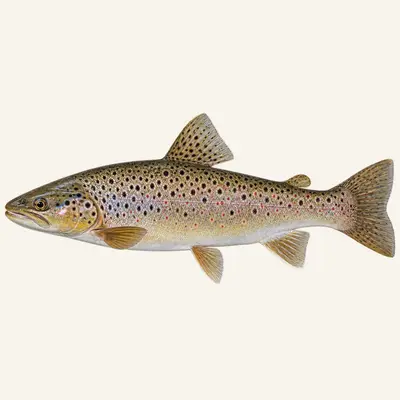
That specialisation is what separates it from the lake whitefish, with which it shares many of the same lakes. One works the sediment for insect larvae and molluscs; this one stays up in the water and filters. Two large coregonines in one lake, occupying the same volume of water at different heights within it, is the classic arrangement that lets both of them persist — and it means the presence of one says nothing about how to fish for the other.
How to catch it
Open water and plankton govern everything. The task is to locate the depth at which the food is concentrated and then present something very small in it, which is the same problem the European members of the genus set and the opposite of what the bottom-feeding lake whitefish requires.
Electronics do the searching. A pelagic fish in a lake of any size cannot be found by reading the shoreline, and time spent on the sounder before the first drop is not preparation but the fishing itself.
Size is moderate: 29 cm as a common length, and 11 years at the oldest reported. It is taken fresh, smoked and frozen, handles any method of cooking, and has supported a steady commercial fishery in the Great Lakes on that basis.
Regulations
Check the local regulations in force (legal size limits, closed seasons, bag limits).
For guidance only. Legal sizes, quotas and open seasons vary by location and season: always check the local regulations in force before fishing.
Other names
Cisco is the usual name, with lake herring in equally wide use, and tullibee across much of Canada. In the Great Lakes smoked-fish trade the same fish is sold as chub, which is a third name for the same animal in the same region.
Every one of those is misleading in its own way. Lake herring describes a salmonid, related to trout and whitefish and not remotely to a clupeid, and the name survives on the strength of a silvery body and a shoaling habit. Chub belongs, in British and European usage, to a cyprinid of running water that has nothing to do with this fish or its family. And cisco itself is applied across several North American species of the genus, so it identifies a group rather than an animal.
Quebec French uses cisco de lac. The species epithet honours Peter Artedi, the eighteenth-century Swedish ichthyologist whose classification of fishes underpinned Linnaeus's own — an appropriate dedication for a genus that has resisted classification ever since.
Sources: fishbase.se · api.gbif.org