Forktail lates
Lates microlepis · Latidae
- Freshwater
- Predators
- Medium
- Size
93 cm
- Weight
8.3 kg
- Water temp.
24–28 °C
Where to fish
- Lake
- River
Habitat icons: Flaticon
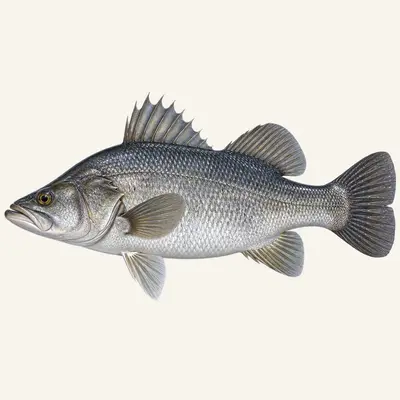
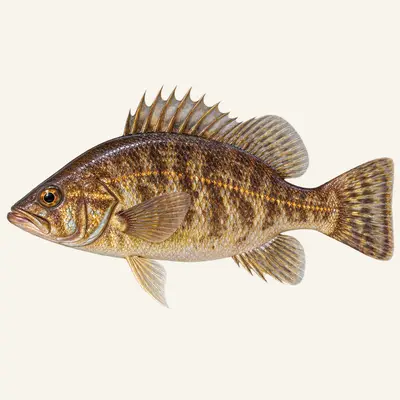
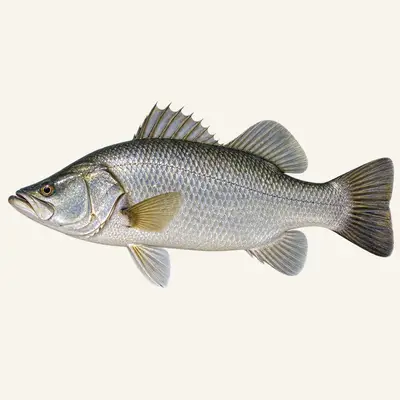
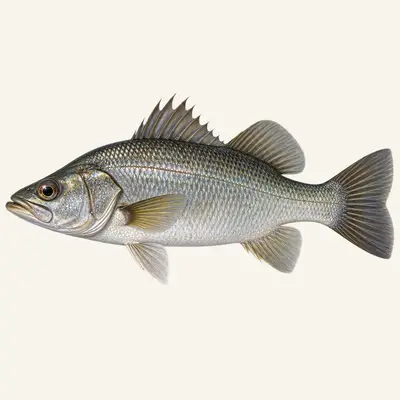
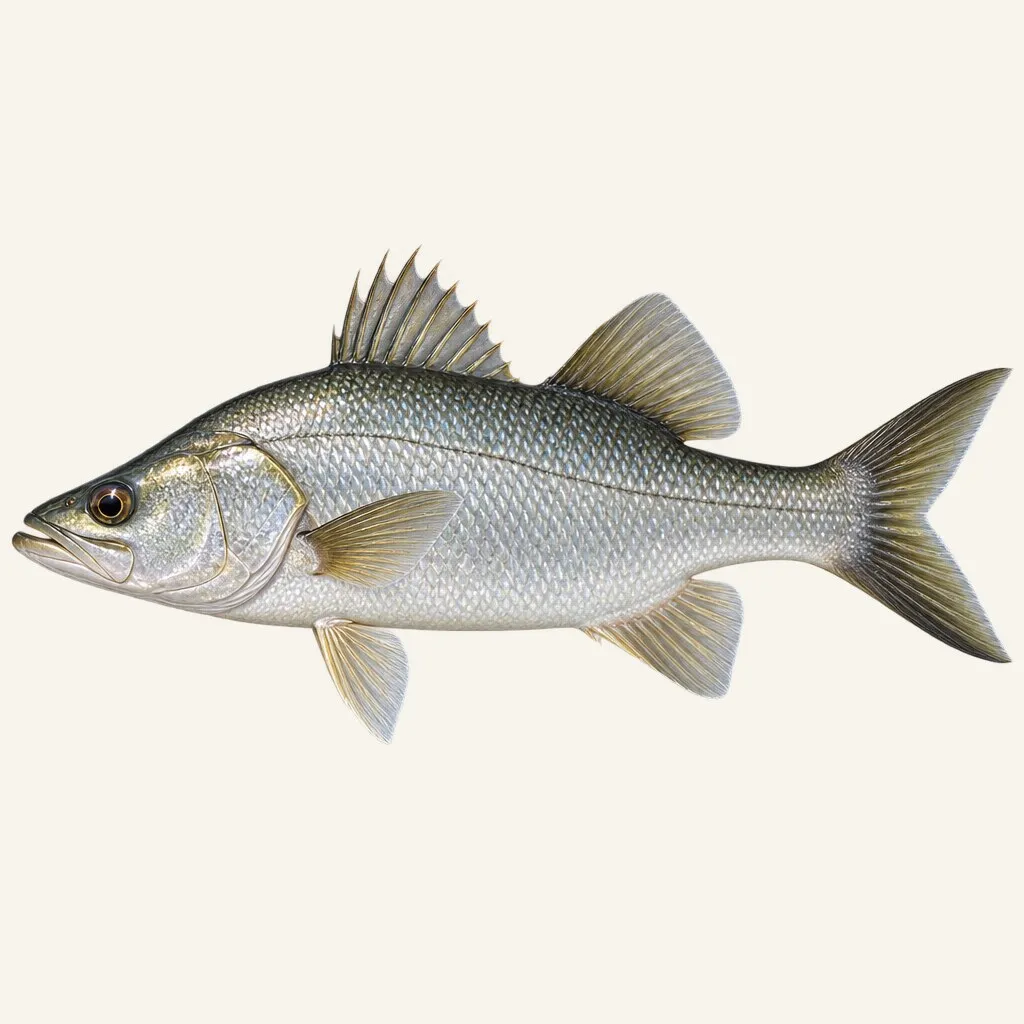
Forktail lates of the Latidae family, recognizable by its slightly forked tail and small scales, found in rivers and lakes of Central Africa.
Calendar
Recorded in 3 countries
Congo - Kinshasa · Tanzania · Zambia
GBIF occurrence records — native and introduced populations combined.
Identifying it
The literature holds on to two characters, and one of them named the fish: small scales, and a tail fin notched in juveniles. The notch shallows out with age, which leaves part of the identification resting on a feature that erases itself — awkward for anybody sorting adults.
The outline is fusiform and compressed, the build of an open-water swimmer. Size separates it better: maturity comes at around 51 cm, and growth continues well past it.
Breeding
What is known amounts to three lines, and each one is a surprise in an open-water fish. Spawning is thought to happen in vegetated areas, which means near the shore, where the adult no longer lives. The breeders pair off two by two rather than spawning as a crowd. The eggs are laid and abandoned.
A pelagic predator that returns to the littoral to breed depends on two habitats instead of one, and there is no reason for the two to deteriorate at the same rate.
The water it needs
The fish lives in one lake, and inside that lake it changes worlds once and for good. Up to 18 cm it occupies a defined inshore habitat close to the edge. Past that length it moves out into the surface layer of open water and does not come back down.
Its boundary with rivers is exact. Young fish will sit off a river mouth — the Malagarasi delta holds them — but they do not enter the river. It is a line the species approaches without ever crossing.
Areas
- Deep holes in large rivers
- River confluences
- Rocky zones of the Congo basin
- Moderate current zones
Techniques
- Vertical jigging
- Cast and retrieve with hard lures
- Live bait fishing
- Dead bait fishing
- Metal lures
Baits
- Local live fish
- Hard lures
- Metal jigs
- Soft plastic lures
- Dead fish drifted
What it eats
One diet, one layer of water: clupeids — the lake's sardines — and, to a lesser degree, Luciolates. Nothing else, at no point in adult life.
That narrowness chains the predator to its prey. Where the shoals move it moves; where they collapse it has nothing to fall back on. A fish that eats four things absorbs the loss of one of them. This one has nothing behind it.
How to catch it
It is taken on handlines in open water, and the search follows from the diet: what has to be found is the sardine shoal, not the fish. Once adult it holds where they are, in the offshore surface layer, and nowhere else.
Handling raises no particular difficulty, since nothing about the animal is dangerous to a person. What needs settling before the take is what happens to the catch, because the stock is in poor condition and a decision improvised at the moment of unhooking always goes the wrong way.
Conservation · Endangered (IUCN) — This species is threatened with extinction. Always release it (no-kill), handle it with the utmost care and check local rules — fishing for it may be prohibited.
Conservation
The predator is caught by the fishery that targets its food. As an adult it lives in the offshore surface layer and eats sardines, and that layer and those sardines are exactly what the lake's industrial fishery works. It shares the hour, the place and the depth of what it eats, and it comes up in the same gear whether or not anyone is looking for it.
That is the only cause the 2025 review retains for its decline. Not pollution, not a dam, not an introduced competitor: exploitation, and nothing besides.
Add to it what a closed lake implies. The population has no outside source — Tanganyika is not restocked from a neighbouring basin — and the fish does not breed below half a metre. An individual returned to the water weighs more here than the same gesture would weigh in a river.
Regulations
Check the local regulations in force (legal size limits, closed seasons, bag limits).
For guidance only. Legal sizes, quotas and open seasons vary by location and season: always check the local regulations in force before fishing.
Other names
English has no vernacular for this fish, so it presses the genus into service as one: it is a lates, and a qualifier does the rest of the work. Forktail lates is what the catalogue carries; German Gabelschwanz-Lates and French capitaine à queue fourchue make the same choice, and all three describe the tail.
The awkwardness is that the tail they describe belongs to a juvenile. The notch is clear on a young fish and fades afterwards, so the name fits the animal caught near the shore rather than the one hauled up from open water. The scientific name went the other way and took the scales.
Sources: fishbase.se · api.gbif.org