Bigeye lates
Lates mariae · Latidae
- Freshwater
- Predators
- Medium
- Size
80 cm
Where to fish
- Lake
Habitat icons: Flaticon
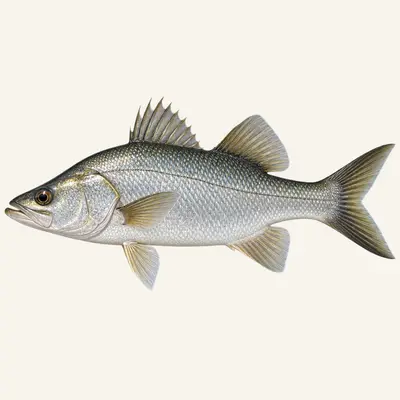
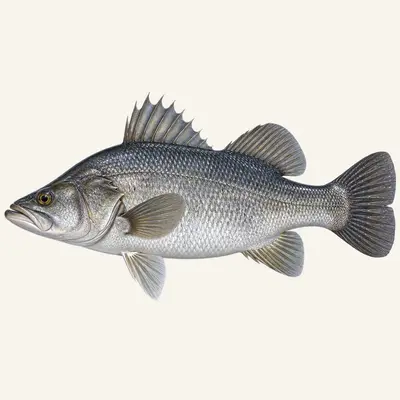
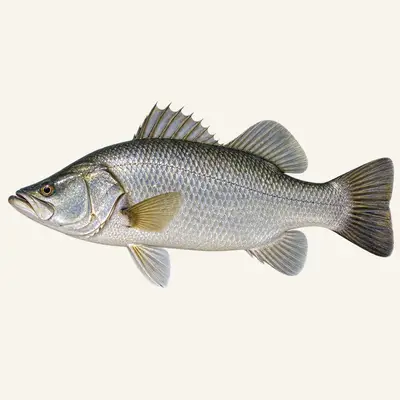
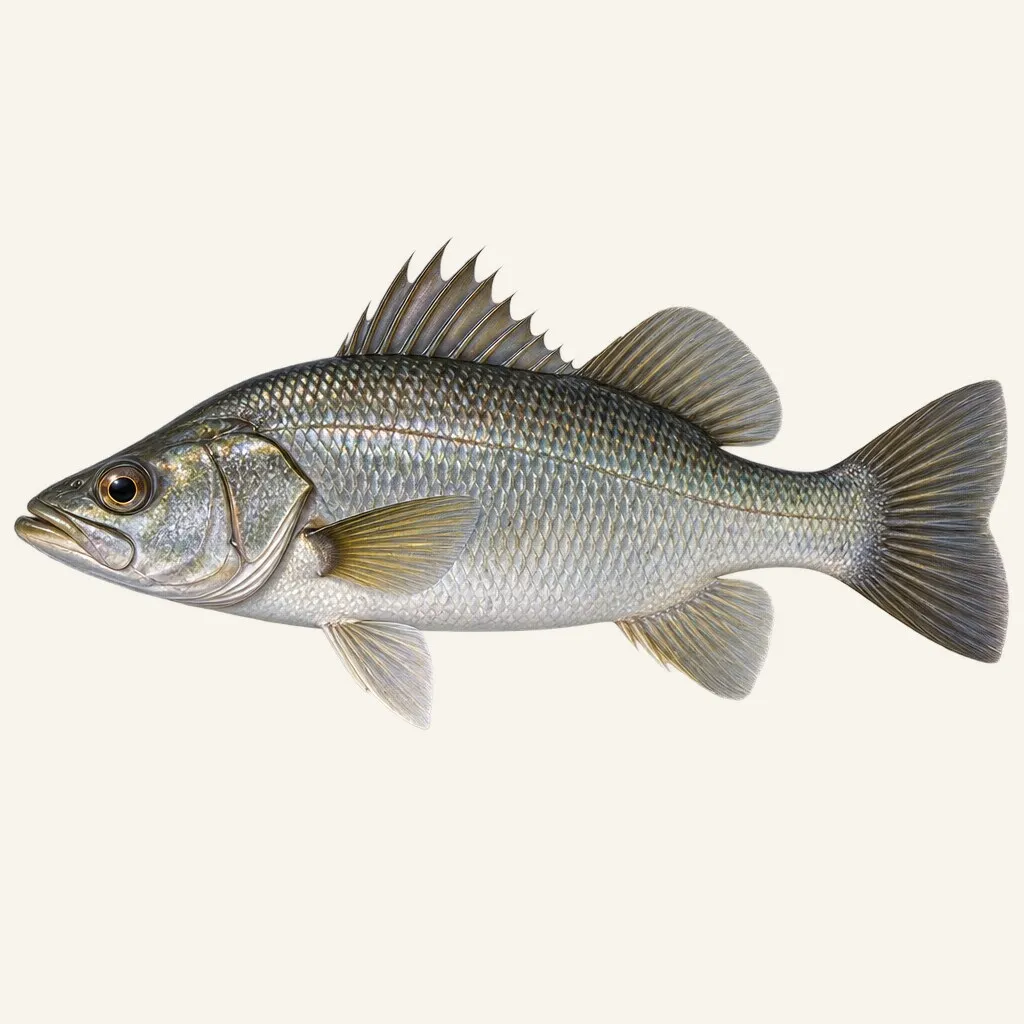
Lates mariae is a large freshwater predator of the Latidae family, endemic to Lake Tanganyika in East Africa, where it inhabits deep and semi-deep waters. Its fusiform body, prominent lower jaw, and large silvery scales with golden highlights distinguish it from the other perches of the lake.
Calendar
Recorded in 3 countries
Congo - Kinshasa · Tanzania · United States
GBIF occurrence records — native and introduced populations combined.
The water it needs
Past 18 cm the juvenile leaves the margin it grew up on and takes up a bottom-living life in deep water. Below a hundred metres it becomes the top predator, with nothing at that depth above it.
It does not stay down there. It rises to the surface every day to feed and then goes back, so an animal that looks unreachable in fact crosses the whole water column at regular intervals, and its address depends on the hour as much as on the place.
Its relations with rivers are looser than a deep-water fish suggests. The species runs down the Lukuga, the lake's outflow, as far as Niemba; it holds the delta and the lower course of the Malagarazi; and young ones have been seen near the inflowing rivers and inside them.
Areas
- Rocky drop-offs of Lake Tanganyika
- Rocky littoral zones
- Deep pelagic holes
- Underwater crevices
Techniques
- Vertical jigging
- Cast and retrieve with hard lures
- Live bait fishing
- Metal lures
Baits
- Small live fish
- Hard lures
- Metal jigs
- Soft plastic lures
- Shrimps
What it eats
Fish and invertebrates — a broader diet than the other large predators of the lake manage, with part of it taken off the bottom and part at the surface.
The open-water share is clupeids, the small sardines that everything predatory in Tanganyika lives on. Several species exploit them, and they do not reach them the same way: this one climbs from the bottom to feed and then returns, while others spend their adult lives in the same layer as their food. The resource is shared. The route to it is not, and that is what lets one lake support several predators of comparable size.
How to catch it
The hour outranks the depth. An animal that rises to feed and drops back has no fixed storey, and the same vertical produces or fails according to when it is fished. Following it means following a cycle rather than choosing a bottom.
The rest comes out of the water itself. Great depth calls for rigs that sink fast and hold their position, and the anatomy of the family calls for the same care as in its relatives: the cheek is what cuts, with the opercular spines and the serrated edges doing the damage well before the teeth have anything to do with it. Maturity comes at around 45 cm against a maximum of 80.
Conservation · Vulnerable (IUCN) — This species is threatened with extinction. Always release it (no-kill), handle it with the utmost care and check local rules — fishing for it may be prohibited.
Conservation
A deep-water fish is easily assumed to have a refuge. This one has none. Tanganyika does not turn its water column over: below the surface layer the oxygen is gone, and the floor of the lake is dead over most of its depth. The habitable band is narrow, and this species occupies the bottom of it. It cannot go deeper to escape anything.
What follows is mechanical. Intensive fishing takes from that band, out of a population with no neighbouring population to draw on — the lake is closed and its only outlet is a river. The 2025 review retains exploitation as the sole cause of the decline.
Release raises a specific problem here. A fish brought up from several tens of metres suffers decompression, and letting it go at the surface does not always save it. The decision is therefore taken when choosing the depth to fish, not at the moment of unhooking.
Regulations
Check the local regulations in force (legal size limits, closed seasons, bag limits).
For guidance only. Legal sizes, quotas and open seasons vary by location and season: always check the local regulations in force before fishing.
Other names
English cannot decide what to notice about this fish's head. Bigeye lates is the commoner form; bighead lates circulates as well, and the catalogue carries that one as the French name for want of any French usage at all. The two point at the same animal and disagree about which part of it is remarkable.
The hesitation is not trivial. Tanganyika holds several large latids of similar outline, which the lakeside fisheries distinguish perfectly well and which the European languages never had a reason to name apart. Here the binomial is the only reliable handle.
Sources: fishbase.se · api.gbif.org