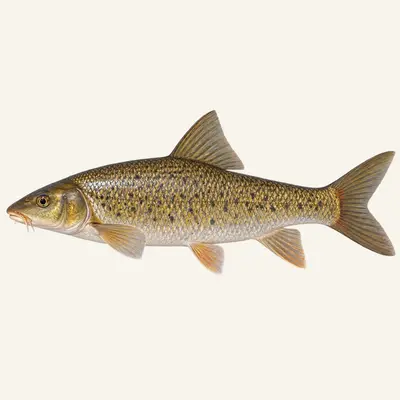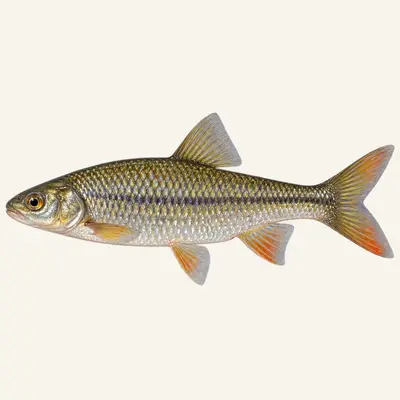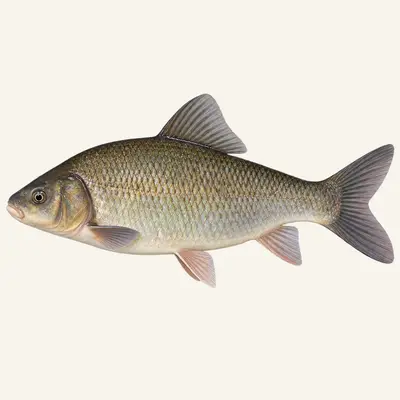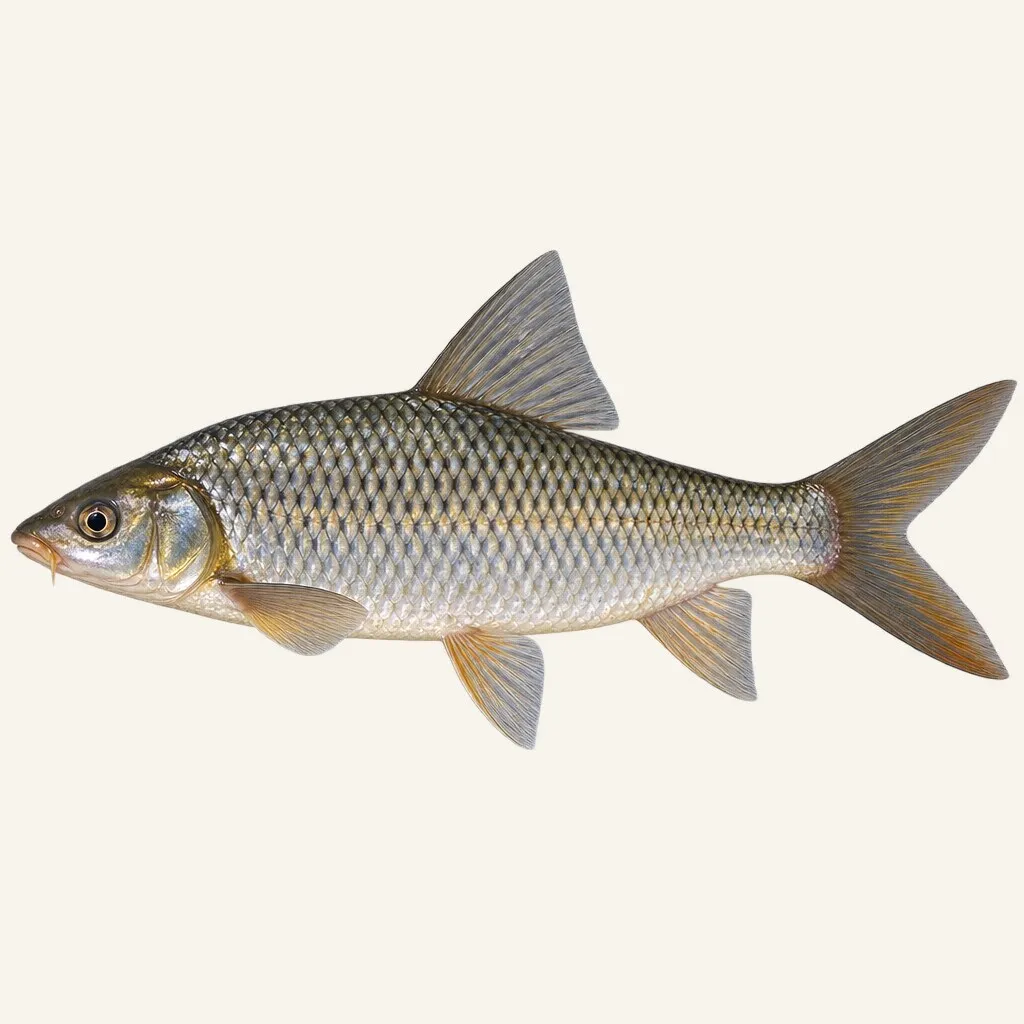
Bata
Labeo bata · Cyprinidae
- Freshwater
- Carp & coarse
- Medium
- Size
61 cm
Where to fish
- Canal
- Lake
- River
Habitat icons: Flaticon
Bata labeo - coarse fish, Southeast Asia
Calendar
Recorded in 2 countries
Bangladesh · India
GBIF occurrence records — native and introduced populations combined.
Breeding
Fourteen and a half centimetres. That is the length at which this fish first breeds, and it is the only biological measurement published for the species.
Set beside its own genus, the figure does the work of a paragraph. Rohu, farmed alongside it across the same subcontinent, is not mature until 58 centimetres — four times the length, and a far larger multiple by weight. Two members of one genus have arrived at opposite answers to the same problem.
Early maturity shortens everything downstream of it. The first spawning comes quickly, several year classes overlap in a population at any moment, and a season lost to drought or to a flood that never came costs proportionally less than it costs the large labeos, which stake a decade on a few late attempts.
Nothing else is on record. No spawning month, no egg count, no flood requirement, no description of the ground it lays on.
Areas
- Irrigation canals and ditches
- Slow muddy rivers
- Agricultural ponds
- Floodplains
Techniques
- Short pole fishing
- Light bolognese fishing
- Bottom fishing
- Match fishing
Baits
- Small flour dough balls
- Moist bran
- Bloodworms
- Fine groundnut cake
- Cooked rice
How to catch it
The uses entry contains a contradiction that turns out not to be one: no interest to fisheries, and commercially farmed. Both statements describe a pond animal rather than a river one.
The maturity figure explains how that is possible. A species that closes its life cycle at fourteen and a half centimetres will do so in a tank of a few hundred square metres. A cyprinid that has to reach 58 centimetres before it can spawn will not, which is why the large labeos in culture depend on rivers or on induced spawning and this one does not.
For anyone looking for it in open water, the record is silent exactly where it would be useful. There is no published depth, no account of what it grazes, no season when it gathers. The techniques the catalogue attaches to the species — a short pole, a light Bolognese float, a bait on the bottom — are inferred from its size and its family. They are not drawn from any observation of this fish, and it is worth knowing which of the two you are working from.
Regulations
Check the local regulations in force (legal size limits, closed seasons, bag limits).
For guidance only. Legal sizes, quotas and open seasons vary by location and season: always check the local regulations in force before fishing.
Other names
Four of the six names this catalogue carries are the bare vernacular: bata, unchanged, in English, Spanish, Italian and Portuguese. The other two bolt the genus onto it — bata labeo in French, Bata-Labeo in German — for want of anything else to add.
The English form is the one to notice, because it has no group word in it at all. Almost every other freshwater fish in this catalogue's English column carries one: carp, barb, nase, mahseer, dace, labeo. Bata carries none, so the name identifies the animal without saying what kind of animal it is, and a reader meeting it cold learns nothing from it.
That is what a name looks like when it is imported rather than coined. The word arrived attached to a fish in a South Asian market, went into the scientific epithet without alteration, and no English-speaking fishery ever had occasion to replace it.
Sources: fishbase.se · api.gbif.org