Bigmouth buffalo
Ictiobus cyprinellus · Catostomidae
- Freshwater
- Carp & coarse
- Hard
- Size
55–123 cm
- Weight
2.1–32 kg
- Lifespan
26 years
- Water temp.
16–30 °C
Where to fish
- Lake
- River
Habitat icons: Flaticon
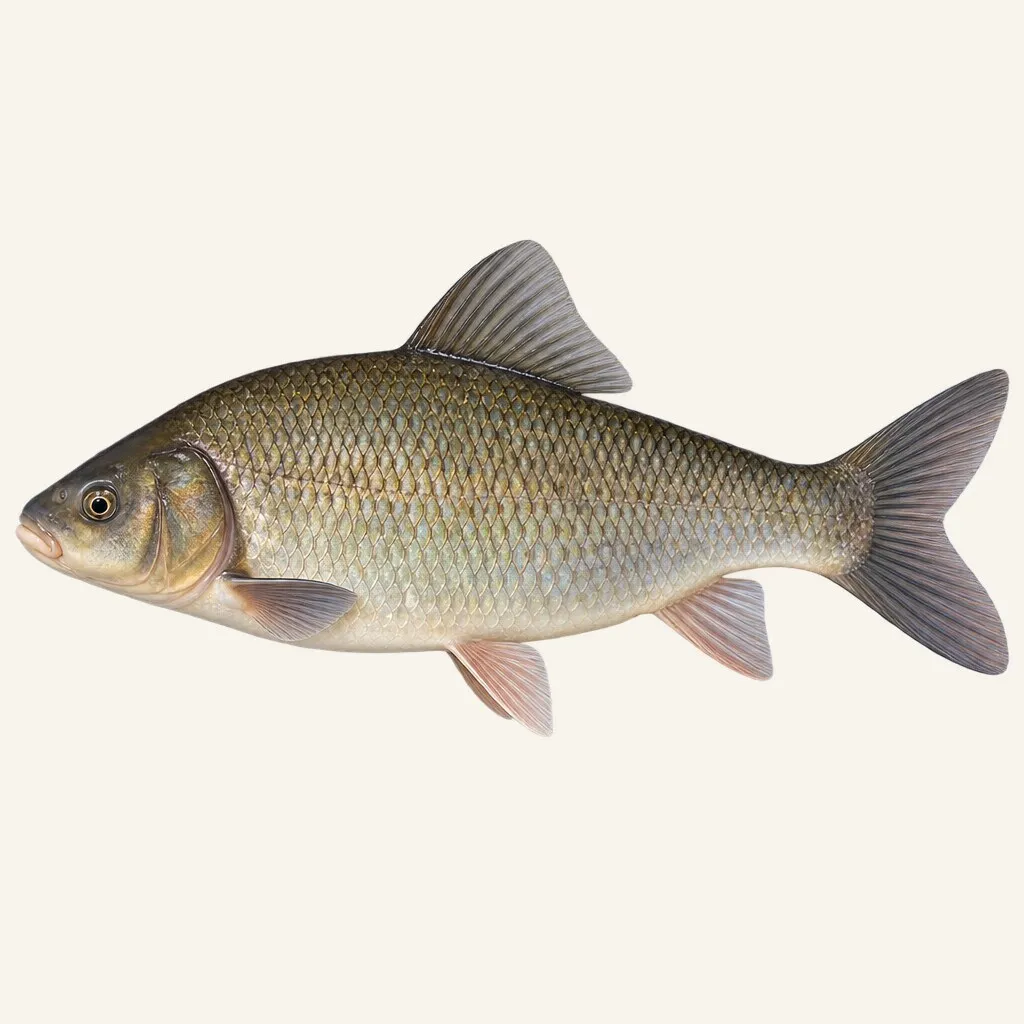
A large North American sucker with a robust body and an oblique, forward-facing mouth, and one of the longest-lived freshwater fishes in the world.
Calendar
Recorded in 2 countries
GBIF occurrence records — native and introduced populations combined.
Its range
Hudson Bay by way of the Nelson and Red rivers, the Great Lakes, and the Mississippi basin from Ontario and Saskatchewan and Montana south to Louisiana: 23 degrees of latitude and 38 of longitude.
The thermal band accounts for it without anything else being required. Sixteen to 30 degrees covers the summer of a prairie slough in Saskatchewan and the summer of a Louisiana backwater alike, and a fish indifferent between those two ends up with a range shaped like a drainage rather than like a climate.
Identifying it
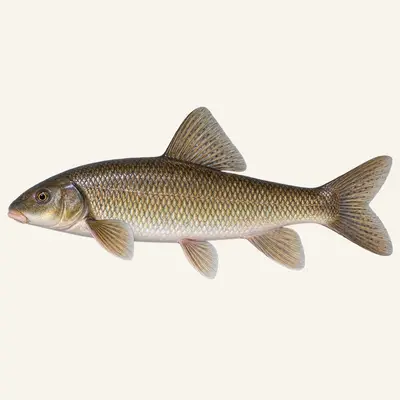
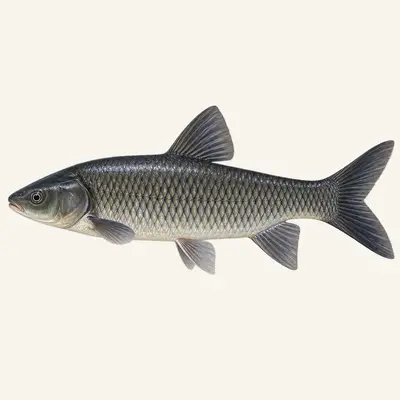
The mouth faces forward and tilts upward. In a family whose members carry a ventral sucking mouth for working the bed, that is the character to check first, and it is also the one the catalogue entry above leads on.
The body is heavy and deep, and it is the outline that earned the epithet. Cyprinellus means little carp; the resemblance goes no further than the silhouette.
Breeding
Spawning leaves the still water. It happens in streams and ponds with fast flow, over sand and gravel or among weed — the reverse of the slow, soft-bottomed places the adults hold for the rest of the year.
One female may spawn with several males, so a single deposit of eggs has divided paternity behind it and no pair bond.
The water it needs
Two lines in the same file bracket a narrow band. The environment line gives a depth range beginning at 4 m; the biology rubric says the species prefers water shallower than 5. Between them they describe a fish living in a metre-thick slice of a reservoir, which is worth knowing before the deep end gets searched for a large one.
Around that: main channels, pools and backwaters of rivers from small to large, lakes and impoundments, over soft bottom.
Areas
- Mississippi River basin
- Great Lakes
- Red River of the North basin
- Great Plains reservoirs
Techniques
- Light float fishing
- Bottom fishing (ledgering)
- Match fishing
- Bowfishing (where permitted)
Baits
- Dough balls
- Sweet corn
- Earthworms
- Cereal-based groundbait
- Fishing pellets
What it eats
Cladocerans and cyclopoid copepods, with midge larvae as a supplement. The bigmouth buffalo lives on water fleas.
Hold both ends of that together. An animal growing past a metre subsists on prey a millimetre long, taken from open water, in numbers nobody usefully counts. The forward-facing mouth stops being a curiosity at that point: it is not for probing sediment, it is for taking in loaded water.
The record classes the species as benthopelagic rather than demersal, which agrees with the diet and disagrees with the family.
How to catch it
No hook imitates a copepod. That is the first constraint and the largest, and it is not a question of finesse: an animal collecting prey it cannot see individually offers nothing to present. Captures happen alongside the diet rather than inside it, using the baits listed for the species here — dough, sweet corn, cereal groundbait, pellets — fished delicately on a rig the fish does not detect.
Where to put them comes from the depth pair above. When comes from the same file: the season on this page closes over the cold months and the species is fishable through the warm half of the year.
Bowfishing appears in the site's own list of methods for the species, qualified as where permitted. It disposes of the problem of the take by disposing of the take, and it removes the option of returning the fish at the same time — which matters more here than for most species, for the reason set out below.
Ordinary and exceptional are a long way apart. Common length is 35 cm; the measurements block above shows how far beyond that the species goes, and the distance between the two figures is made of years.
Conservation
Published ages for this fish do not agree, and the disagreement is inside this repository. The FishBase summary reports a maximum of 26 years. The catalogue entry rendered above calls it one of the longest-lived freshwater fishes in the world, which is a claim of a different order. Both statements sit in the file; the honest position for a page is that the figure is unsettled.
The shape of the problem is not unsettled. A common length of 35 cm against the maximum shown above means the large fish in any water are old fish, and however many years old they turn out to be, they were recruited long before anybody now fishing arrived. A cohort like that is not replaced inside a season, or inside several.
A method that takes fish without selection and without the possibility of return therefore lands hardest on the fraction slowest to rebuild. That is an argument for choosing the method deliberately instead of by convenience.
The species is also farmed commercially, and the fishery aimed at wild stock is described as minor.
Regulations
Aging populations make this species vulnerable; bowfishing is sometimes restricted and rules vary by state. Subject to local regulations.
For guidance only. Legal sizes, quotas and open seasons vary by location and season: always check the local regulations in force before fishing.
Other names
Cattle run through the whole nomenclature. Ictiobus joins the Greek for fish to the Greek for ox. English picked a different large grazing mammal and made it buffalo. Then the epithet sends the reader off to the carp instead. Three names, three animals, none of them a relative.
The mouth is in all six vernaculars: bigmouth buffalo, búfalo bocagrande, Großmaul-Büffelfisch, bufalo dalla bocca grande, búfalo-de-boca-grande, buffalo à grande bouche. The qualifier is not decoration. Buffalo is a name shared across the genus, and the mouth is what the adjective is there to separate, so a buffalo reported without one has identified a genus and stopped.
Sources: fishbase.se · api.gbif.org