Japanese amberjack
Seriola quinqueradiata · Carangidae
- Saltwater
- Coastal
- Medium
- Size
150 cm
- Weight
40 kg
Where to fish
- Rocky shore
- Offshore
Habitat icons: Flaticon
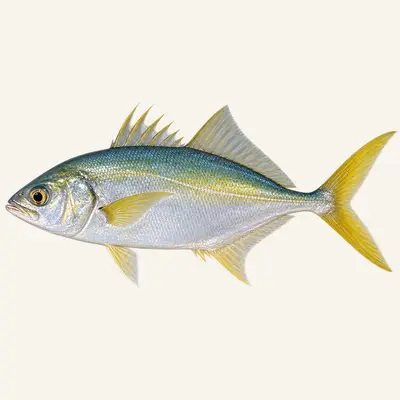
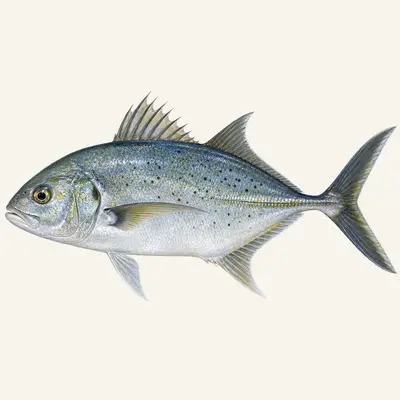
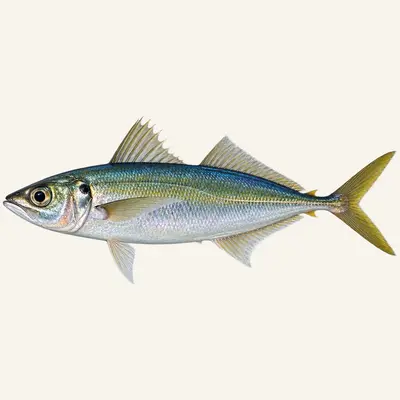
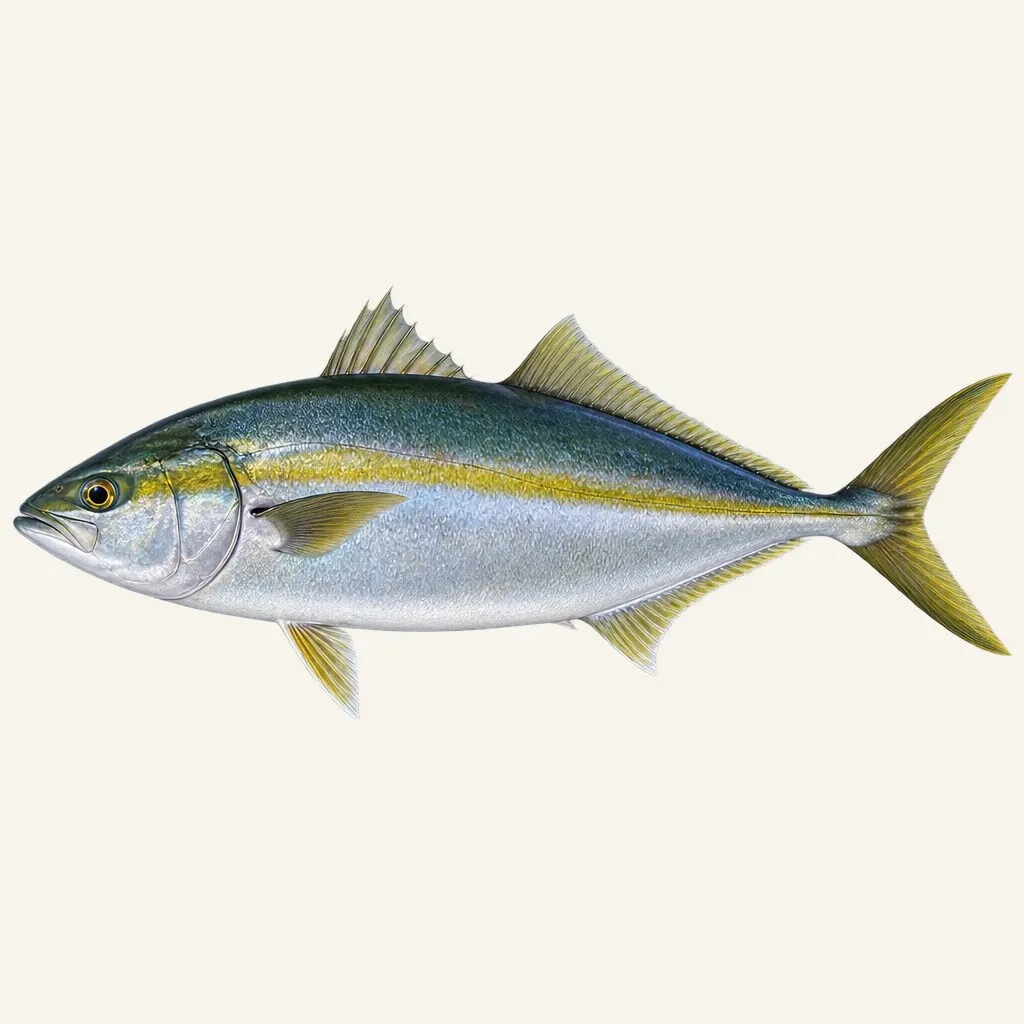
The Japanese amberjack, or buri, is the most consumed seriola in Japan, iconic in both sport fishing and Japanese gastronomy. It has a streamlined body, metallic blue-grey back, silver flanks, and a faint golden-yellow lateral stripe. A coastal pelagic fish of temperate East Asian seas, it undertakes seasonal migrations following water temperature.
Calendar
Recorded in 2 countries
Japan · Russia
GBIF occurrence records — native and introduced populations combined.
Identifying it
This fish is confused with the yellowtail amberjack, and two details part them.
The first is the upper corner at the back of the upper jaw: angular here, rounded in the other. The second is the proportion of the paired fins — pectoral and pelvic are of almost equal length here, whereas the pectoral is the shorter of the two in the yellowtail amberjack.
Six or seven spines open the dorsal fin, followed by 29 to 36 soft rays; the anal has three spines and 17 to 22 rays; there are 24 vertebrae. Scutes are absent, as through the genus. The body is fusiform and oval in section.
The water it needs
The range is north-western Pacific, from Japan and the eastern Korean Peninsula out to the Hawaiian Islands. The fish is demersal and recorded down to 100 m. Adults shoal.
Juveniles live among drifting seaweed, and the collection of those juveniles is what Japanese aquaculture was built on: the young are taken out of the weed and grown on in captivity, then sold fresh for sashimi.
Beyond that the record is short, and it is worth saying so rather than filling the space. Diet is given as plankton with no prey list attached, which cannot be the whole account of an animal of this size. Reproduction is not described at all.
Areas
- Coastal cold current zones
- Rocky drop-offs
- Offshore wrecks
- Open bays
Techniques
- Deep jigging
- Live bait fishing (nodong)
- Coastal trolling
- Squid jigging
Baits
- Heavy jigs
- Live bait (saury, scad)
- Live squid
- Soft plastic lures
How to catch it
Since the available facts are largely morphological, what follows holds at the level of the genus rather than of the species.
Amberjacks are open-water predators that hunt on structure — reefs, banks, drop-offs — and they answer lures worked fast. Their opening run is violent and heads for the bottom, which calls for tackle sized generously and a drag set to match it.
Identification matters more than usual here. Since the species is told from the yellowtail amberjack on two proportions, a fish taken where the two occur together deserves a look at the jaw and at the paired fins before it is given a name.
Regulations
Check the local regulations in force (legal size limits, closed seasons, bag limits).
For guidance only. Legal sizes, quotas and open seasons vary by location and season: always check the local regulations in force before fishing.
Other names
Japanese amberjack in the catalogue, and simply yellowtail through much of the English-language trade — which collides with the yellowtail amberjack, a different species sharing part of the same water.
Buri is the Japanese name for the adult and hamachi for the young farmed fish, a distinction that Western restaurant menus almost always drop. It is among the most heavily farmed marine fish in the world, and hamachi is the name under which most people outside Japan ever meet it.
Sources: fishbase.se · api.gbif.org