So-iuy mullet
Planiliza haematocheilus · Mugilidae
- Saltwater
- Coastal
- Medium
- Size
50–80 cm
- Weight
1.0–5.0 kg
- Depth
5–10 m
Where to fish
- Estuary
- Rocky shore
Habitat icons: Flaticon
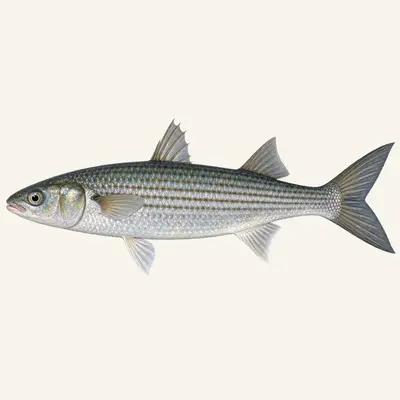
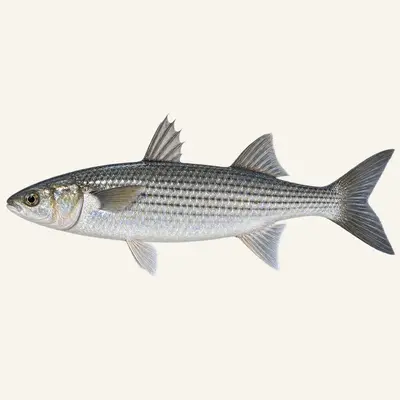
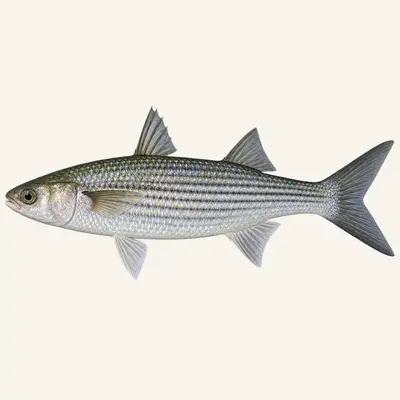
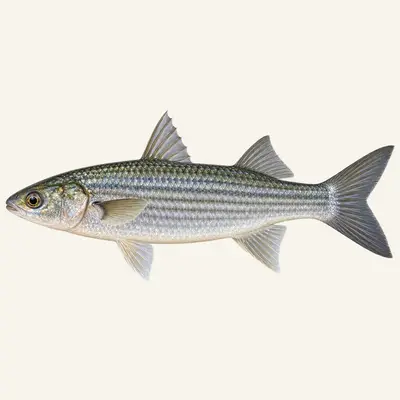
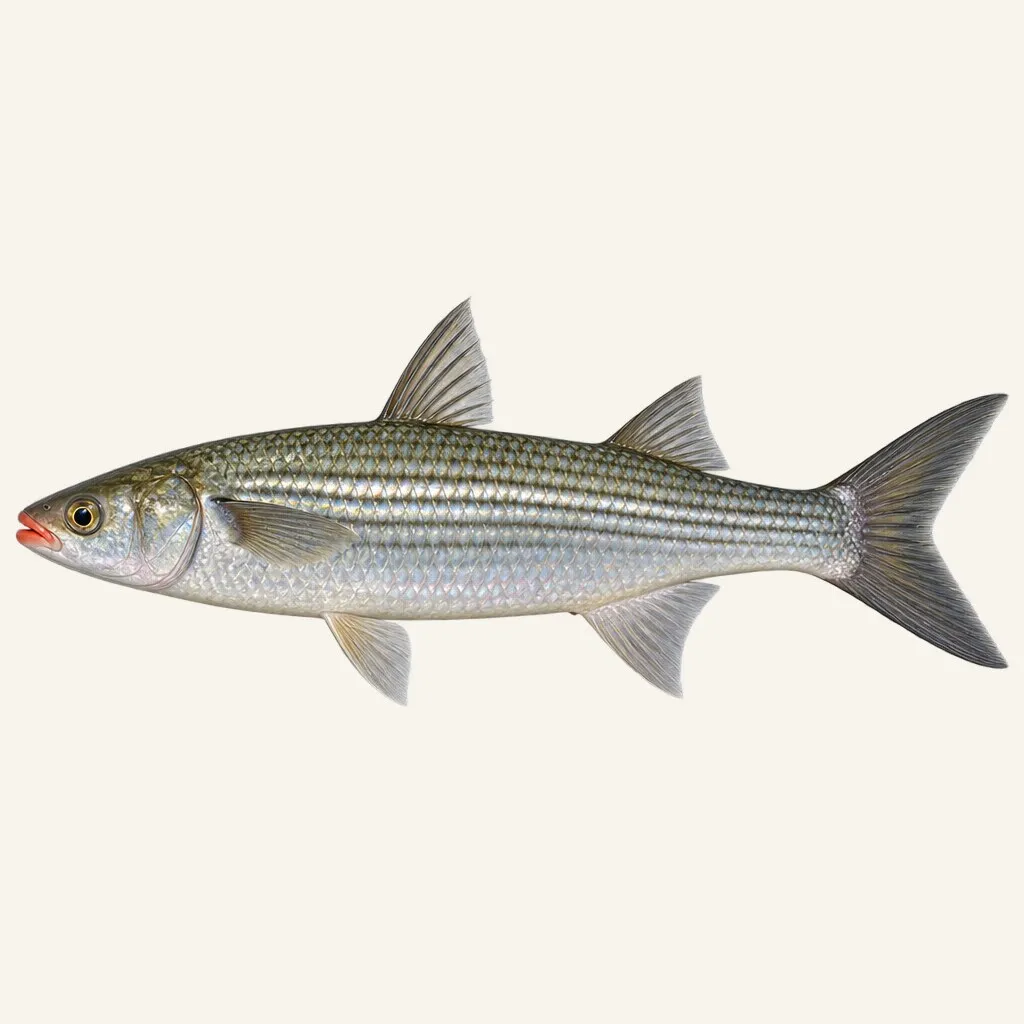
Large euryhaline mullet native to East Asia and introduced to the Black Sea, recognizable by its reddish-orange iris and lips.
Calendar
Recorded in 5 countries
China · Japan · Russia · South Korea · Ukraine
GBIF occurrence records — native and introduced populations combined.
Its range
The native range follows the north-west Pacific: Hokkaido south to Kyushu, and the Amur down to Xiamen by way of the Korean peninsula, with a report from Vietnam. That is a band running from 53 to 18 degrees north.
The band is the key to what happened next. The Black Sea and the Sea of Azov sit squarely inside it, so the transplanted fish had no climate to adapt to — it found the temperatures of home in a diluted basin that suits a euryhaline animal perfectly. The species is now established in the Black Sea and the Sea of Azov, in the Aegean and in the Mediterranean.
Identifying it
Everything usable is on the head: the iris and the lips run reddish-orange. The body is the family's, and no fin count and no snout measurement is given for this species in the source consulted.
Working from a colour requires a method. An iris is judged on a living fish, in daylight, and it fades fast once the fish is dead. Caught in time the character is immediate; on a fish that has spent an hour in a keepnet it is worth nothing at all.
Size helps, but not everywhere. In the native range the common length reaches 50 cm, which makes this a distinctly bigger mullet than the European ones. In the Black Sea, where it was introduced, fish usually run 20 to 30 cm and rarely pass 43. A size expectation formed in the Pacific does not transfer to the Sea of Azov.
Breeding
The cycle is catadromous, with a condition attached that few mugilids impose: the juvenile spends its whole first year in fresh water and only then drops to the sea to breed. Fresh water here is not a tolerance, it is a compulsory stage, and a basin whose river is barred produces no recruitment at all.
One precise date comes out of the surveys. In August the fry of the year, 3.1 to 6.2 cm long, concentrate in quantity at the river mouths. It is the only point in the cycle that is both dated and located.
The eggs are pelagic and non-adhesive, as they are throughout the family.
One figure resists interpretation. The recorded length at first maturity starts at 48 cm, above what the great majority of Black Sea fish ever measure. Either the figure belongs to the native range and does not carry over, or the introduced population breeds at a smaller size. The source does not choose between them, and it is better to know that before reasoning from a capture.
The water it needs
The fish works shallow water, 5 to 10 m, along the coastal fringe, and runs up rivers into their fresh reaches. In its native range the rivers discharging into Peter the Great Bay carry it in notable numbers.
The span of salinities it crosses is the full one, from open sea to river, and it crosses it in both directions in the course of a single life. That plasticity, together with a diet that excludes nothing, is what made it a coloniser. The same combination in any species produces the same consequences.
Areas
- Estuaries and deltas
- Intertidal zones
- Harbors and quays
- Coastal lagoons
Techniques
- Float fishing
- Light ledger fishing
- Coastal feeder fishing
- Fixed pole fishing
Baits
- Sandworm
- Fresh shrimp
- Bread crumb
- Algae
- Flavored paste
What it eats
The source is one word long: omnivorous. Little written, and heavy with implication, because the mugilids it joined in its adopted basin are on record as deposit feeders, living on an algal film and organic mud.
An omnivore takes what turns up. It depends on no particular pasture, it has no lean season imposed on it by the growth of algae, and it occupies places where a strict herbivore would go hungry.
For fishing the difference is immediate. Animal baits are in play here, which is not true of the grazing mullets sharing the same shoreline, where bread and paste remain the only route in.
How to catch it
The fish is caught where the salinity changes: river mouths, deltas, the intertidal, quay walls and lagoons. An ordinary working depth of 5 to 10 m puts all of it inside the reach of a rod from the bank.
Being omnivorous, it allows two approaches instead of one. Vegetable baits work as they do on the other mullets, and animal baits work as well — a shrimp, a worm — which makes this species accessible to anyone who has never mixed a paste.
August concentrates the fry of the year at the river mouths. They are not a catch, but they are an indicator: their presence says that a river still functions as a nursery, and therefore where to look for the adults dropping back.
Expect the local format rather than the published one. On the coasts of introduction a fish of 20 to 30 cm is the norm, and the half-metre specimens belong to the native range.
Conservation
The subject here is not the state of the species. It is what the species does where it was put.
The abundance side is quantified. In the Sea of Azov this is now the most abundant mullet of all. Along the shores of the Black Sea its expansion coincides with a marked retreat of the native mugilids, which — the source's own word — it apparently replaces. The correlation is on record; the mechanism is not. Competition for the same pasture, occupation of the same river nurseries, or two trends that merely run together: none of the three is demonstrated in the document.
That hedge is worth preserving exactly as written, because what follows depends on it. The fish now supports a commercial fishery in the very basin where the local species declined, so there is an economic interest attached to its presence. This is the ordinary difficulty of a successful introduction: the value created becomes an argument against reversing it, at a point where reversal is no longer available anyway.
A last point of method. An introduced species often has no assessment at all in its native range, and the absence of a label says nothing about the Asian populations, which are fished.
Regulations
Check the local regulations in force (legal size limits, closed seasons, bag limits).
For guidance only. Legal sizes, quotas and open seasons vary by location and season: always check the local regulations in force before fishing.
Other names
Five of the six names in this catalogue point at the lips: red-lipped mullet in one form or another, and the epithet haematocheilus says the same thing in Greek, built on blood and lip.
English is the exception. So-iuy mullet describes nothing — it is a vernacular borrowed from the fish's own region and transcribed as it stood. That is a historical clue in itself. A name that travels with the animal marks a transfer; a descriptive name marks an encounter.
The binomial has moved more than once. The species has been filed in Mugil, then in Liza, before Planiliza — three genera for one fish, which has to be allowed for when reading anything written more than a few decades ago.
Sources: fishbase.se · api.gbif.org