Spotted Sand Bass
Paralabrax maculatofasciatus · Serranidae
- Saltwater
- Coastal
- Medium
- Size
35–67 cm
- Weight
0.6–6.0 kg
- Lifespan
20 years
- Depth
1–61 m
Where to fish
- Estuary
- Rocky shore
Habitat icons: Flaticon
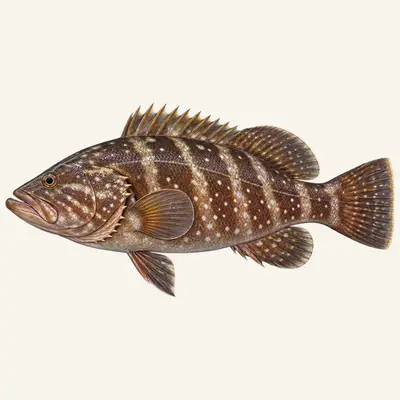
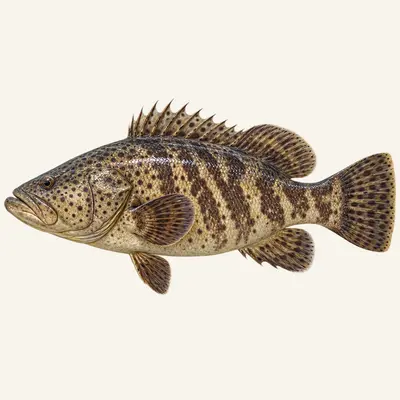
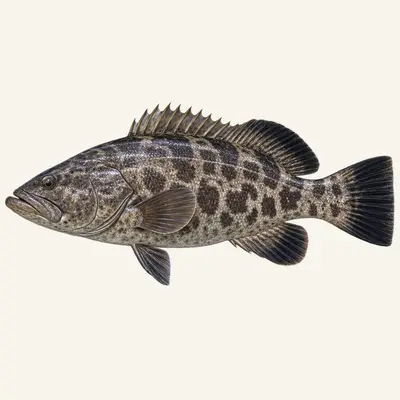
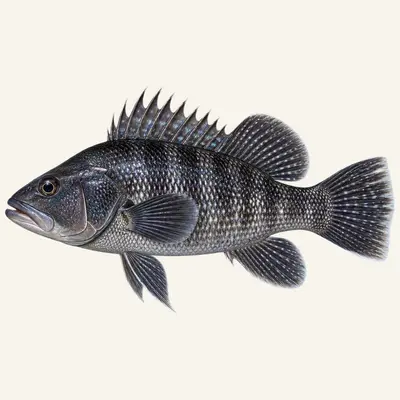
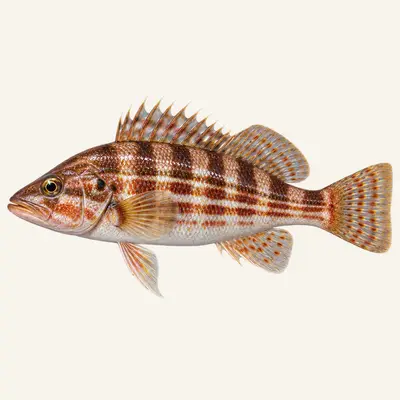
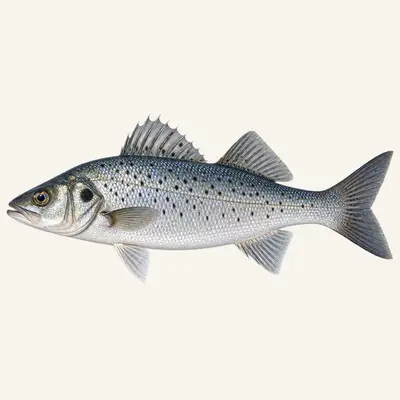
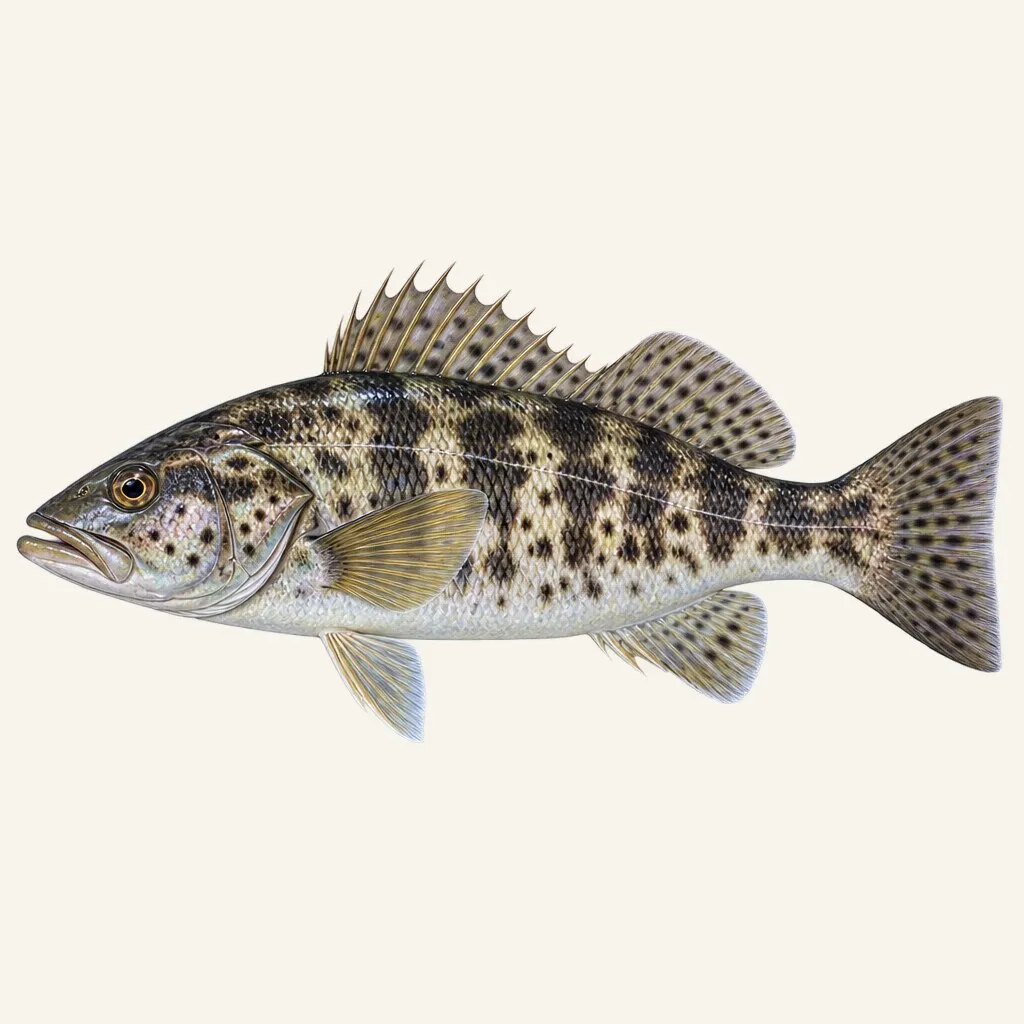
An olive-brown coastal bass dotted with small dark spots, prized as a sport fish along the Pacific coast of California and Mexico.
Calendar
Recorded in 3 countries
GBIF occurrence records — native and introduced populations combined.
Its range
From Monterey, in central California, south along the Mexican coast and into the Gulf of California, with a report from as far down as Nicaragua. On the chart that reads as a continuous coastline; on the water it is nothing of the kind.
This is a fish of enclosed water. Its range is better understood as a chain of bays, harbours, lagoons and estuaries strung along that coast, with long stretches of open shore between them holding very little. The Gulf of California, warm and full of shallow embayments, is a large part of the population rather than an outlying edge of it, and the northern end of the range is thin because the bays get colder and fewer, not because the coast stops.
Breeding
Eggs are shed into open water and left there, which is the ordinary arrangement in this family and the reason the species does not need a nesting substrate.
The interesting part is a correction printed in the record itself. Protogyny — beginning life as a female and changing to male later — was proposed for this fish, and a more detailed study covering several species overturned it: this one, and the whole of the genus with it, is confirmed as gonochoristic. A fish is born male or female and stays that way.
That matters on the water because of what it rules out. Across the serranids, and among many of the fish an angler is likely to meet on a reef, size and sex are linked, and a large individual is very often a transformed male whose removal falls on the breeding structure of the population. Here that inference does not apply. A big spotted sand bass is a big fish, and its size says nothing at all about which sex it is.
The water it needs
Sand or mud, near rock, near eelgrass, in shallow water. All four conditions matter and the fish is looked for where they meet: the soft bottom is where it feeds, the rock and the grass are what it hides in, and a stretch of clean open sand with neither is empty ground.
The recorded depth range runs from 1 to about 61 m, but the working end of it is very shallow. Bays and harbours are where the species is caught, which puts it in the most modified water on its coast — dredged channels, marina basins, culvert mouths, warm back lagoons behind a sand bar.
That is possible because of a tolerance that few coastal predators have. The species is recorded as holding from 7.5 up to 32 °C, and as surviving intervals of extreme cold. Shallow enclosed water is precisely where temperature swings hardest, between a summer afternoon in a back bay and a winter night in the same place, and a fish that can absorb a span of nearly twenty-five degrees can live in water that would empty of anything more particular.
The last entry on the habits is the one that changes how it is fished: the species is described as secretive.
Areas
- Southern California bays
- Gulf of California
- Baja California coast (Mexico)
- Coastal estuaries and lagoons
- Eelgrass beds
Techniques
- Soft plastic lure fishing
- Bait fishing with live bait
- Jigging
- Shore fishing in bays
- Float fishing
Baits
- Live shrimp
- Marine worms
- Sardine strips
- Soft plastic shads
- Small crabs
What it eats
Small fishes and bottom-living crustaceans, taken during the day.
The daytime part is worth pausing on, because it is not the default among ambush feeders in enclosed water, where dawn and dusk usually do most of the business. This animal hunts in daylight from inside cover, which pairs with the description of it as secretive: it is not out patrolling, it is sitting where the grass meets the sand and taking what comes past.
How to catch it
Cover, slowly, in daylight. Everything about the fishery follows from a secretive predator that hunts by day over soft ground next to structure.
The presentation should crawl. A soft plastic dragged along the bottom at the edge of an eelgrass bed, a live shrimp fished on a light lead, a small crab held near a piling — all of them work because they arrive within a metre of a fish that is not going to leave its cover to chase anything. Distance covered counts for little; casts placed against the edges count for everything.
Bays and harbours are the ground, and the fish will hold in water shallow enough to be fished off a dock. A rising tide moving over a flat that was dry an hour before puts the fish onto it, and the same flat empties as the water leaves.
Two figures should shape a decision about a capture. Maturity is recorded from as little as 9 cm, and the oldest fish on record was 20 years old. A population of this species is therefore composed almost entirely of mature fish, and the large ones are not simply well-fed — they are old. Twenty years, in a fish that never gets very big, means slow growth throughout, and the individual in the net has been in that bay longer than most of the boats moored in it.
Conservation
The exposure here is a matter of address rather than of numbers, and it starts from a line in the record: commercially the species is of no interest, and as a game fish it is important.
So all of the pressure on it is recreational, and all of it is applied inside bays. Those bays are also the entire habitat — feeding ground, cover, nursery and refuge in one enclosed body of water, with no deep-water population offshore to restock them. What is taken from a bay is replaced from that bay or from the next one along the coast, and the distances between them are not small for a fish that does not roam.
That geography puts the species in the same water as harbour dredging, marina construction, runoff and the loss of eelgrass, and it means a single bay can be depleted or degraded without anything showing up in a coastwide account of the species.
Longevity is what makes it slow to repair. An animal that takes two decades to reach the top of its size range rebuilds numbers long before it rebuilds a size structure, and a bay fished hard returns to holding fish well before it returns to holding old ones. California sets bag and size measures for these basses, and they are held by the state fisheries agency and revised periodically.
Regulations
Minimum size and bag limits apply in California; follow local regulations.
For guidance only. Legal sizes, quotas and open seasons vary by location and season: always check the local regulations in force before fishing.
Other names
Spotted sand bass is the standard name, and the qualifier carries the whole of it. Sand bass, unqualified, is used for more than one member of this genus on the same coast, and a report or a catch record that says only sand bass identifies nothing — the two fish that share the name have different sizes, different ground and different management.
The scientific name promises two patterns at once. Maculato- is spotted and fasciatus is banded, and the fish is described as olive-brown scattered with small dark spots. The two halves of the epithet do not carry equal weight on an adult in the hand, which is a common outcome when a name is coined from a preserved specimen.
Bass, as usual on this coast, is the misleading word. This is a serranid — the family of the groupers — and the name it shares with the freshwater basses of the sunfish family reflects a resemblance of shape and nothing else. In Mexican Spanish the fish falls under cabrilla, a word applied along the whole Pacific coast to serranids of several genera, so a locality is needed before it means a species.
Sources: fishbase.se · api.gbif.org