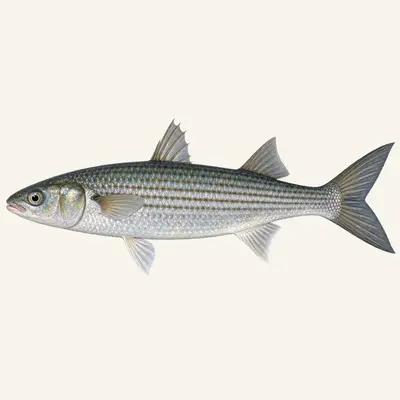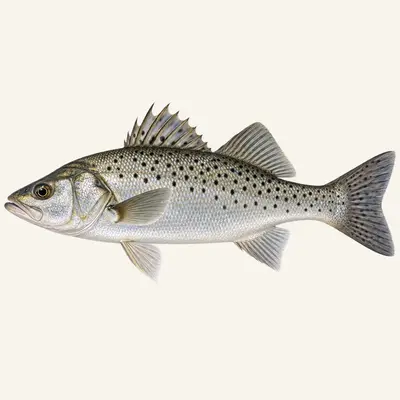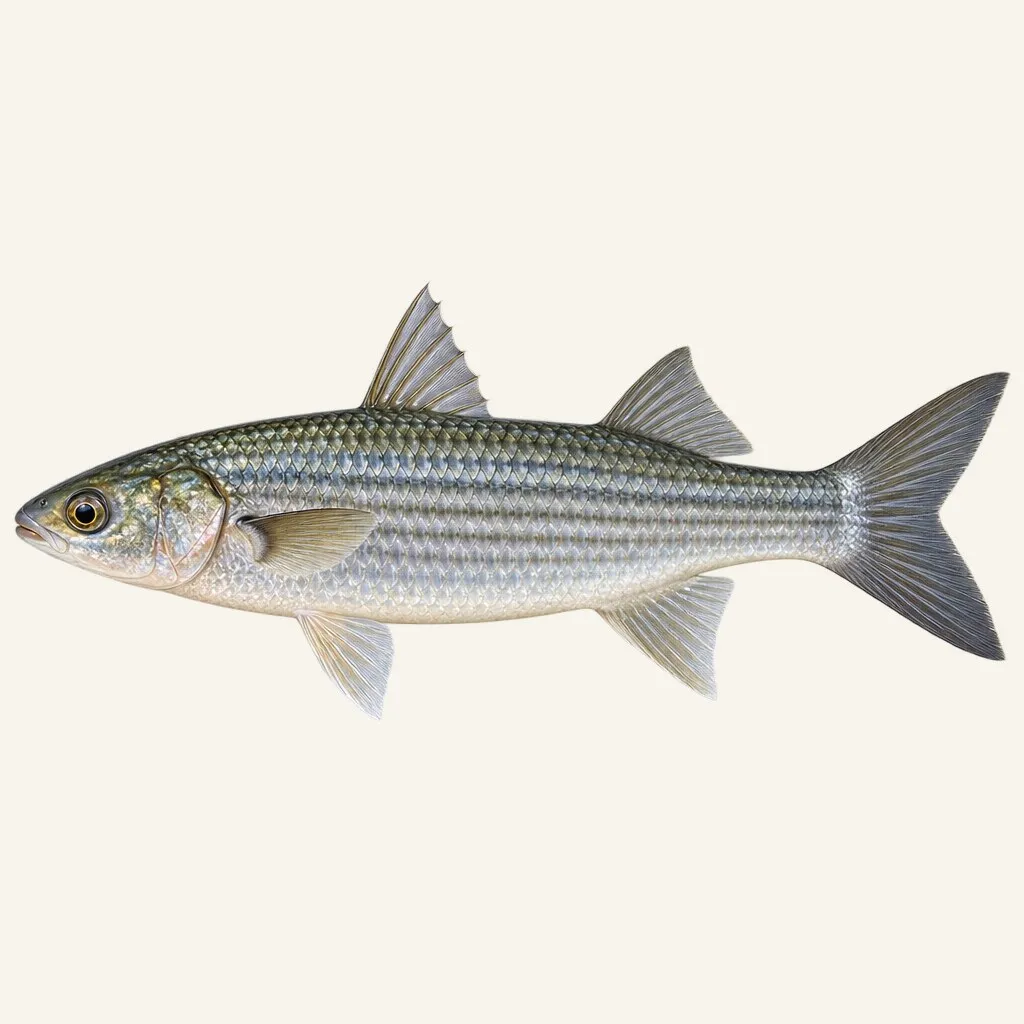
Boxlip mullet
Oedalechilus labeo · Mugilidae
- Saltwater
- Coastal
- Medium
- Size
25 cm
- Lifespan
10 years
Where to fish
- Estuary
- Rocky shore
Habitat icons: Flaticon
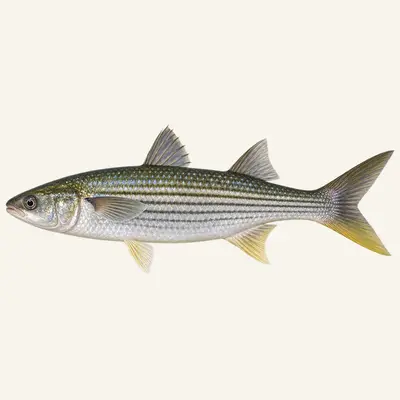
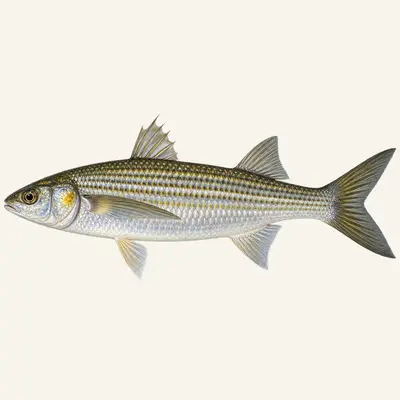
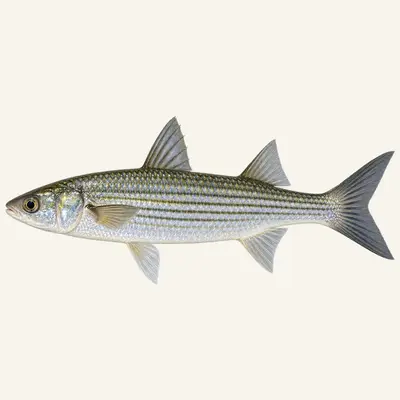
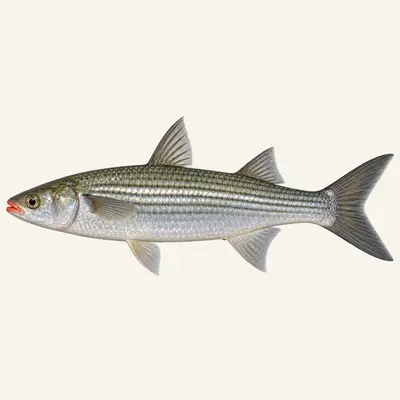
Mullet of rocky Mediterranean and east Atlantic coasts, recognizable by its thick, papillae-fringed upper lip, grazing on algae and detritus.
Calendar
Its range
The absence is more informative than the presence. This mullet is missing from the Black Sea, a basin most of the Mediterranean mugilids occupy. The source that notes the absence also notes that the fish enters neither brackish nor fresh water — and the Black Sea carries a diluted surface layer. The two entries point the same way. It is not a demonstration, but they answer each other.
The occupied range is very nearly one enclosed sea. The Mediterranean is held end to end, and the Atlantic share of it is Morocco to Gibraltar, a few hundred kilometres past the strait and no further.
Identifying it
The upper lip carries a fringe of papillae — a border of small fleshy points running round the whole margin of the mouth. That fringe is the character of the species, and it shows at arm's length on a fish held head-on.
Thickness by itself decides nothing, and this is where the check goes wrong. The thicklip grey mullet works the same rocky coasts, and its own upper lip is described as thick as well. What has to be found is the fringe, not the volume.
Beyond the mouth there is nothing to go on. No fin count and no head proportion is published for this species in the sources consulted, so on a doubtful fish the lip is the only evidence available.
Breeding
Maturity arrives at 12.9 cm, within a range of 11 to 15. The eggs are pelagic and adhere to nothing.
Set that against a maximum reported age of 10 years and the shape of a population follows: it is almost entirely adult, and an individual spends nearly the whole of its life above the length at which it breeds. Neither the spawning season nor the fecundity is recorded in the source, which is a real gap on an otherwise ordinary coastal fish.
The water it needs
The fish lives immediately off the coast, over rock, and not below about 20 m. It frequents river mouths and the outfalls of sewers without going up either: it comes to the mouth from the sea and stops at the edge of the diluted water.
There is a logic to that station. Enriched water grows more algae on stone, and a grazer that refuses brackish water finds the richest pasture on the coast right there, on the salt side, without ever leaving its own medium. It is why the species turns up exactly where it would be least expected, with no change of salinity involved.
Areas
- Coastal lagoons
- Calm brackish areas
- Sheltered harbors
- Seagrass beds
Techniques
- Delicate float fishing
- Fixed pole fishing
- Bread fishing
- Light ledger fishing
Baits
- Bread crumb
- Marine green algae
- Fine sand worms
- Flour paste
- Small marine invertebrates
What it eats
It grazes algae and detritus. The diagnosis does not break the menu down further, but the ground, the tool and the diet agree with one another: a fringed lip applied to stone works as a rasp, and papillae multiply the points of contact on a hard, irregular surface.
That is what the combination suggests, and the reasoning should be labelled as such. Nothing in the source goes beyond the two words, and the respective shares of algae and deposit are not known for this fish.
How to catch it
Two instructions follow from the facts, and the second is the more useful of them.
The first is a matter of the size of the mouth: soft, vegetable or doughy baits, a fine hook, a discreet line. A mullet scraping a stone throws itself at nothing, so there is no version of this fishing that involves imitating anything.
The second is geography. This one is not sought upstream. Its relatives on the same coast are fished high in estuaries and into canals; this species stops at the sea. The marks are rock armour, breakwaters, sheltered harbours and the immediate approaches to a river mouth — on the salt side, always, and over hard ground.
One figure changes how a capture gets judged: 10 years of life in a small body. Growth stops early, and two fish of the same length can be several years apart in age. Length says nothing about age in this species.
Where the fish came from is worth weighing separately. One taken at the mouth of an outfall is not the same proposition on the table as one taken off a rock point away from the town.
Regulations
Check the local regulations in force (legal size limits, closed seasons, bag limits).
For guidance only. Legal sizes, quotas and open seasons vary by location and season: always check the local regulations in force before fishing.
Other names
The scientific name says one thing twice, in two languages. Oedalechilus is Greek for the swollen lip, labeo Latin for the one with big lips. Genus and species name the same organ.
Five of the six living languages in this catalogue follow suit: boxlip mullet, mulet labéon, Lippenmeeräsche, cefalo labbrone, tainha-de-lábios-grossos. A character that five naming traditions converge on is a character that shows.
Spanish is the exception and also a trap. Morragute describes nothing, and it is not reserved for this fish either — the same Spanish word is on record for the thinlip grey mullet. One opaque name, two species, and no way to tell from the word which is meant.
Sources: fishbase.se · api.gbif.org