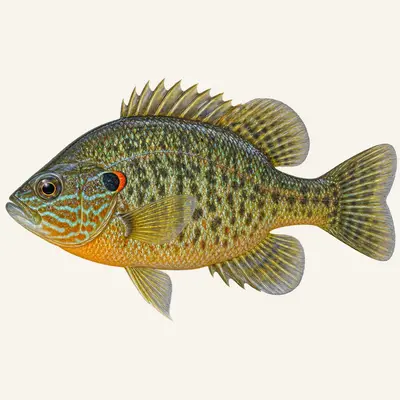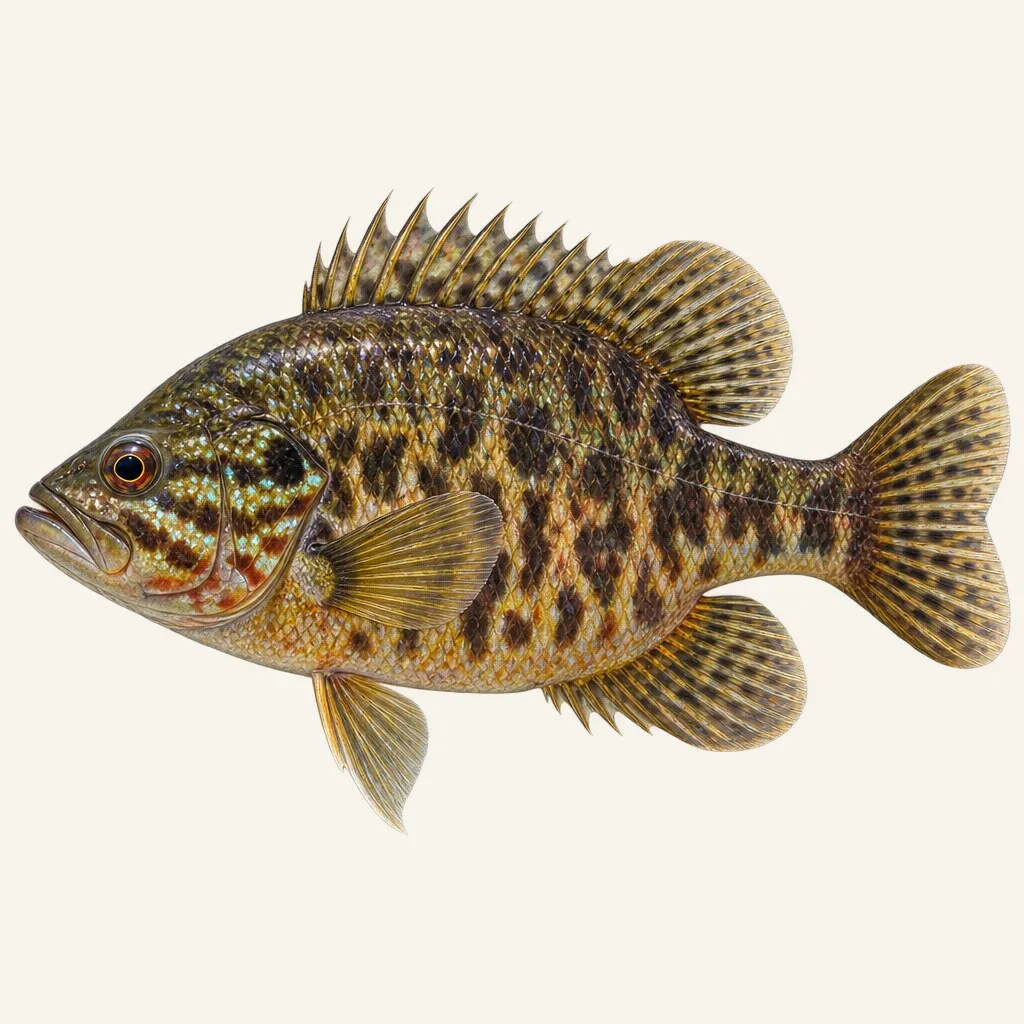
Warmouth
Lepomis gulosus · Centrarchidae
- Freshwater
- Predators
- Medium
- Size
31 cm
- Weight
1.1 kg
- Water temp.
10–20 °C
Where to fish
- Lake
- Pond
- River
Habitat icons: Flaticon
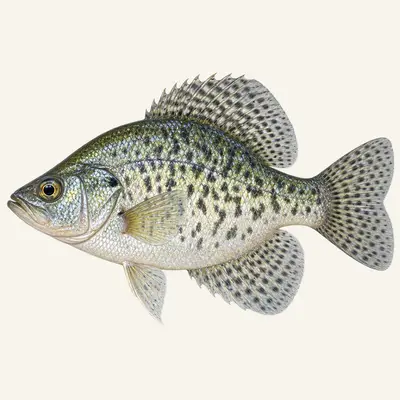
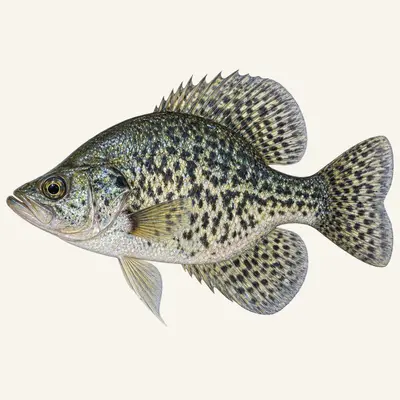
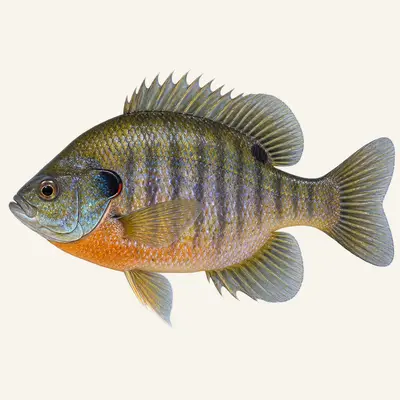
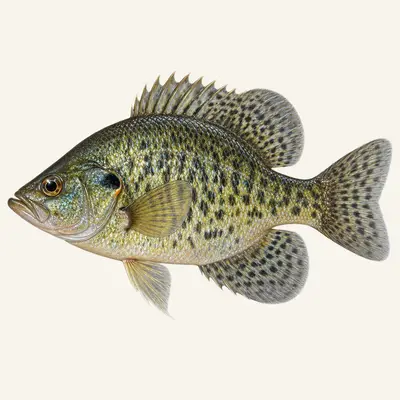
Stocky sunfish with a compressed oval body, recognizable by its large mouth characteristic of the Centrarchidae family and mottled greenish hues.
Calendar
Recorded in 2 countries
GBIF occurrence records — native and introduced populations combined.
Its range
Two blocks of range meet. Inland, the Great Lakes and Mississippi basins carry it from western Pennsylvania to Minnesota and south to the Gulf coast. On the seaward side, an unbroken belt of Atlantic and Gulf drainages runs from the Rappahannock in Virginia to the Rio Grande in Texas and New Mexico.
That gives the species the interior of the continent and the whole coastal plain — and it puts it almost everywhere the green sunfish is, which is why the two get muddled and why any comparison between them has to rest on something other than a map.
The something else is in the numbers. This fish is recorded between 10 and 20 degrees, the green sunfish between 18 and 32; the northern limit here sits around 46 degrees north against 50 for the other. Those are the bands the two species have actually been logged in rather than the limits of what they can stand, but they point the same way: the warmouth is the cooler-water animal of the pair, and it does not reach as far north.
Breeding
The male holds the eggs for five to six days.
A day or two short of the week that the pumpkinseed and the bluegill put in is a small difference with two edges to it. Less time on station means less exposure for the male, who is not feeding properly while he guards, and a faster turnaround to the next clutch. It also means the eggs and then the fry are on their own sooner, in water that is thick with things that eat both.
The water it needs
Mud, and no current. Adults are found over soft bottom in weedy lakes, ponds, swamps and the slack sections of streams, and the record classes the fish as demersal — it lives on the bed rather than above it.
Swamps are the entry that gives the species away. Black water, deep ooze, drowned stumps and nothing moving: that is difficult water for most fish and ordinary water for this one. Where a redear wants warm clear water with growth in it, and a longear needs thick living weed against a bank, this fish takes the softest, stillest, least promising corner of a system.
The practical version is short. Anywhere a paddle comes up black, and anywhere a bait sinks into the bottom instead of resting on it, is warmouth water.
Areas
- Vegetated margins
- Shaded edge areas
- Shallow ponds and lakes
Techniques
- Surface lure fishing
- Live bait fishing
- Ultra-light spinning
Baits
- Earthworms
- Small live fish
- Insect larvae
- Frogs
How to catch it
The species name is the fishing advice. Gulosus means gluttonous, and the mouth is built to match: wide, deep, and out of keeping with the family, which is what allows a fish of this size to take prey the insect-sifting sunfish around it cannot.
So the calibre goes up. A small live fish, a whole lobworm, a soft plastic of a size that would be absurd on a bluegill: all of them are within range, and the take is a proper predatory grab rather than a series of pecks at the bait.
Where to put them follows from the habitat. Swamp margins, silted ponds, backwater ends, the shaded side of a fallen tree in slack water — the places where the rest of the panfish thin out are where this one holds up.
It grows to the same length as the green sunfish and to a greater weight, which describes the fish in the hand well enough: thick through the body and heavy for its length, not the flat disc the family is known for.
Regulations
Check the local regulations in force (legal size limits, closed seasons, bag limits).
For guidance only. Legal sizes, quotas and open seasons vary by location and season: always check the local regulations in force before fishing.
Other names
Warmouth is the accepted name and it describes nothing at all. Its origin is not settled, and it stands out in a genus where the English names are otherwise informative to a fault — an ear, a colour, a diet, a spot.
Goggle-eye does better on the fish and worse on the paperwork. It is used for this species across much of the South, after the large eye, and it is used just as freely for the rock bass, a different centrarchid in a different genus. A report of goggle-eye from a stretch of water where both occur has said nothing usable.
Taxonomy took the mouth seriously for a long time: the warmouth was kept apart from the other sunfish in a genus of its own, Chaenobryttus, largely on the strength of its jaws, before being returned to Lepomis. The older name still turns up in books and on old state records.
Sources: fishbase.se · api.gbif.org