White sucker
Catostomus commersonii · Catostomidae
- Freshwater
- Bottom fish
- Easy
- Size
41–65 cm
- Weight
0.8–2.9 kg
- Lifespan
12 years
- Water temp.
0–29 °C
Where to fish
- Lake
- River
Habitat icons: Flaticon
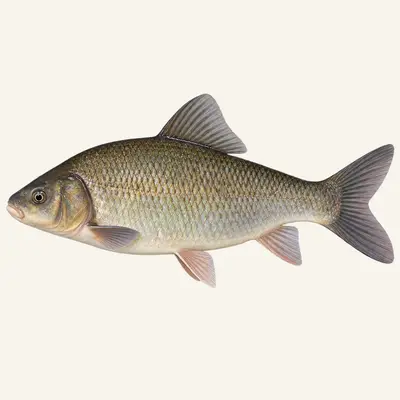
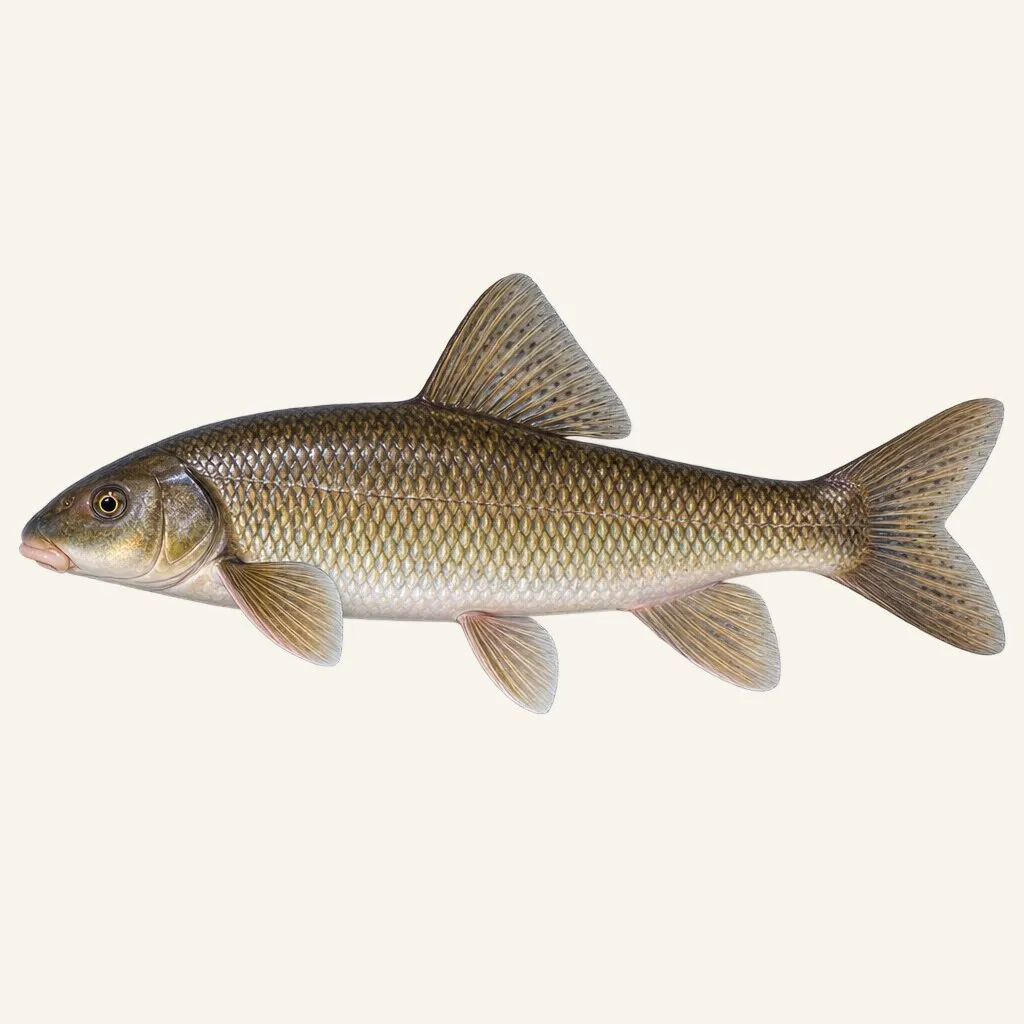
A bottom-dwelling fish with an elongated body and fleshy ventral mouth, widespread across North American freshwaters.
Calendar
Recorded in 2 countries
GBIF occurrence records — native and introduced populations combined.
Its range
Most of Canada across to the Atlantic coast, and south through North Carolina to New Mexico, becoming less common on the southern High Plains.
That thinning is the only real shape in the map. Everywhere else the species stays inside its own thermal band; the southern High Plains are dry and warm and short of the clear cool creeks the record most often places it in, and that is where an otherwise continental range begins to run out.
Breeding
The two sexes leave the spawning stream at different times. Most females drop back to the lake during the first half of the downstream migration and most males during the second, so the sex ratio over a gravel run is not a constant: it tilts female early and male late, and a count taken on one day describes that day.
The run is a homing run. Adults return to particular gravel-bedded streams, which is not an obvious trait in a bottom-feeding fish of lakes and large rivers, and it has consequences further down this page.
The act itself is brief and repeated. Two to four males press against a female with their fins; eggs scatter, sticking to the gravel where they land or carrying downstream to lodge where the current eases. Each episode lasts three or four seconds and may be repeated between 6 and 40 times in an hour. Spent adults are back in the lake 10 to 14 days after spawning began.
The young leave the same way and in the dark: downstream fry migration runs between dusk and dawn.
The water it needs
Headwater riffles to the open water of great lakes, and everything in between. Adults are on record from rocky pools and riffles at the top of a system down to large lakes, most often in small, clear, cool creeks and rivers of small to medium size.
Depth extends the same way. The usual band reaches 30 m and individuals have been found below 45 — an unremarkable figure for a lake fish and a strange one for an animal whose typical address is a cool creek.
The thermal span is the widest thing in the file: 0 to 29 degrees, from 68°N to 34°N, with slight salinity tolerated on top of it. That covers very nearly everything fresh water in North America has to offer, and it is why the range reads as a continent instead of a region.
One rhythm cuts across all of it. The fish moves into shallower water near sunrise and sunset to feed.
Areas
- Moderate-current river bottoms
- Confluences and pools
- Shallow lake margins
- Gravelly riffles at spawning
Techniques
- Bottom (ledger) fishing
- Bottom rig
- Float fishing
- Light worm fishing
Baits
- Earthworm
- Maggot
- Dough bait
- Sweet corn
What it eats
The change of feeding mode happens over four millimetres of growth. Fry at 1.2 cm take plankton and small invertebrates; bottom feeding begins between 1.6 and 1.8 cm and stays the method for the rest of a twelve-year life. Very little else in this animal's biology turns that sharply, and few switches in a fish's career are recorded to that precision.
The tool is the mouth: fleshy, set beneath the snout, worked as a suction cup. It draws sediment in and sorts what arrives, which is why the English name of the family describes an action rather than a shape.
The species also sits low in its own food web. Birds, fishes, mammals and lampreys are all listed as feeding on it — lampreys by attachment rather than pursuit, which takes from a living fish instead of removing it from the count.
How to catch it
Two windows, and they are the only times the fish comes up. Sunrise and sunset move it into shallow water to feed. The rest of the day it is on the bottom, possibly a long way down.
The mouth writes the rig. A suction feeder working sediment takes small baits lying still on the bed — worm, larva, maize, paste — and nothing resembling a fish. There is no version of this fishery involving a retrieve.
What the record actually claims for the species is worth reading, because the reputation says otherwise. White sucker is listed as a gamefish, supports a minor commercial fishery, is farmed commercially, is used occasionally as bait, and its flesh is described as white, flaky and sweet. Four uses and a compliment, for a fish most North American anglers unhook without looking at.
Size arrives slowly. Maturity starts from 23 cm, common length is 41, and 12 years is the recorded ceiling on age — so the difference between an ordinary fish and a heavy one is made of years rather than of water.
Conservation
The unit at risk here is a stream, not a species. Homing means every spawning tributary carries its own contingent, and a barrier at the mouth of one ends that group's contribution without altering anything visible about the adults in the lake below. Nothing in the open water looks different in the year the gravel becomes unreachable.
For 10 to 14 days those adults are also in the most exposed position they occupy all year: concentrated in a short reach, in shallow gravel, with the fry making the same journey after them at night.
And the species is load-bearing. Four groups of predators are recorded feeding on it, which makes a white sucker population part of the upkeep of everything above it. That is an argument for putting one back which has nothing to do with its own numbers.
Regulations
Generally unprotected species, often taken as a baitfish; per local regulations.
For guidance only. Legal sizes, quotas and open seasons vary by location and season: always check the local regulations in force before fishing.
Other names
Sucker names the mouth, and in North America it also names a fool. Insult and fish have grown together to the point where the word does the work of a verdict, and the four uses on record for this one never quite get past it.
Mullet is the regional alternative in parts of the United States and it collides head-on with the marine mullets, so a mullet on a catch list has to be read from the water rather than from the word. Quebec French keeps two names of its own, meunier noir and cyprin-sucet.
Commersonii honours Philibert Commerson, an eighteenth-century French naturalist, and records nothing at all about the animal.
Sources: fishbase.se · api.gbif.org