Yellow peacock bass
Cichla kelberi · Cichlidae
- Freshwater
- Predators
- Medium
- Size
59 cm
- Weight
4.9 kg
Where to fish
- Estuary
- Lake
- River
Habitat icons: Flaticon
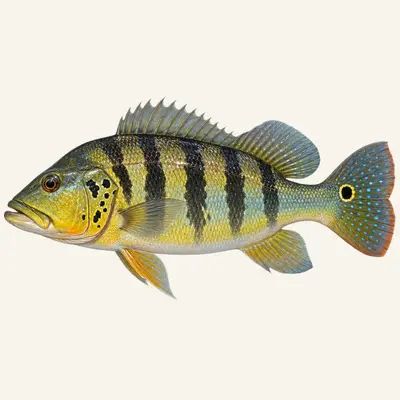
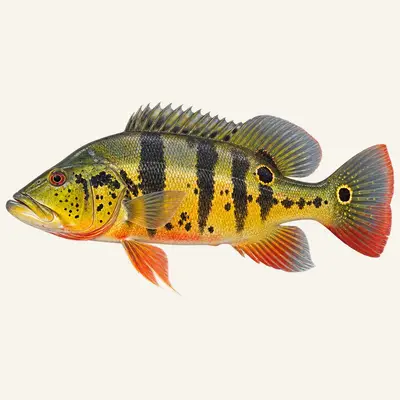
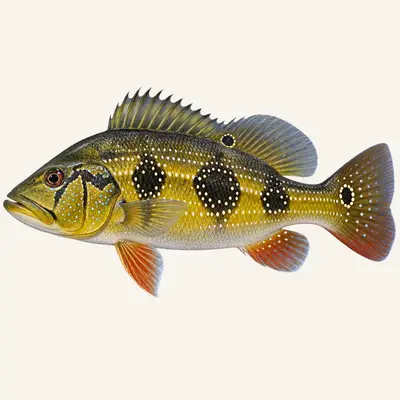
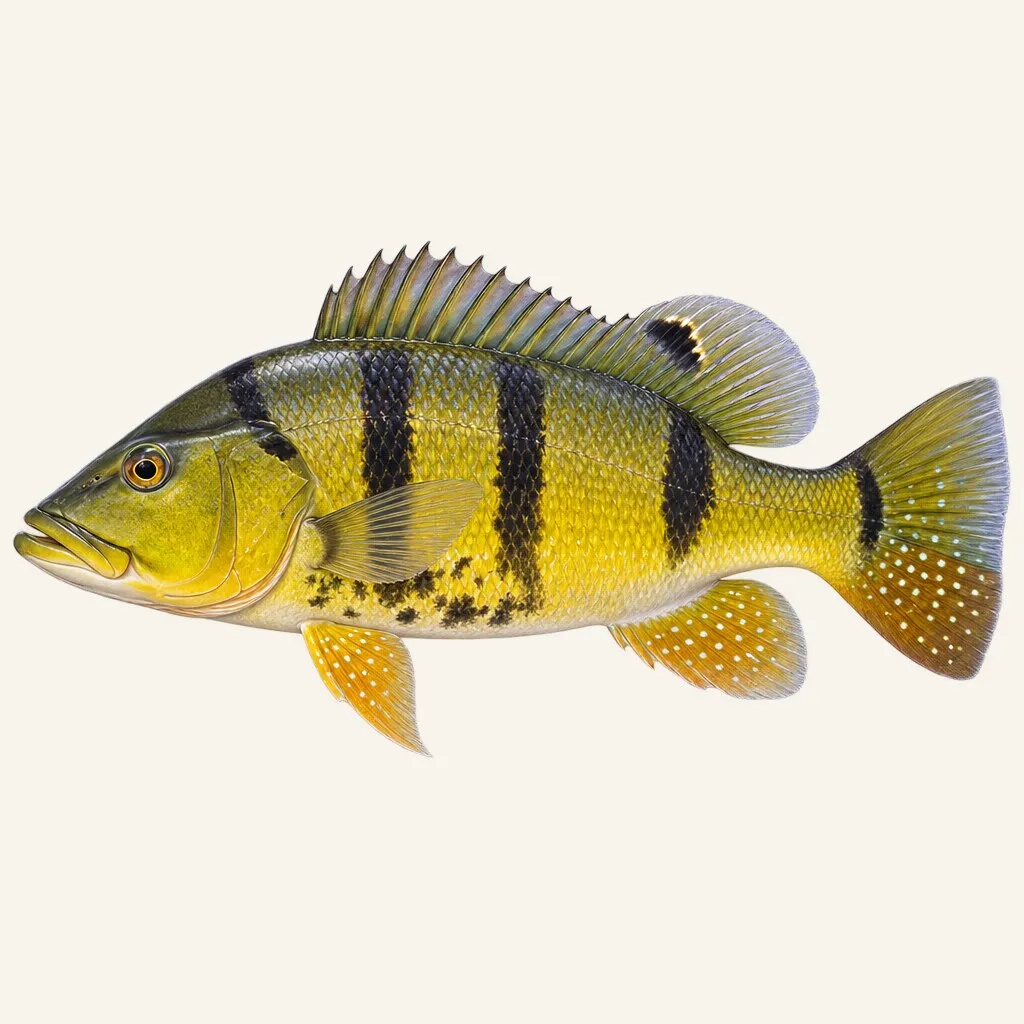
The yellow peacock bass is a smaller predatory cichlid from the Tocantins-Araguaia basin in central Amazonia. Its yellow-gold to greenish coloration and subtle flank spots set it apart from other peacock bass species; it rarely exceeds 45 cm in length.
Calendar
Recorded in 2 countries
Brazil · Singapore
GBIF occurrence records — native and introduced populations combined.
Identifying it
The character that names this species is a scatter of small pale spots on the pelvic fins, the anal fin and the lower lobe of the tail in adult fish. No other member of the genus carries them.
That is fortunate, because the rest of its appearance puts it in a group of three that colour pattern cannot separate at all. Inside that group the counts help a little. A lateral row here runs from 76 to 83 scales, a range that stops one scale short of where C. pleiozona begins, and the fourth bar that species normally shows is typically missing on this one.
So the fins settle it, and they have to be seen properly to settle anything — spread, wet, and on a fish still in the water if it is going back. A folded pelvic fin against a dark flank shows nothing.
Areas
- Reservoir weed bed edges
- Shallow areas with vegetation
- Creek mouths
- Submerged structures
Techniques
- Cast and retrieve along vegetation edges
- Topwater popper fishing
- Light jigging
- Live bait fishing
Baits
- Surface poppers
- Colored minnow lures
- Light jigs
- Local live fish
- Soft shad lures
How to catch it
Maturity at 20.7 cm, far below the size at which a fish here starts to interest an angler. The consequence is worth stating plainly: anything worth catching has already bred, and the population is not carrying its reproduction in the size classes being caught.
Nothing in the file describes where it holds, what it hunts, or when it breeds. What is known of the genus — adult fish taking other fish and little besides, hunting the shallow margins, responding to lures worked near the surface — remains the best available guide, and it is a guide to Cichla rather than to this species. The distinction matters when the guidance fails: a blank day here proves nothing about the fish, only about the borrowed assumptions.
Regulations
Check the local regulations in force (legal size limits, closed seasons, bag limits).
For guidance only. Legal sizes, quotas and open seasons vary by location and season: always check the local regulations in force before fishing.
Other names
Tucunaré in Brazil, and peacock bass in English — where the English name stops being a curiosity and becomes a practical problem. Every species in the genus answers to it. A fish reported as a peacock bass is attributable to none of them.
This one, at least, can be settled by a photograph, provided the pelvic and anal fins are in the frame and open. Very little else in the genus can be identified from a picture, which makes the habit of photographing a fish flat on its side, fins folded, a small loss every time.
Sources: fishbase.se · api.gbif.org