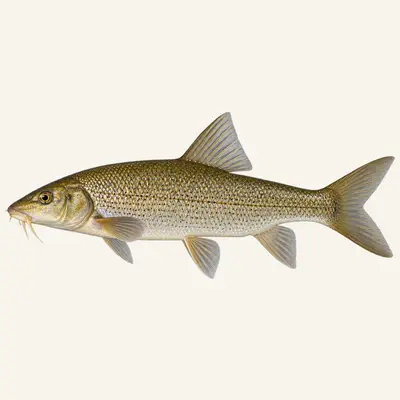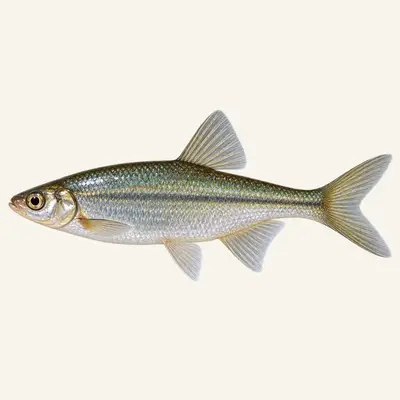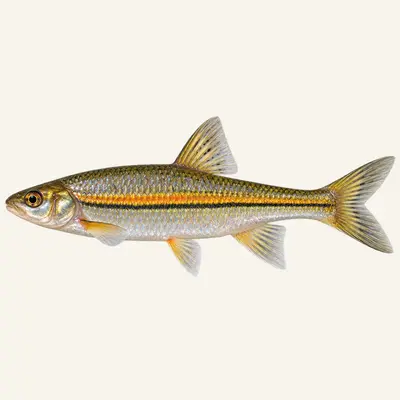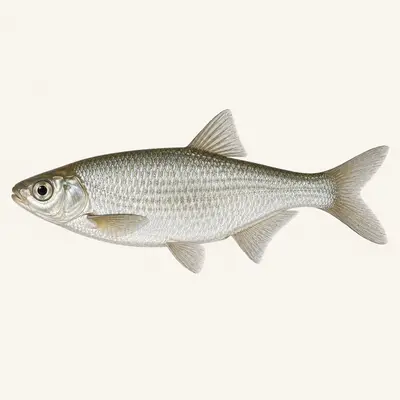
Ide
Leuciscus idus · Cyprinidae
- Freshwater
- Carp & coarse
- Medium
- Size
30–80 cm
- Weight
0.3–5.5 kg
- Lifespan
29 years
- Water temp.
4–20 °C
Where to fish
- River
Habitat icons: Flaticon
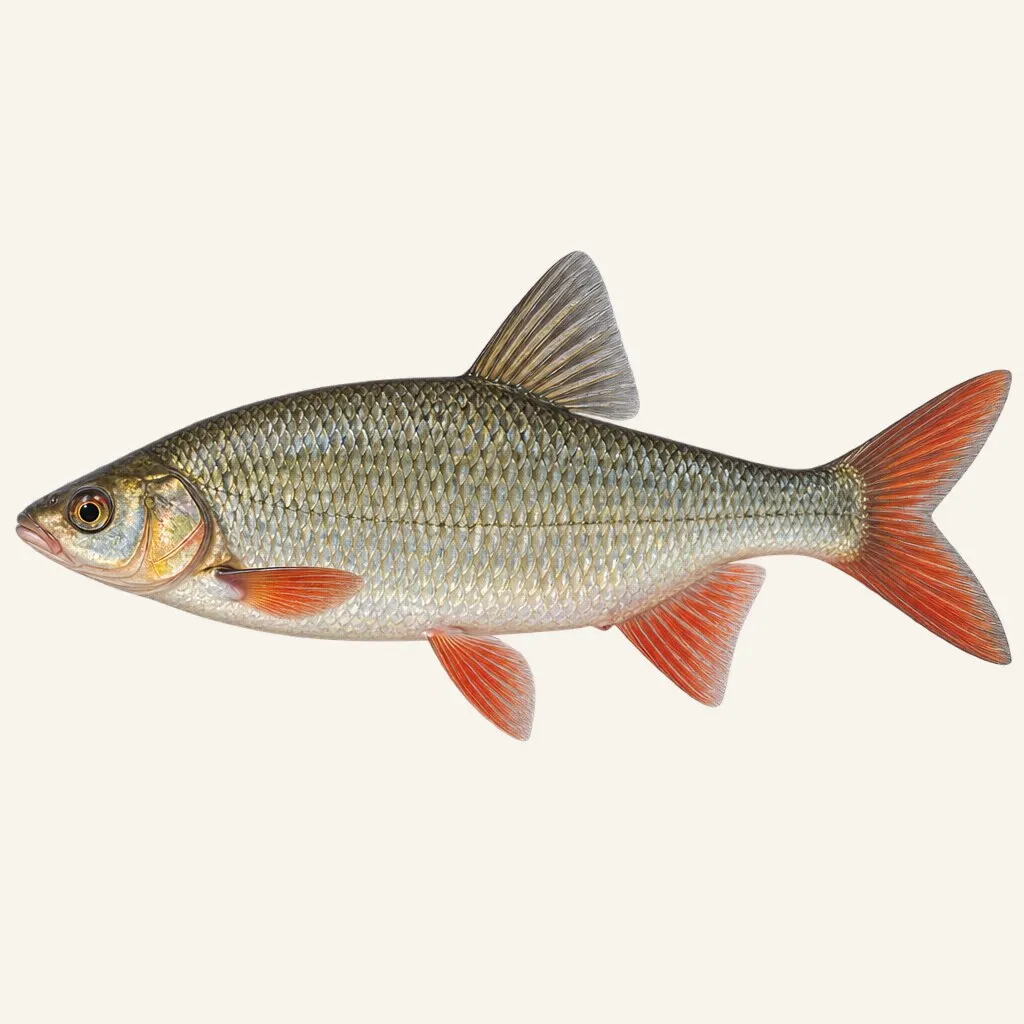
Slender silvery body with reddish fins - gregarious, hard-fighting fish
Calendar
Recorded in 15 countries
Austria · Belgium · Czechia · Denmark · Estonia · Finland · France · Germany · Netherlands · Norway · Poland · Russia · Sweden · Ukraine · United Kingdom
GBIF occurrence records — native and introduced populations combined.
Its range
Ide hold the Baltic, Black Sea, northern Caspian and North Sea basins, and the Atlantic basin south to the Seine and lower Loire. In Asia they run east to the Lena and the Aral basin. They are absent from Scandinavia north of 69°N.
They have been introduced to Great Britain and northern Italy.
One introduction route is peculiar to this fish. The golden form, the orfe, has been carried to several European countries and to the United States as an ornamental pond fish. Those are garden-pond escapees turning up in rivers, and ornament therefore accounts for part of the map.
Identifying it
Every fin on an ide carries a reddish wash except the dorsal. That is the first thing to look for, and it survives on a photograph as well as in the hand.
The second character is a missing one. Ide scales lack the regular dark mesh that nets the flanks of a chub; the pigment stays diffuse. The two fish are close enough that this detail does the work.
The counts confirm: 56 to 58 lateral line scales plus 3, 8½ branched dorsal rays, 10 to 11½ anal rays, 47 vertebrae, pharyngeal teeth in two rows. The mouth is terminal, the tail has 19 rays.
At 85 cm and 4 kg the ide is the largest European Leuciscus.
Breeding
A female spawns once a season, and with several males. The males gather on the spawning ground and follow ripe females onto it.
Spawning takes place in tributaries, in moderate flow, over gravel or submerged plants, and the sticky eggs adhere where they fall.
One spawning a year sets the ide against the chub, which spreads its own across several episodes. The consequence is direct: a badly timed flood does not cost an ide a fraction of its season, it costs the whole of it.
Fertile hybrids with asp are recorded, which is notable between two fish whose diets are so far apart.
The water it needs
Adults hold large lowland rivers and nutrient-rich lakes, down to about 15 m, and tolerate brackish water.
The social pattern inverts with age. Juveniles shoal and use a wide range of marginal habitats; adults turn solitary and move deep. A big ide is therefore looked for alone, well away from the margins where the small ones were seen.
Areas
- Calm zones
- moderate currents
- mid-river reaches
- wide rivers
Techniques
- Lures
- Worms
- Bread
- Insects
Baits
- Micro-lures
- Spoon
- Flies
What it eats
The diet is broad — aquatic and terrestrial animals of all kinds, plus plant material — and large fish turn markedly to fish.
That switch is what separates ide from dace, which share the river but not the size. A fish that moves on to fish escapes the ceiling invertebrates impose, and that is why one reaches 85 cm and the other rarely 30.
How to catch it
Two ages, two different fisheries. Shoaling juveniles in the margins fish like any other cyprinid, on small baits. Large solitary fish, deep and alone, belong more to predator tactics — and that split catches out more anglers than anything else about the species.
Longevity changes what a capture means. The maximum recorded age is 29 years, which is remarkable for a river cyprinid: a very large ide has been in that river for three decades, and returning it is not the same act as returning a three-year-old.
The flesh is poor, which has long pushed the fishery towards catch and release.
Season follows the spawning run, when fish otherwise scattered in deep water gather in the tributaries.
Conservation
A female that spawns once a year, in a tributary, over clean gravel, stacks up three separate points of failure. Lose access to the tributary, lose the gravel, or lose the year — and unlike a fish that spreads its spawning, there is no second attempt within the season.
Longevity hides the problem for a long time. An ide population can keep showing good fish for fifteen years after it has stopped renewing itself.
Ornamental introductions raise a distinct question: pond fish selected for colour end up in rivers where the species is native, and breed with it.
Regulations
Check the local regulations in force (legal size limits, closed seasons, bag limits).
For guidance only. Legal sizes, quotas and open seasons vary by location and season: always check the local regulations in force before fishing.
Other names
Ide in English, with orfe generally reserved for the golden ornamental form — though the two names are used loosely and the same species is behind both. Aland or Nerfling in German, jaź in Polish. In Britain the fish is an introduction, and its status varies by water, so the local rule is a question for the competent authority.
Sources: fishbase.se · api.gbif.org