Pacific halibut
Hippoglossus stenolepis · Pleuronectidae
- Saltwater
- Flatfish
- Medium
- Size
258 cm
- Weight
363 kg
- Lifespan
55 years
- Depth
0–1,200 m
Where to fish
- Rocky shore
Habitat icons: Flaticon
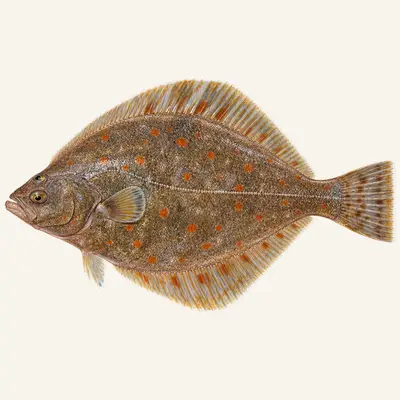
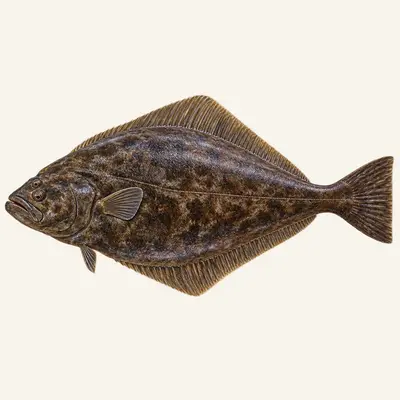
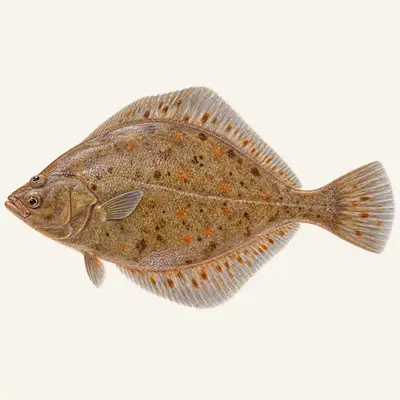
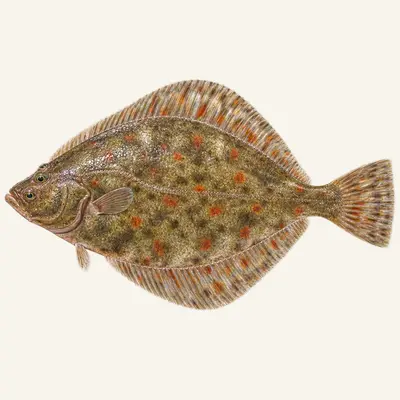
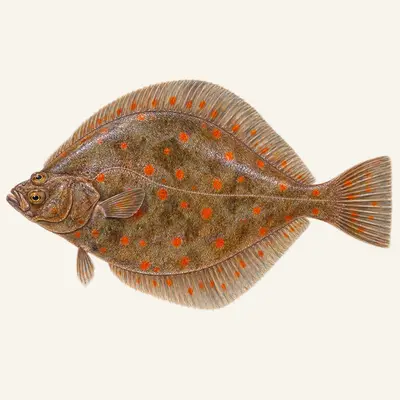
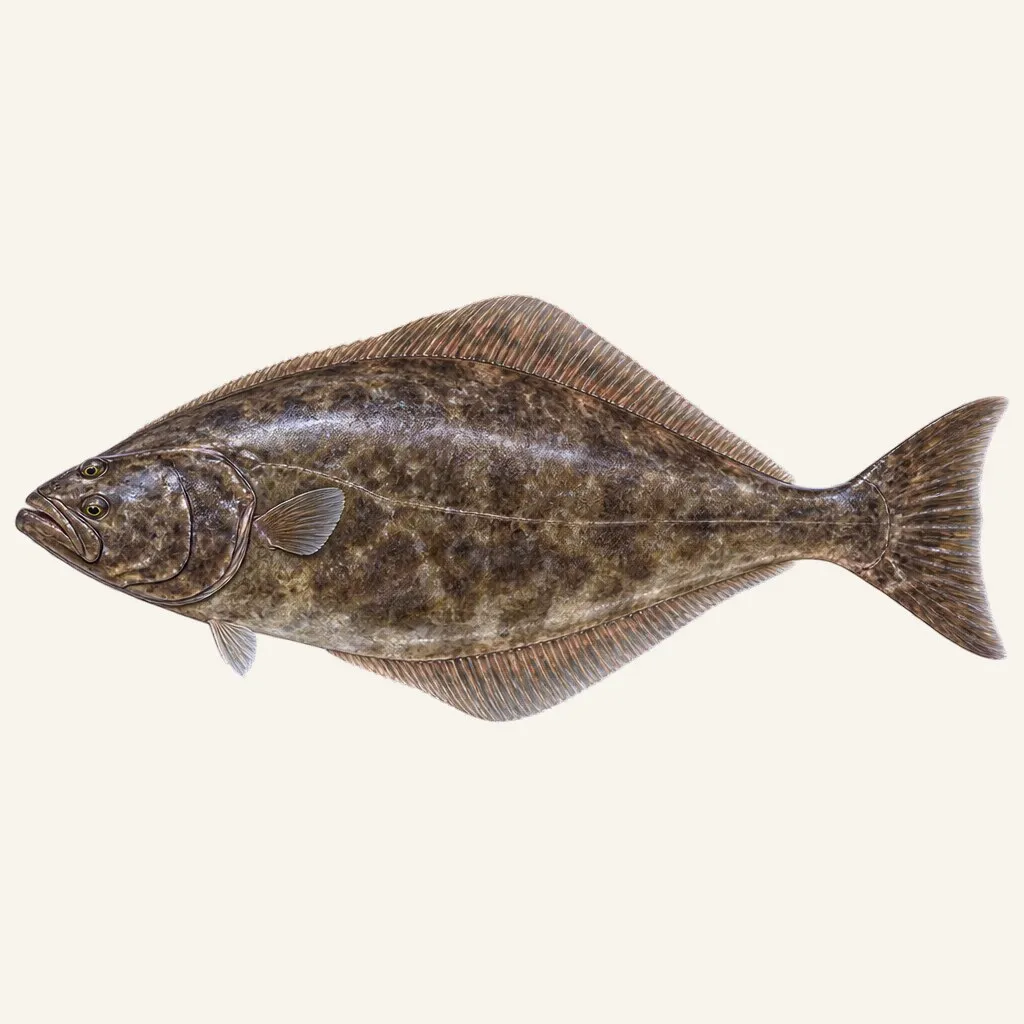
The Pacific halibut is a large, oval-shaped flatfish with a greenish-brown upper side, found on rocky and sandy bottoms in the cold waters of the North Pacific. An active predator, it hunts fish, crabs, and octopus at depths exceeding 1000 m.
Calendar
Recorded in 2 countries
GBIF occurrence records — native and introduced populations combined.
Its range
The range is a rim around the North Pacific: Hokkaido and the Sea of Okhotsk on the western side, north to the southern Chukchi Sea, and down the American side to Point Camalu in Baja California.
Read the shape rather than its extremities. The Chukchi and Baja are the ends of the record, not places the fish ordinarily lives, and between them the species occupies the continental shelves and their edges continuously. Both limbs of the rim are cold-current coasts. The gap in the middle is the open Pacific, and a bottom fish does not cross it.
Identifying it
The determination against its Atlantic congener is not made on the fish. Dorsal rays run 90 to 106 here against 98 to 110 there, anal rays 69 to 80 against 73 to 85: the ranges overlap through most of their length and settle nothing. What separates the two species is an ocean, and their distributions do not meet at any point. These are the two largest flatfishes in the world, one to each hemisphere of water, and a fish of this build in the North Pacific is this one by elimination.
On the animal itself, three characters are worth having. The dorsal fin begins above the front of the pupil of the upper eye, and it stays low, rising towards the middle of its length. The caudal is spread and slightly lunate — a tail for holding station in a current, not the rounded fan of a fish that never leaves the mud. The pectorals are small. Vertebrae number 49 to 51.
The water it needs
The whole fishery rests on one seasonal movement. Older halibut winter in deep water along the edge of the continental shelf, then move into shallow coastal water for the summer, between 27 and 274 m. The fish comes to the coast; the boats are not obliged to reach the shelf break.
Age sorts the depths as well. Young fish are found near shore and move out as they grow, which gives the counter-intuitive result that the shallowest ground holds the smallest animals while the deeper summer ground holds the large ones.
Recorded depth runs from the surface to 1,200 m, and bottom type counts for little: the species is taken over various grounds rather than tied to any one of them.
Areas
- Deep Alaskan grounds
- Pacific continental shelves
- Submarine holes
- Cold coastal zones
Techniques
- Deep live bait fishing
- Heavy jigging
- Boat bottom drift
- Deep bottom longline
Baits
- Salmon chunks
- Whole herring
- Squid
- XXL soft lure
What it eats
Fishes, crabs, clams, squids and other invertebrates. Clams are the item that says most. A fish that eats bivalves is working the sediment and taking prey that cannot move at all, which is not what the menu of a large predator normally looks like.
The rest of the list is mobile, and the lunate tail described above belongs to the same animal. This is a bottom fish that can also run something down.
How to catch it
The season is set by the fish's own calendar. Summer puts adults into 27 to 274 m of coastal water; winter puts them along the shelf edge, deeper and further out. A summer mark and a winter mark are not the same mark, and no amount of effort makes one into the other.
Depth also settles what can be decided later. A fish brought up from the shelf edge has re-equalised nothing on the way, so the choice about releasing it is made before the bait goes down rather than once the animal is alongside. In the shallower summer band that constraint eases considerably.
Size follows depth through the age segregation. A run of small fish inshore is not a poor session, it is the wrong depth for what was wanted.
The fishery is regulated, on both sides of the ocean and not in the same way. What the rules are on a given date has to be checked with the competent authority.
Conservation
Fifty-five years of documented longevity frames everything else. A stock of this species is decades of accumulated survivors, and the length at first maturity is not even recorded in the reference source — which is to say that the age at which a female begins to contribute is not something the basic literature settles.
The summer movement is the pressure point. For a few months a year the adult population leaves the shelf edge and gathers in coastal water shallow enough for small boats, so an animal otherwise spread over 1,200 m of depth becomes reachable across its whole range at once. Nothing about that concentration reflects how many there are.
Both limbs of the range are heavily fished and divided between several national jurisdictions. The fish crosses management boundaries; the fishing does not.
Regulations
Check the local regulations in force (legal size limits, closed seasons, bag limits).
For guidance only. Legal sizes, quotas and open seasons vary by location and season: always check the local regulations in force before fishing.
Other names
Pacific halibut, and in the trade Alaska halibut or northern halibut for the same fish.
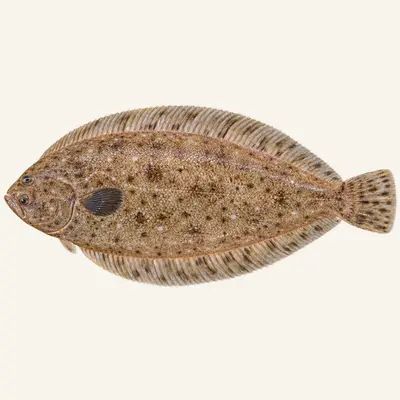
The word halibut has been attached to enough unrelated flatfishes to be worthless on its own. California halibut, Paralichthys californicus, shares this species' coast, belongs to a different family and is not a Hippoglossus at all; it is the fish most often sold as halibut in southern California. Greenland halibut is a third genus again.
Stenolepis means narrow-scaled, which is at least a character rather than a market claim. Japanese says ohyō.
Sources: fishbase.se · api.gbif.org