Shadow bass
Ambloplites ariommus · Centrarchidae
- Freshwater
- Predators
- Medium
- Size
31 cm
- Weight
0.8 kg
Where to fish
- River
Habitat icons: Flaticon
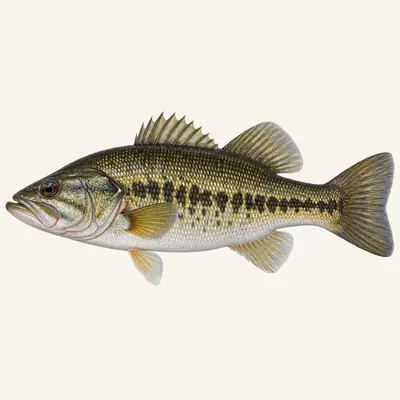
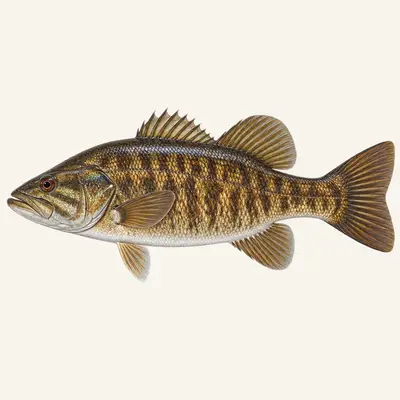
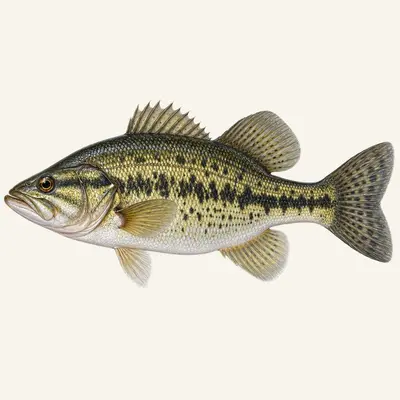
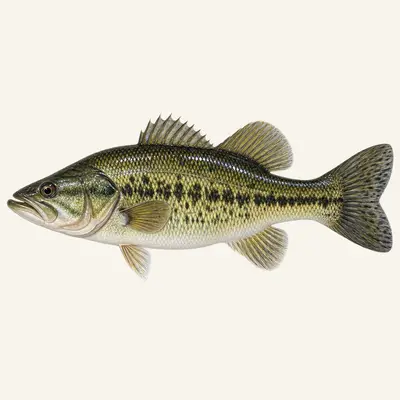
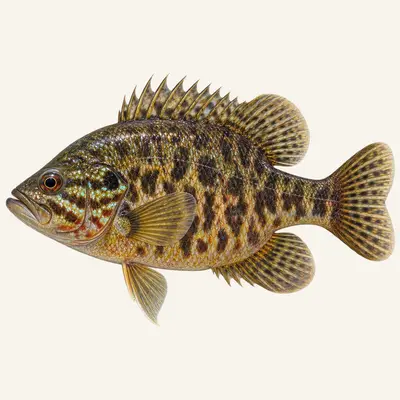
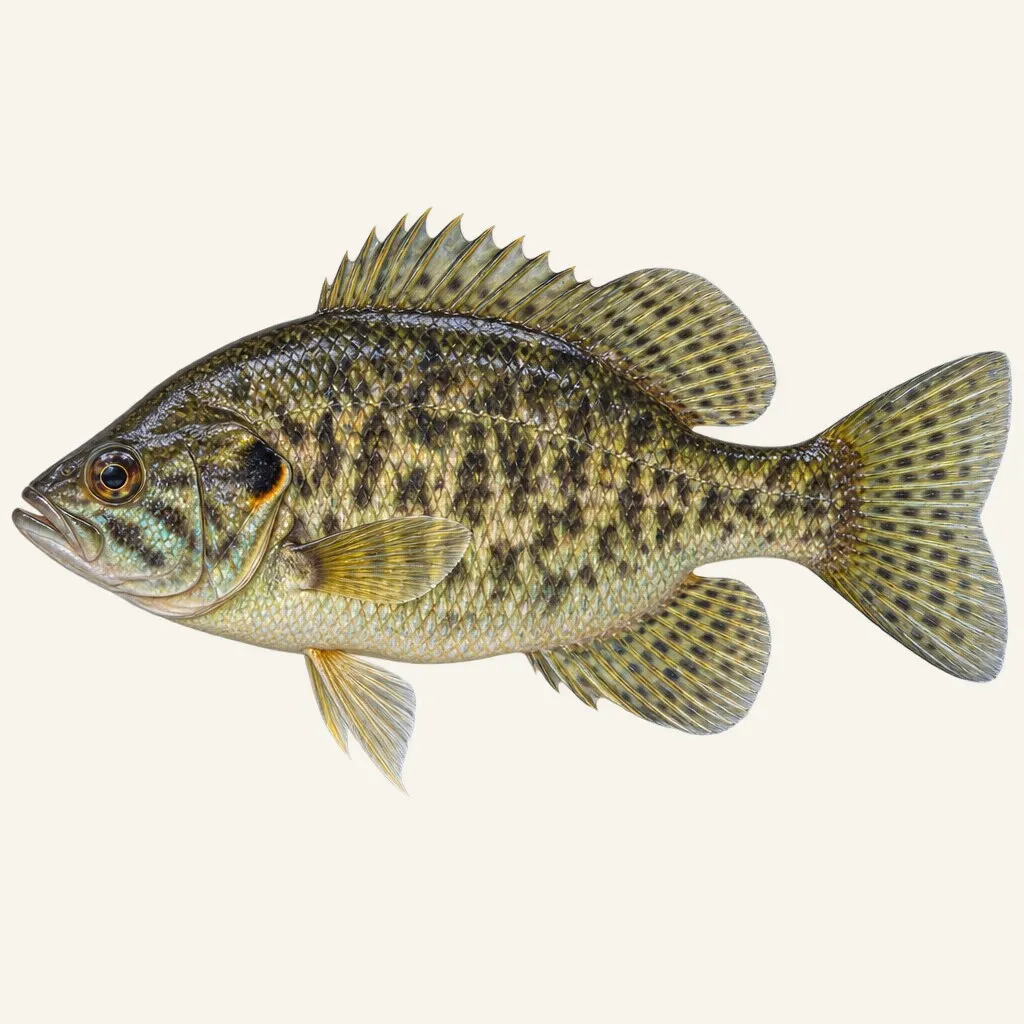
The shadow bass is a small Centrarchidae close to the rock bass, with a compressed body displaying a brown-olive speckled pattern, recognizable by its notably large eyes.
Calendar
Recorded in 1 country
GBIF occurrence records — native and introduced populations combined.
Its range
Two pieces of ground, and they are not adjacent. On the Gulf Slope the species runs from the Apalachicola drainage in Georgia west to the lower Mississippi in Louisiana. Inland, it holds the St Francis, Black, Arkansas, Red and upper Ouachita drainages of Missouri and Arkansas.
Put beside the rock bass, the shape of that reads as a division of the continent along the line the ice reached. The northern species has the glaciated country — the Great Lakes, the St Lawrence, the upper Mississippi, the prairie rivers running to Hudson Bay. This one has the coastal plain and the Ozark and Ouachita uplands below it. One genus, split at the front of the last glaciation.
No introduction is recorded for it anywhere, which sets it apart from most of the family. The sunfishes, the black basses and its own northern congener have all been carried to other continents; this one has stayed where it started.
Identifying it
The eye is the character and the eye is the name. Ariommus is Greek for large-eyed, and on a fish in the hand the proportion is what separates this one from its northern relative. Everything else about it is genus rather than species.
The record offers nothing to check that against — no fin-ray counts, no scale rows, no vertebral figures are published for it. So the honest field method is drainage. The two share a family resemblance close enough that a state list carrying both names resolves by catchment rather than by anything on the animal, and that is how survey work treats it.
The water it needs
Pools of creeks and small to medium rivers, brushy and vegetated, over gravel, over sand and over mud.
Mud is the entry that matters, because it is the one the rock bass does not get. That fish is tied to clear silt-free stone; this one takes a soft bottom as readily as a hard one. So the pair is not divided by latitude alone — one of the two has a substrate requirement and the other does not, and in practice that widens the water worth trying. A slow, shaded, silty pool is a shadow bass pool and not a rock bass pool.
What both accounts agree on is cover. Brush and vegetation appear in every description, and cover in a pool means shade. An oversized eye is worth having in exactly that kind of light.
Areas
- Shaded areas under vegetation
- Gravel and sand bottoms
- Rocky edges
- Small clear streams
Techniques
- Light soft lure fishing
- Fly fishing
- Live bait fishing
- Natural drift fishing
Baits
- Earthworms
- Small artificial insects
- Small live fish
- Miniature soft lures
What it eats
The prey list is the most specific thing in the whole record, and every item on it lives on the bottom: darters, madtoms and minnows among the fishes, crayfish, and the nymphs of dragonflies, mayflies and stoneflies.
Darters and madtoms are the telling pair. Both are small benthic fishes that spend the daylight hours under stones, and madtoms are active at night. A predator taking them is hunting the bed itself, under cover and in poor light, rather than picking prey out of the open pool — which is what the eye had already suggested.
How to catch it
Small water, on foot, and aimed at cover rather than at open pool. The fishing happens in creeks and small to medium rivers, and the distance that matters is the last metre.
Light is the variable. An outsized eye and a diet of nocturnal bottom fishes both point at the ends of the day, and at shade in between; the least likely proposition on that water is a bright pool at noon.
The presentation comes straight off the prey list. A nymph, a worm, a small crayfish imitation — worked down and into the cover, not swum across in front of it.
It is the smaller of the two Ambloplites, and the tackle should follow the fish rather than the family's reputation. The measurements on this page make the difference plain enough.
Regulations
Check the local regulations in force (legal size limits, closed seasons, bag limits).
For guidance only. Legal sizes, quotas and open seasons vary by location and season: always check the local regulations in force before fishing.
Other names
Shadow bass is the standard name, and unusually for this family it describes the habit rather than the animal: shaded pool water under cover, which is where it lives and when it feeds.
The collision to know about is with the rock bass. Across much of the South those two words are used loosely for either species, and for a long stretch of the literature this fish was carried as a form of the rock bass rather than as a species in its own right — so older state records and older books from the Gulf drainages carry the northern name for a southern animal.
Sources: fishbase.se · api.gbif.org